
- Respond within the hour — slow responses signal that rescheduling is low stakes for you too
- Offer 2 or 3 specific alternative slots rather than asking when they are free
- Give a deadline for them to confirm, then release the slot
- Repeat reschedules from the same prospect warrant a different approach
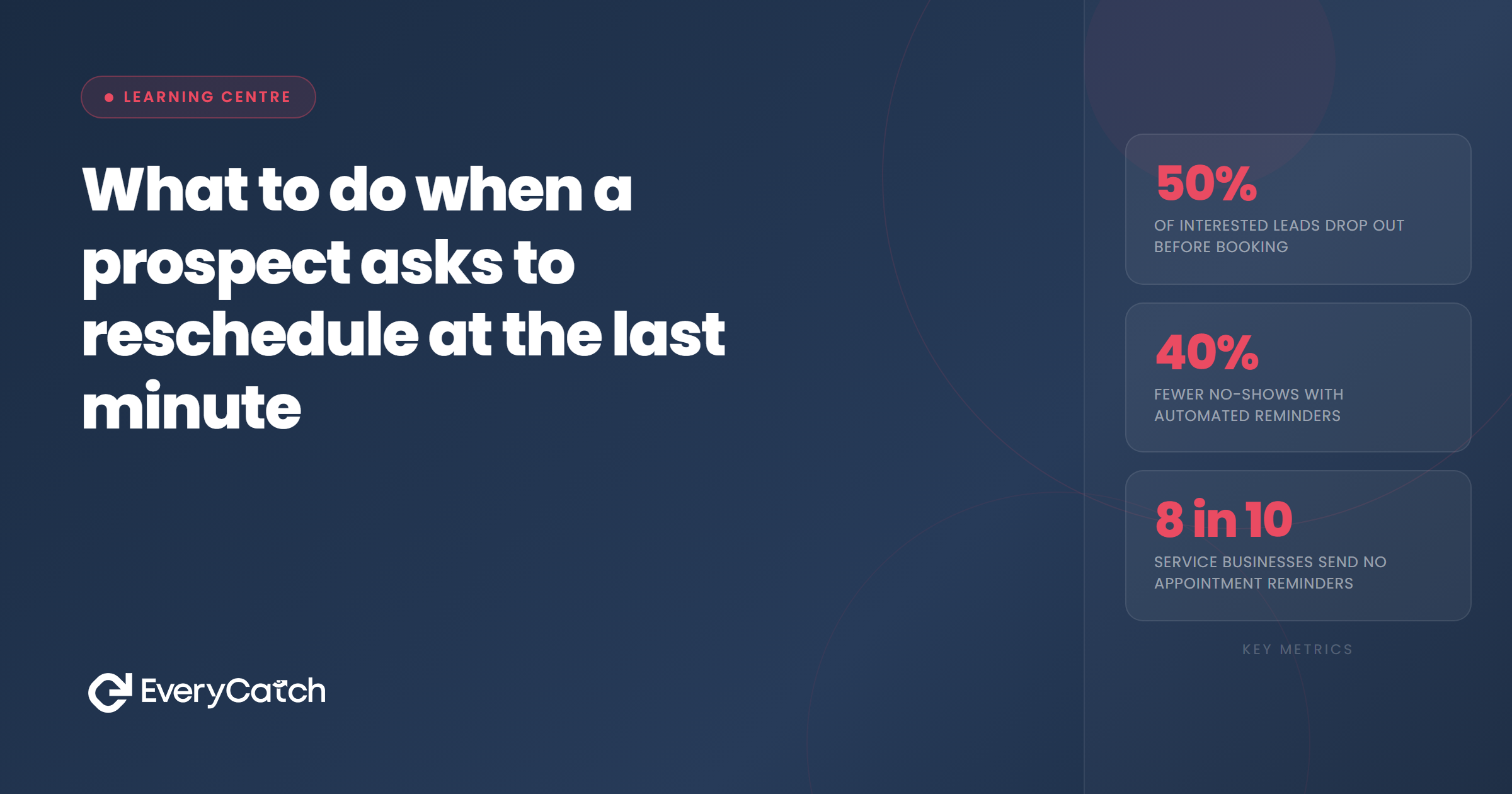
- A good reminder sequence before the appointment cuts reschedule requests significantly
It happens to every service business, at every price point, in every trade. A prospect books, confirms, and then — often the morning of, or the evening before — a message arrives asking to reschedule. The question is not whether it will happen. The question is what you do next, and whether your response keeps the booking or loses it.
Most businesses handle this badly in one of two ways. They either reply with an overaccommodating "No problem, whenever suits you" that signals your diary is wide open and your time is theirs to waste. Or they go silent, unsure what to say, which lets the prospect drift. Both outcomes are avoidable.
Why last-minute reschedule requests happen more than you expect
Life genuinely does intervene. A childcare issue, a work emergency, illness — these are real and unavoidable. But they account for perhaps half of last-minute reschedules. The other half comes from situations that better systems could have prevented.
A significant portion of last-minute reschedules happen because the prospect was never properly re-engaged after booking. They filled in a form or sent a message, received a confirmation, and then heard nothing until the appointment arrived. By that point, the booking had mentally faded in importance. When a conflict appeared, moving the appointment felt easy because nothing had reinforced its value in the intervening days.
Some prospects also reschedule because they are having second thoughts. They booked in a moment of decisiveness and have since found reasons to hesitate. A reschedule is safer than a cancellation — it keeps the option open while buying time. Recognising this pattern matters because it changes the right response. These prospects need a conversation, not just a new date.
Respond the same day, not later
The speed of your response matters more than most business owners realise. When someone asks to reschedule and you take 24 hours to reply, the implicit message is that the booking is not particularly important to you either. That makes it easier for them to drift away altogether.
Aim to respond within the hour during working hours. If the message arrives outside hours, respond first thing the next morning. Acknowledge the request briefly and move immediately to resolution. A one-paragraph reply is better than a lengthy, sympathetic response that gives the prospect more reasons to reconsider.
Something like: "No problem — I have [Date, Time] and [Date, Time] available this week, or [Date] next week. Let me know which works and I will send a new confirmation. If I do not hear back by tomorrow, I will open the slot." That is direct, professional, and closes the loop.
Give options, not open-ended questions
Asking "When would suit you?" feels polite, but it hands the scheduling problem back to the prospect and opens the door to indefinite delay. Offering two or three specific alternatives does the opposite — it keeps momentum and makes confirming the easiest path.
Choose slots that work well for your diary, not whatever is least popular. If your Tuesday afternoons are already busy, do not offer Tuesday afternoon as a rescue option. The alternatives should be slots you actually want filled, so rescheduling works for both sides.
Limit the options to three at most. More than three creates decision paralysis and prolongs the reply cycle. Two is often enough. The goal is to get a confirmed date within 24 hours of the original reschedule request, not to start an extended back-and-forth.
Still chasing replies for reschedule requests?
EveryCatch handles follow-up and rebooking automatically, so no enquiry falls through the gap.
Book a free discovery callProtect the slot without damaging the relationship
Your time has value. A slot held for a prospect who has not confirmed is a slot unavailable to someone who would have shown up. Giving a deadline — "Let me know by tomorrow at noon or I will need to open this slot to other clients" — is not aggressive. It is honest, and most prospects respect the clarity.
The tone matters here. State the deadline as a practical constraint, not a threat. Most people understand that a diary slot is a real resource. They appreciate knowing where they stand rather than receiving a polite holding reply with no action required.
If the same prospect has rescheduled before, the dynamics shift. A second last-minute reschedule from the same person is a signal — either they have a chaotic schedule that makes them a difficult client, or they are not as committed as their initial booking suggested. At this point, asking for a deposit upfront before confirming the new time is reasonable. You are not penalising them; you are securing your time appropriately.
Prevention: cutting reschedule rates before they happen
The best reschedule response is the one you never have to send. A well-constructed reminder sequence — a confirmation the same day they book, a reminder 48 hours before, and a text on the morning of the appointment — keeps the booking present in their mind and significantly reduces the proportion who reach out to move it.
The 48-hour reminder is particularly valuable. It arrives at a point when the appointment is still far enough ahead that practical obstacles have not yet materialised, but close enough that it feels immediate. If they do have a conflict, they find out now rather than the morning of, which gives both sides more options.
The morning-of message should be warm and brief. Something that confirms the time, includes the address or call link, and expresses that you are looking forward to the conversation. Small as it is, it makes the prospect feel expected rather than forgotten, and that changes the psychological equation around attendance.

From the EveryCatch team
EveryCatch builds automated booking and follow-up systems for service businesses that want to stop losing leads to slow responses and no-show drift. The goal is always the same: get more of the right conversations into the diary, and keep them there.