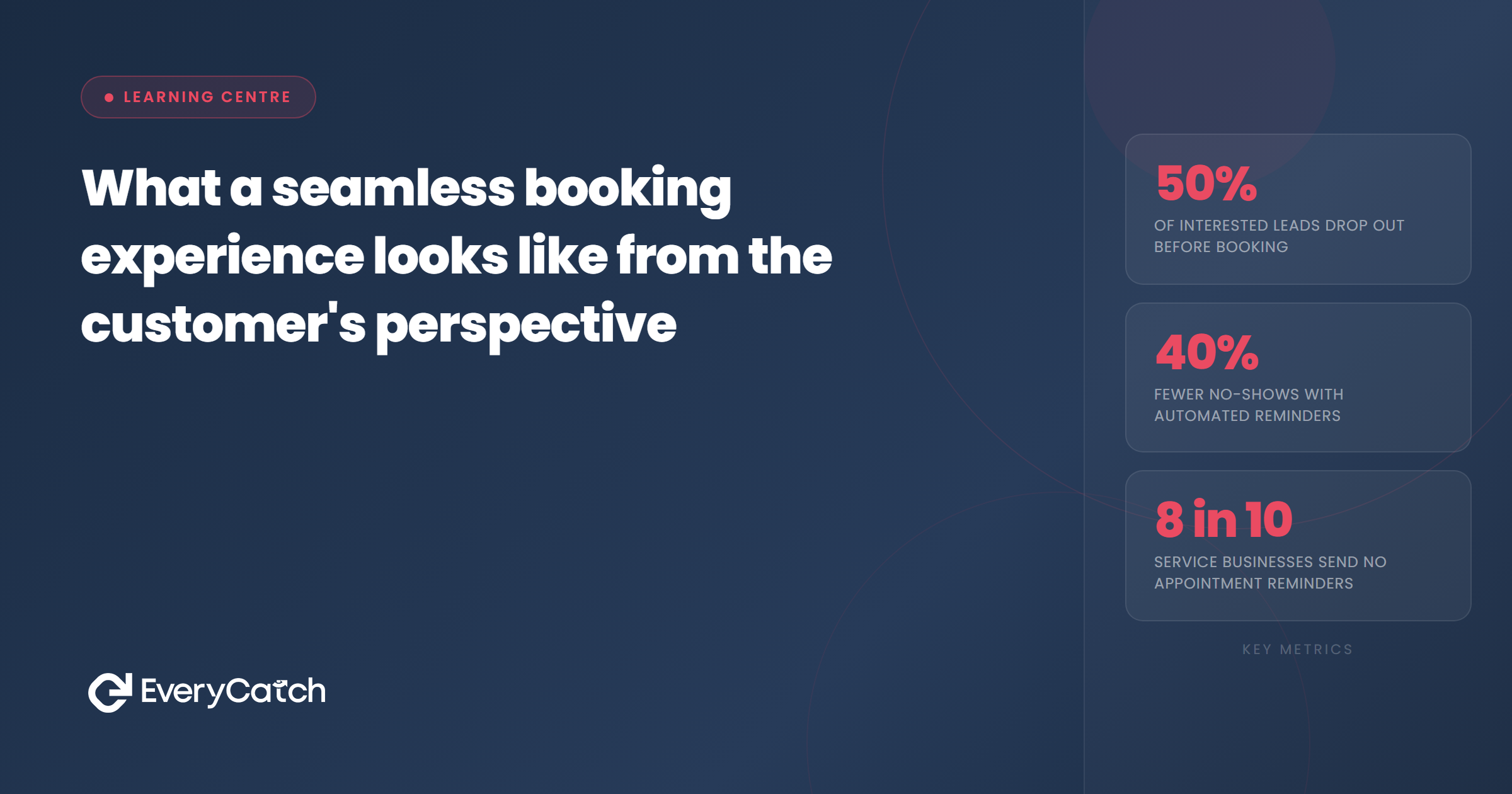
- Customers judge the booking experience by how quickly they got a response, how clear the process felt, and whether they felt confident afterwards.
- The most common friction point is waiting, not the technology itself.
- Confirmation messages matter more than most businesses realise, because they determine whether the customer feels safe about the appointment they just made.
- A good booking experience starts at the first point of contact, not at the calendar step.
- Customers who have a smooth first booking are significantly more likely to return and refer.
The moment a customer decides to book
A potential customer does not start thinking about the booking process when they reach your calendar page. They start the moment they decide they need what you offer. That decision creates a window of intent, and the question is whether your business is easy enough to engage with to keep them moving forward while that intent is strong.
For most service businesses, the enquiry arrives through a phone call, a website form, a text, a Facebook message or a missed call. The customer has made a mental commitment to find someone and get this sorted. What happens next either sustains that momentum or starts to erode it.
The experience from the customer's side is simple: they want to know they have been heard, that someone is going to help them, and that the next step is obvious. That sounds minimal, but a surprising number of businesses fail on all three within the first exchange.
A fast response that confirms the enquiry was received and sets out the next step is the single biggest driver of conversion at this stage. Customers do not expect perfection; they expect acknowledgement. The businesses that get this right are the ones that reply quickly, tell the customer what happens next, and make the path to booking feel short.
The friction points that kill conversion
Every additional step between enquiry and confirmed booking gives a customer a reason to pause. Some of those pauses become decisions to go elsewhere. The friction points that cause this are not always obvious to the business, because they happen on the customer's side of the exchange.
The most damaging is delay. A customer who sends a message at 7 pm and gets a reply the next morning has had twelve hours to reconsider, search competitors or simply lose the urgency that drove them to enquire in the first place. Delay is invisible from the inside and consequential from the outside.
The second is ambiguity. A reply that says "we'll get back to you shortly" without a timeframe tells the customer nothing useful. They do not know whether to wait, whether to call, or whether the message was even read. The uncertainty itself is a form of friction.
Third is unnecessary complexity. Asking a customer to fill out a long intake form before they have even seen whether you have availability sends the wrong signal. Collecting information that is not needed yet, at a stage where the customer just wants to know if you can help, creates resistance that many customers do not push through.
Fourth is inconsistency across channels. A customer who sends an enquiry on Facebook and then calls to follow up should have both attempts handled, not just one. When enquiries disappear into gaps between channels, the customer experiences it as indifference, even if the business simply did not see the message.
What the experience looks like when it works
How does your booking process look from the outside?
We audit and rebuild the enquiry-to-booking journey for service businesses, removing the friction points that cost you customers before they ever confirm.
Book a free discovery callWhen the booking experience works well from the customer's perspective, it feels almost effortless. They reach out, they hear back quickly, the response makes sense, they confirm a time, and they receive something that tells them everything they need to know. The whole thing takes a few minutes and requires no chasing.
Speed is the first element. A response that arrives within minutes, not hours, carries a clear message: this business is on it. That impression colours the rest of the experience, including the customer's expectation of how the service itself will be delivered.
Clarity is the second. The customer should understand exactly what they have booked, when it is happening, what to expect from the service, and how to change the appointment if they need to. A confirmation that contains all of that, without the customer having to ask, removes the anxiety that often follows a new booking.
Reassurance is the third. The customer has handed over a commitment, whether that is a time slot, a deposit, or simply their personal details. A message that confirms the booking and signals that they made the right choice, brief but warm, settles that decision and reduces the likelihood of cancellation.
These three things, speed, clarity and reassurance, do not require expensive technology or a dedicated bookings team. They require a process that makes sure every enquiry receives the same experience regardless of when it arrives or which channel it comes from.
The trust signals that make the difference
Beyond the functional steps, customers read signals during the booking process that tell them whether they are making a safe choice. These signals are rarely explicit, but they shape the decision to confirm, to cancel, or to refer.
A prompt, professional response signals competence. A slow, vague one signals the opposite. This is not fair to businesses that are genuinely excellent at the work but poor at administration, but it is how customers form first impressions.
A confirmation that includes the company name, the name of the service, the date and time, and a contact number signals that the business has its act together. A one-line reply that says "see you Tuesday" does not, because it leaves too many questions unanswered.
Reminders sent before the appointment signal that the business cares about the customer turning up. Customers who receive a reminder the day before do not just turn up more reliably; they also feel more positive about the business in the lead-up to the appointment. The reminder itself is a form of service.
None of these signals are difficult to produce. What they require is consistency, and consistency is what automation provides. When the system sends the same confirmation, the same reminder, the same follow-up every time, the customer always gets the signals that build trust, regardless of whether anyone remembers to send them manually.

From the EveryCatch team
EveryCatch works with service businesses to build booking and follow-up systems that deliver a consistent, professional customer experience from first enquiry to confirmed appointment. The work is set up once and runs automatically from there.