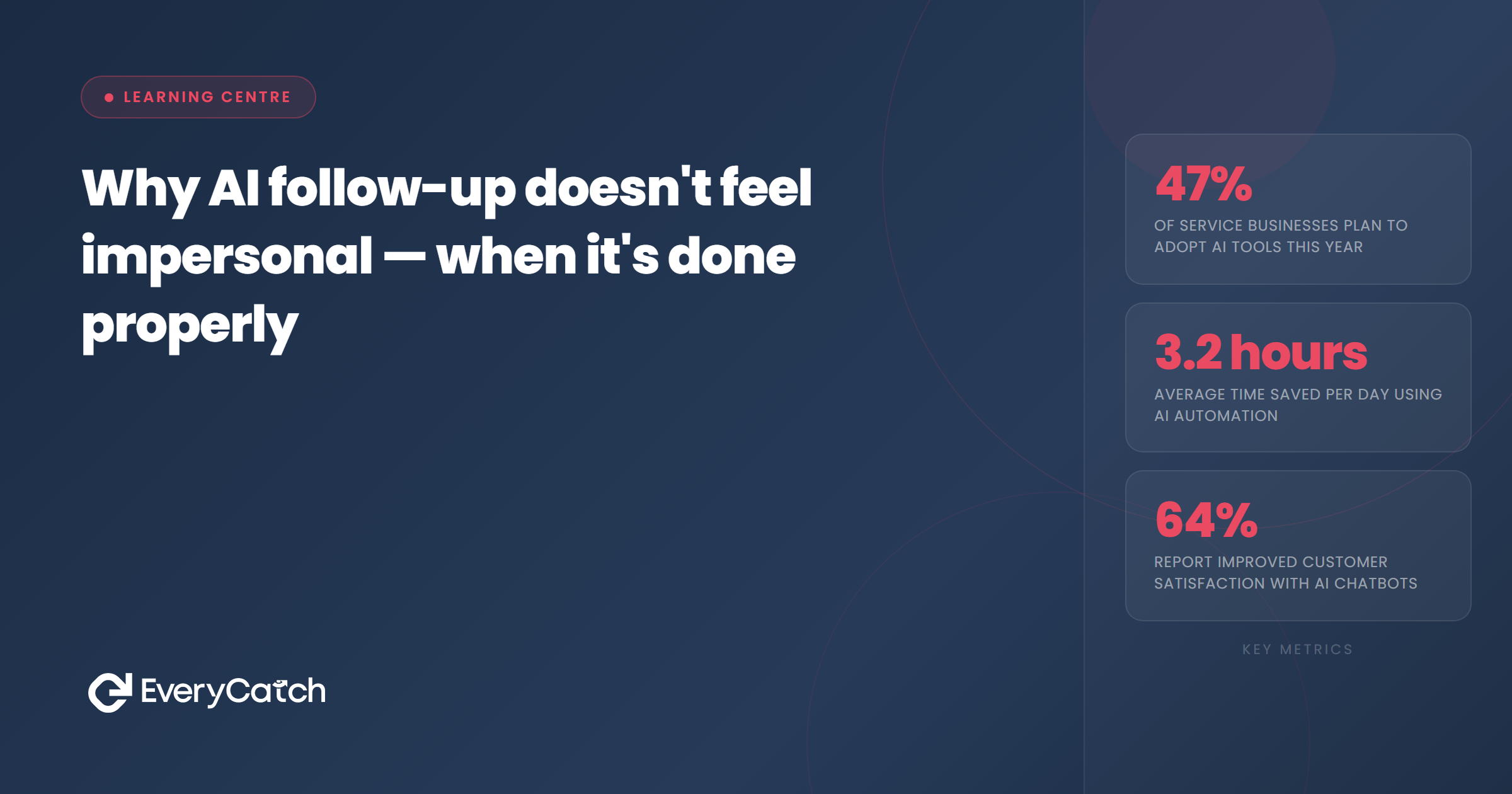
- AI follow-up feels impersonal when it ignores context, timing, and tone, not because it is automated
- A well-configured AI sends the right message at the right point in the conversation, which often feels more attentive than manual follow-up
- The content of the message, not the mechanism that sent it, is what the customer judges
- Context awareness, knowing what the customer enquired about and where they are in the conversation, is what separates good AI follow-up from bad
- Manual follow-up that is late, generic, or skipped entirely is less personal than timely AI follow-up
The critique of AI follow-up usually sounds like this: "It feels cold. It feels scripted. Customers can tell it's automated." And sometimes, that critique is accurate. But the problem it is describing is bad automated messaging, not automated messaging in general.
The same problems exist in manual follow-up when it is done badly. A generic check-in email sent three weeks after a quote, with no reference to the specific job, the conversation that happened, or the customer's situation, feels impersonal too. The mechanism is not what determines the quality of the message. The content and timing are.
Why AI follow-up feels impersonal when it is done badly
There are three specific patterns that make automated follow-up feel cold, and they are all design failures rather than inevitable outcomes.
The first is ignoring context. A follow-up message that could have been sent to anyone, with no reference to what the customer actually asked about, signals that the business did not pay attention. "Just checking in to see if you are still interested" is the worst offender. It is lazy as a manual message and worse as an automated one, because it implies the business could not even be bothered to automate something useful.
The second is wrong timing. A follow-up that arrives immediately after a quote might be too fast. One that arrives after six weeks has missed the moment entirely. Bad timing makes the customer feel like a number on a list rather than a person with a genuine need. The follow-up that arrives three days after the quote, when a customer is likely to have received other quotes and be making comparisons, demonstrates that someone understands the buying timeline.
The third is tone mismatch. A formal, corporate-sounding message sent after what was a friendly initial conversation creates a disconnect. The customer had a relaxed exchange and then received something that felt like it came from a different company. Good AI follow-up maintains the tone of the relationship that was established, not the tone of a generic template.
The article on what AI can actually do for a service business right now covers why timing and context-awareness are where the best AI systems create the most value for service businesses.
What makes AI follow-up feel natural when done properly
AI follow-up that works has three things in common with good human follow-up: it references what the customer actually enquired about, it arrives at a moment that makes sense in the context of the conversation, and it moves the relationship forward rather than just checking in for the sake of it.
Referencing the specific enquiry is not technically difficult. The information is in the original message. An AI system that includes the job type, location, or date mentioned in the original enquiry is not doing anything clever. It is just not ignoring the information it already has. The effect on the customer is significant: they feel heard rather than filed.
EveryCatch's follow-up sequences are built around this principle. Each follow-up in the sequence is triggered by what happened in the conversation before it, not just by the passage of time. If a customer has not responded to a quote, the follow-up takes a different form than if they responded but did not convert. Context determines the message, not just the calendar.
Want to see AI follow-up that reads naturally?
Book a discovery call to see how EveryCatch builds follow-up sequences that feel personal because they are built on context.
Book a free discovery callThe signals a well-configured AI reads before it sends anything
A well-built follow-up system reads several inputs before deciding what to send and when. The initial enquiry content tells it the service type, the urgency level, and any specific requirements mentioned. The customer's response history tells it whether they engaged with the first reply, whether they asked questions, and whether there were any signals of hesitation or enthusiasm.
The pipeline stage matters too. A customer who received a quote and went quiet is in a different position than a customer who booked an appointment and then did not show up. Both need follow-up, but the right message for each is completely different. An AI that cannot tell the difference between those two situations will send the wrong message to at least one of them, which is worse than sending nothing.
This is where investing time in configuring a follow-up system pays off. The logic, what to send when and to whom, is built once and then runs reliably. Manual follow-up depends on someone remembering to do it at the right time, having the right information available when they do, and finding the words in the moment. AI removes all three of those failure points.
Why context-aware AI follow-up outperforms templated messages
The gap between a context-aware follow-up and a templated one is the gap between a message that the customer reads and a message that goes straight to deleted items. Templated messages exist because they are easy to write. Context-aware ones require more thought at the setup stage, but they perform measurably better in terms of response rates.
A useful test: would this message make sense to someone who had never been in contact with the business before? If yes, it is a template. If it genuinely relies on something specific about that customer's conversation, it is context-aware. Most recipients can tell the difference immediately, and their level of engagement reflects it.

From the EveryCatch team
EveryCatch follow-up sequences are built around conversation context, not generic schedules. The logic runs once, reliably, for every lead, without anyone having to remember to do it.