
- The content of your first reply matters as much as its speed — a generic response wastes the advantage of responding quickly
- Reference something specific from the enquiry to show the prospect they were actually read, not processed
- Ask one focused question rather than a list — multiple questions slow momentum and feel like a form
- Always include a concrete next step so the prospect knows what to do and what happens next
- Avoid common errors: brochure dumps, vague promises to "be in touch", and overly formal language on informal channels
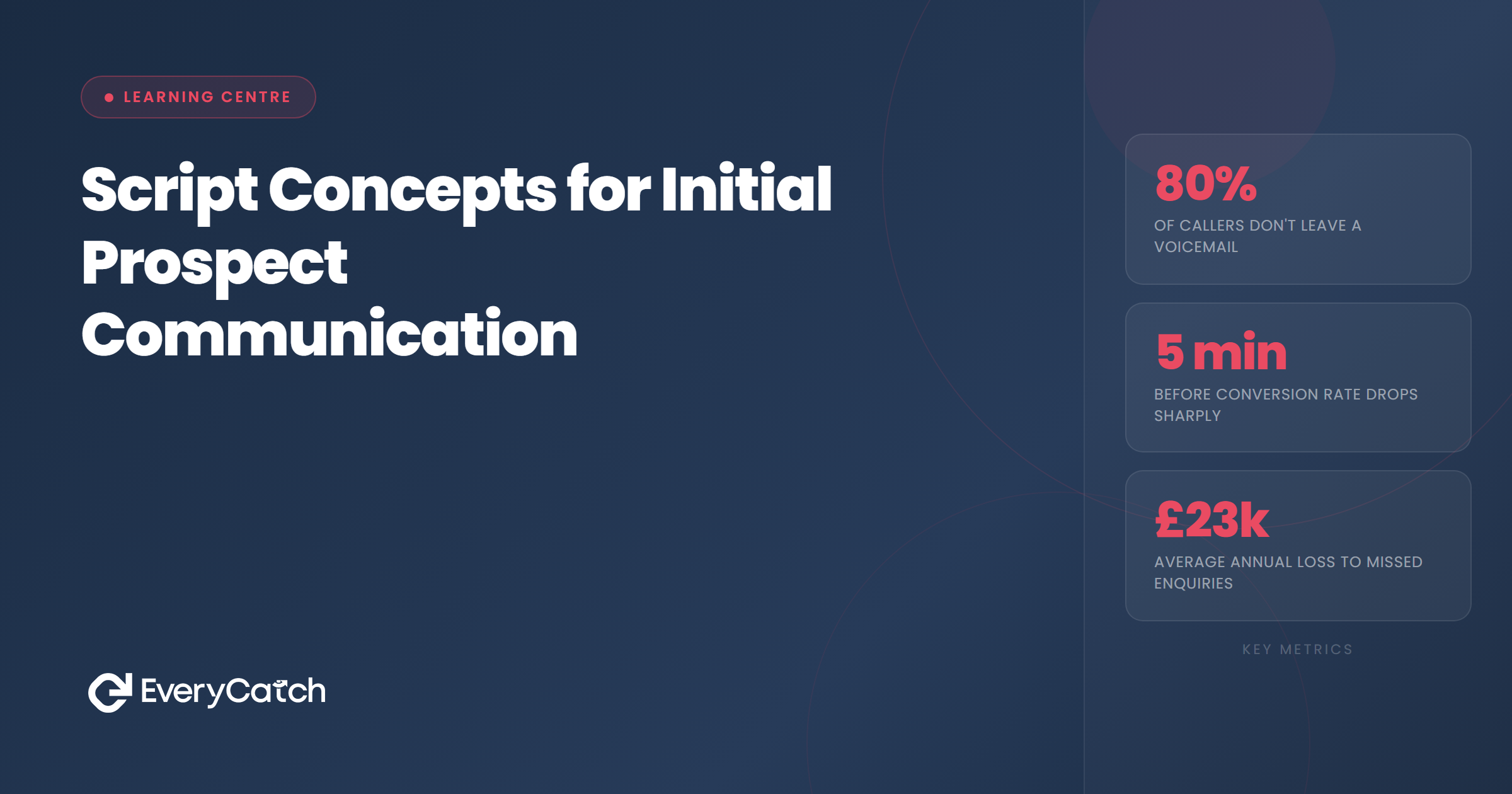
There is a lot of attention placed on how fast a business responds to a new enquiry. Research supports the focus. The difference in conversion between responding within five minutes and responding after an hour is significant, and the gap widens further the longer a reply takes.
But speed is only part of the equation. A response that arrives quickly and says nothing useful does not move the conversation forward. In some cases it actively damages it, because the prospect receives confirmation that the business is present but not paying attention.
The content of that first reply carries more weight than most businesses recognise. It shapes the prospect's first impression, sets the tone for the relationship, and determines whether the conversation continues or quietly stalls.
Start with what they told you
The simplest way to make a first response feel personal is to reference something specific from the enquiry. This sounds obvious, but the majority of automated and templated responses ignore it entirely. They open with the business name, a general greeting, and a promise to get back in touch — none of which shows the prospect that anyone actually read what they sent.
If someone submits a web form saying they need a landscaper for a new build in Winchester and want the work done before summer, the first response should acknowledge at least one of those details. "Thanks for getting in touch about your Winchester project" is a better opening than "Thanks for your enquiry." Both take the same amount of time to write. One tells the prospect you read their message; the other suggests you did not.
This is where well-configured AI has a genuine advantage over a fixed template. It can pull specific details from the enquiry and weave them into the response. A static acknowledgement cannot. This is one of the reasons the quality gap between a generic automated reply and a trained AI response is larger than people expect.
The broader principle is that your first response should feel like it was written for this specific person, not broadcast to everyone who fills in the form. Why automated response does not mean impersonal response covers this in more depth.
Ask one question, not five
When a business wants to qualify a new lead, the temptation is to ask everything at once. What is your budget? What is the timeline? What is the size of the property? Have you had quotes before? What is the postcode?
From the business's perspective, this feels efficient — gather all the information in one go and avoid back-and-forth. From the prospect's perspective, it reads as a chore. They sent a message to explore whether this business might be the right fit, and they have been handed a questionnaire in return. The effort required to reply increases, and many people simply do not bother.
A more effective approach is to identify the single most important qualifying question and ask only that. The information you cannot proceed without. If that is the location, ask the location. If it is the scope, ask the scope. Keep everything else for the next exchange once they have replied.
One question keeps the conversation moving. It also signals confidence. A business that knows exactly what it needs to know first comes across as more organised than one that throws everything at the wall.
Offer a clear next step
A first response without a clear next step leaves the prospect unsure what to do. They have received a reply, but nothing tells them how to progress. The conversation stalls, not because the prospect lost interest, but because there was no prompt to continue.
The next step should be specific and easy to take. "Book a call at a time that suits you" with a booking link is better than "we will be in touch to arrange a convenient time" with no link. "Reply with your postcode and we can confirm whether we cover your area" is better than "we look forward to hearing more about your requirements." One is actionable; the other is a holding pattern.
The next step does not have to be a sales call. It can be a short question that advances the qualification. It can be a link to a page that answers common questions about your process. It can be an invitation to book a site visit. What it cannot be is nothing.
Consider what the prospect needs at this stage of their decision. They are almost certainly still evaluating options. Your next step should make it easy to progress with you specifically, without requiring significant effort on their part. A booking link removes friction. A clear call-to-action removes ambiguity. Both increase the chance that the conversation continues.
Want to see what a well-configured first response looks like?
Book a discovery call and we can walk through how EveryCatch handles new enquiries — from acknowledgement to appointment, without a person needing to be present.
Book a free discovery callWhat good first responses do differently
The best first responses share a few consistent characteristics, regardless of the industry or the channel they arrive on.
They are short. A first response is not a brochure. It should be a few sentences: acknowledgement, one question, next step. The prospect has not yet committed to this business. They do not need a full explanation of the company history or a list of all services offered. They need enough to feel confident and to take the next step.
They match the channel. A WhatsApp message that reads like a formal email feels wrong. A web form reply that reads like a text message can feel unprofessional in certain sectors. The register of the response should fit the medium. Conversational on conversational channels. More structured where that is appropriate.
They are warm without being excessive. "Brilliant to hear from you!" is not a response to an enquiry about a boiler repair. Neither is a cold, formal "Your enquiry has been received." A natural, direct tone lands better than either extreme.
They set a clear expectation. If a human will follow up by phone in the morning, say so. If the next stage is a site visit, explain how that gets arranged. Prospects who know what is coming do not feel the need to chase or shop elsewhere in the meantime.
The connection between these qualities and conversion is covered in more detail in why fast response rates close more deals — though the principle there applies equally to the quality of the response as to its speed.
Mistakes that undermine an otherwise fast response
Speed without quality is a partial solution. These are the most common ways a timely first reply fails to do its job.
Sending a brochure or PDF as the first response. This tells the prospect to go away and read something rather than engaging in a conversation. Most do not read it. Those who do are now in research mode rather than dialogue mode, which is a harder place to convert from.
Promising to call without giving a time. "We will give you a call shortly" creates uncertainty. The prospect does not know when to expect the call, whether to pick up if they are in a meeting, or what to do in the meantime. A specific time or a booking link is always better.
Using overly formal language on informal channels. On WhatsApp in particular, a message that reads like it was composed by a legal team creates distance. People message informally because they expect a human exchange. A response that feels corporate immediately signals that the conversation will be bureaucratic.
Ignoring the specifics of the enquiry. A generic reply after a detailed enquiry tells the prospect they were not read. If someone has taken the time to explain their situation in some detail, the first response should reflect at least some of that back. Failing to do so is a signal about how the business will operate if they become a client.
Burying the next step. If there is a booking link or a key question, it should be prominent. A response where the call-to-action sits at the bottom of several paragraphs will be missed by a significant proportion of readers. Put the next step where it cannot be overlooked.
For more on the mistakes that cost service businesses leads, see what service businesses get wrong about lead response.