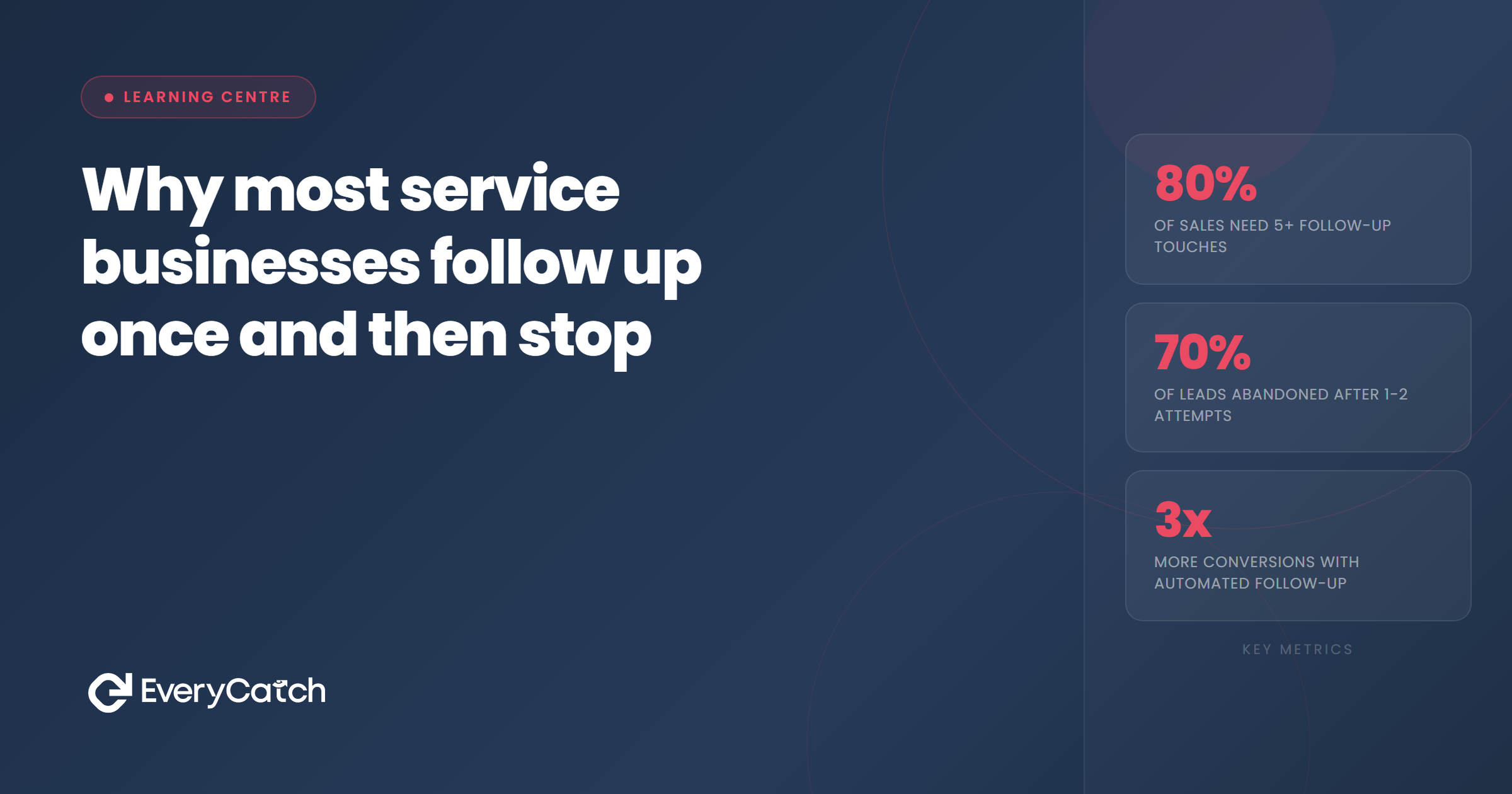
- The average service business stops following up after one attempt, leaving 60–70% of leads uncontacted
- Business owners stop because they lack systems, feel uncomfortable persisting, and never measure the loss
- Buyers genuinely need multiple touchpoints before they're ready to book, so stopping early looks like disinterest from their side
- The compound cost of single-attempt follow-up can exceed £50,000 per year in lost revenue for a typical local service business
- Businesses that automate persistent, respectful follow-up typically convert 2-3x more leads from the same traffic
You get a lead. Someone fills in the form, calls while you're out, or messages on Facebook. You call back or reply once, maybe twice if you're organised. They don't answer. You move on. Three weeks later, you see they've booked with a competitor.
This pattern happens thousands of times every day across the country. The lead was real. The buyer was genuinely interested. But somewhere between the first attempt and the booking, the thread broke.
Most service businesses do not follow up systematically. They follow up once, perhaps twice if the lead looks promising, and then stop. The lead file goes cold. The business owner tells themselves the buyer wasn't serious or found someone cheaper. In reality, the buyer simply moved on to a business that stayed visible.
The single-attempt pattern
When you look at CRM data from service businesses without automated follow-up, the pattern repeats itself. One outbound call. One email. One text message. Then silence. The median number of follow-up attempts across trades, professional services, and home improvement businesses sits somewhere between 1.2 and 1.8, depending on the sector.
That figure includes the initial response, which means the typical follow-up sequence looks like this: you get the lead, you respond, they don't reply, you try once more a day or two later, then the trail goes cold. The lead moves into a "dead" column in your spreadsheet or CRM. You assume they weren't ready, or that they were just shopping around.
Research from multiple sales and CRM platforms consistently shows that 60–70% of leads never receive more than two contact attempts. For businesses relying on organic enquiries, this number often climbs higher. The business owner is busy, there's work to do, and chasing someone who didn't answer feels like a poor use of time.
The same research shows that 80% of sales require five or more follow-up touches before conversion. That gap between one or two attempts and five-plus touches represents the difference between a functioning sales process and a leaky bucket.
Why follow-up stops after one try
There are three structural reasons why most service businesses stop after the first attempt.
First, there is no system. The business owner responds to leads manually. If they're on site, or with a customer, or dealing with a supplier issue, the lead waits. By the time they get around to following up again, a day has passed. Then two. The urgency fades. The lead drops down the list. Eventually, it falls off the edge.
Second, business owners believe that persistence equals pestering. Nobody wants to be the person who calls five times and leaves four voicemails. It feels intrusive. Many owners assume that if someone doesn't reply, they're not interested, and continuing to follow up would annoy them. This belief is understandable but incorrect.
Buyers expect follow-up. They've reached out to multiple businesses. They're busy. They forget. A polite, well-timed message a few days later does not irritate them. It reminds them you exist and that you care about their enquiry. The businesses that stay in touch are the ones that get the booking.
Third, there is no visibility of the cost. The business owner does not see a report each week showing how many leads went cold after one attempt. They don't know that 40 leads in the last quarter never received a second follow-up. They just see the leads that converted, and assume the rest weren't viable. The invisible loss never gets measured, so it never gets fixed.
The psychology of stopping
Business owners stop following up because it feels uncomfortable. Each unanswered call or ignored message reinforces the sense that you're bothering someone who doesn't want to hear from you. After two or three attempts, the psychological cost of continuing outweighs the potential benefit of one more booking.
This is where automated follow-up changes the equation. When the system sends the message, the emotional friction disappears. There is no awkwardness. The message goes out at the right time, in the right tone, without requiring you to overcome the discomfort of manual persistence.
The other psychological factor is optimism bias. Business owners assume that the leads they lose weren't real opportunities. If someone was genuinely interested, they'd have replied. This belief protects the owner from feeling like they've failed, but it also prevents them from building the system that would capture those opportunities.
Most leads are real. They just needed more time, more reminders, or a different channel. The buyer who didn't answer your call might have opened your text. The one who ignored your text might respond to an email with a calendar link. Follow-up is not about convincing people who don't want your service. It's about staying present for the people who do, but need a few more prompts before they're ready to commit.
How many leads are you losing to single-attempt follow-up?
Book a call and we'll show you exactly where your leads are falling through the cracks.
Book a free discovery callThe compound cost
When you calculate the financial impact of stopping after one follow-up, the numbers become uncomfortable. Assume a local service business generating 100 leads per month. If 40% of those leads receive only one follow-up attempt, and 50% of those would have converted with persistent follow-up, you've lost 20 bookings per month.
At an average job value of £500, that's £10,000 per month or £120,000 per year in lost revenue. Even if the conversion rate with better follow-up is more conservative, say 25%, you're still looking at £60,000 per year walking out the door because nobody sent a third text message.
The cost is invisible because it doesn't appear on any report. You don't see "£10,000 lost to inadequate follow-up" in your accounts. You just see the revenue you did generate, and assume that's the limit of what was available.
The compounding effect makes this worse over time. A business that captures 30% more leads this year grows its reputation, gets more referrals, and attracts better customers. A business that lets 40% of its leads slip away stays flat or declines, then blames the market, the competition, or the quality of leads.
What persistence looks like
Persistent follow-up is not aggressive. It is consistent, respectful, and multi-channel. A well-designed follow-up sequence might look like this:
- Immediate auto-reply confirming receipt of the enquiry
- Phone call within five minutes (or automated text if unanswered)
- Second text message 24 hours later with a calendar link
- Email 48 hours later with case studies or examples
- Final text message after five days offering one last booking slot
Each touchpoint adds value or removes friction. You are not repeating the same message five times. You are guiding the buyer through a process, making it progressively easier for them to book. By the fifth touchpoint, if they still haven't responded, you can confidently assume they're not ready or not interested. But at least you know you gave them every opportunity.
Businesses that implement this type of sequence typically see conversion rates double or triple compared to their previous single-attempt approach. The leads are the same. The traffic is the same. The only variable that changed was the system.
Automated follow-up systems remove the manual burden and the psychological discomfort. The business owner does not have to remember to send the third message or feel awkward about leaving another voicemail. The system handles it, consistently, for every lead, without exception.
The alternative is to keep doing what most businesses do: respond once, hope for the best, and wonder why competitors seem to close more of the same leads. The only difference is that the competitor followed up five times while you stopped at one.

From the EveryCatch team
We've built automated follow-up systems for hundreds of service businesses and watched conversion rates climb by 150–300%. The pattern is always the same: businesses that persist, respectfully and systematically, win more work from the same leads.