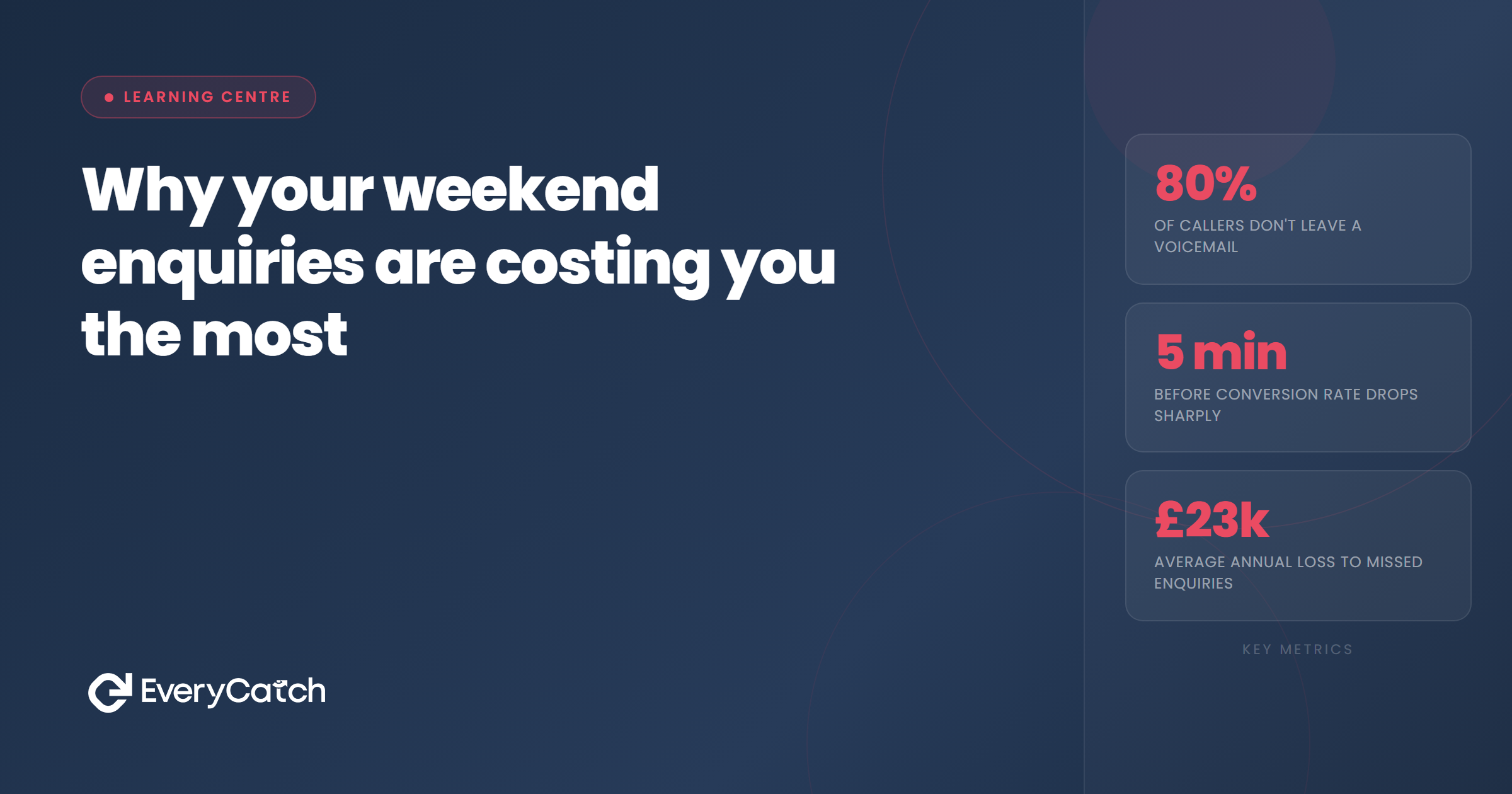

- Weekend enquiries typically wait 36-72 hours for a response, compared to 4-6 hours for weekday leads
- Leads that convert within 24 hours require two fewer follow-up touches on average, reducing cost per acquisition
- Weekend enquiries are often higher quality because people research in their own time, making the delay more damaging
- Automated instant response for weekend leads levels the playing field without requiring weekend staffing
- The true cost includes both lost revenue and wasted marketing spend on leads that never get a fair chance
Weekend enquiries sit in your inbox until Monday morning. Then they sit a bit longer while you work through urgent emails and put out fires. By the time you respond, 48 hours have passed. The lead has moved on.
This happens to every service business. The difference is that some businesses now respond to weekend leads in under a minute, and those businesses win the work. The ones that wait until Monday are funding their competitors' growth.
The weekend delay pattern
The typical pattern looks like this. Someone searches for your service on Saturday afternoon. They fill in your contact form. The automated reply confirms you received their enquiry and says you'll be in touch. Then nothing happens.
You open the inbox on Monday at 9:00am. There are 37 emails. You deal with the most urgent ones first. Around 11:00am, you start working through enquiries. The weekend leads are mixed in with everything else. By the time you respond, it's Monday lunchtime. That's 44 hours if they enquired Saturday afternoon, 68 hours if they enquired Sunday morning.
The research is clear on what happens during that delay. After five minutes, your odds of making contact drop by 10 times. After an hour, they drop by another factor. By the time Monday arrives, you're competing with five or six businesses who responded faster. One of them responded while the potential customer was still on their website.
The weekend delay pattern costs you in three ways. You lose the lead entirely because they book elsewhere. You reduce conversion rates on the leads that do still respond. And you waste the marketing money that brought them to your door in the first place.
Why weekend leads cost more
Cost per acquisition is simple maths. You spend a fixed amount on marketing. You convert a percentage of those leads. The lower your conversion rate, the higher your cost per lead that actually turns into paying work.
Weekend leads have lower conversion rates because of the delay. When you respond 48 hours later, half the leads have already made a decision. They booked a competitor, gave up, or decided not to proceed at all. Your conversion rate on weekend enquiries might be 15%, compared to 35% for weekday leads you respond to quickly.
That difference matters more than most businesses realise. If you spend £2,000 per month on Google Ads and generate 80 enquiries, you're paying £25 per enquiry. If 30 of those enquiries come in on weekends and convert at half the rate of your weekday leads, you're effectively paying £50-60 per converted weekend lead. The same marketing budget is producing dramatically different returns depending on when the lead arrives.
The math compounds when you factor in follow-up costs. Leads that convert quickly need fewer touches. You send one or two emails, make one or two calls, and close the work. Delayed leads need five or six touches. You're chasing people who've already started conversations with competitors. You're trying to resurrect interest that's gone cold. That follow-up time has a cost, even if you don't invoice yourself for it.
How many weekend leads are you actually losing?
We'll show you exactly what's happening to your enquiries outside business hours.
Book a free discovery callThe quality factor
Weekend enquiries are often better quality than weekday enquiries. This is the part that makes the delay so damaging. You're not just losing any leads. You're losing the good ones.
People who enquire at weekends are doing research in their own time. They're not squeezing a quick form fill between meetings. They're sitting at home, laptop open, comparing options properly. They read your entire website. They check reviews. They think about exactly what they need. When they fill in your form, they give you proper information.
These leads are more likely to be ready to book. They're past the initial research phase. They've narrowed down their options. They know what they want. All they need is a conversation to confirm you're the right choice and sort out timing and price.
That's why the weekend delay is so expensive. You're leaving the most ready-to-buy leads sitting in your inbox for two days while they complete the same comparison process with competitors. The competitor who responds instantly gets to have that conversation first. They build rapport. They demonstrate they're organised and responsive. They book the job.
The quality factor also affects lifetime value. Weekend enquirers who do convert, despite the delay, tend to be better customers. They were already predisposed to choose you. They waited for your response when they could have booked elsewhere. These are the customers who leave good reviews, refer friends, and come back for repeat work. When you lose weekend leads, you're not just losing a single job. You're losing the multiplier effect of a good customer relationship.
Your competitor's advantage
The businesses that win weekend enquiries have one thing in common. They respond immediately. Not quickly. Immediately. Under 60 seconds in many cases.
They do this with automation. Not because they're working weekends, but because they've set up systems that respond the moment an enquiry arrives. The potential customer fills in a form, gets an immediate text message confirming you've received their details, and receives a link to book a call or get a quote started. All of this happens automatically.
That immediate response changes everything. The potential customer is still engaged. They're still on your website or they've just closed it. They haven't moved on to the next option yet. When you reach them in that moment, you're not competing with five other businesses. You're having a conversation with someone who's actively interested in what you offer.
The competitive advantage compounds over time. When your conversion rate on weekend leads matches your weekday rate, you're getting 20-30% more customers from the same marketing spend. That extra revenue funds better marketing, which brings in more leads, which compounds the advantage further. Meanwhile, businesses still checking emails on Monday morning are stuck in a cycle where their weekend leads subsidise their competitors' growth.
How to fix it
You have three options for weekend enquiries. Staff your office seven days a week, accept the poor conversion rates, or automate your response.
Weekend staffing is expensive and often impractical for small service businesses. You need someone monitoring the inbox, ready to call leads within minutes. The cost of that staffing eats into margins, especially if weekend enquiry volume is inconsistent.
Accepting poor conversion rates means leaving money on the table. If you're spending on marketing to generate weekend leads, you need those leads to convert at reasonable rates. Otherwise you're just funding wasted opportunities.
Automation is the practical answer for most businesses. When an enquiry arrives, the system sends an immediate text message and email. The text confirms you've received their details and includes a link to book a call or start a quote. The email provides more detail about your process and what happens next. The whole thing happens in under 60 seconds, completely automatically.
That immediate response keeps the lead warm until you can follow up properly on Monday. But more importantly, it often captures the lead before they contact competitors. People who book a call or start a quote process are much more likely to convert. They've taken another step in the journey. They're invested.
The automation doesn't replace human follow-up. It creates the conditions for successful follow-up. When you call on Monday, you're speaking to someone who already received a response, took action on that response, and is expecting to hear from you. Your conversion rate on those calls is dramatically higher than on calls to people who've been waiting two days for acknowledgement.
Some businesses worry that automation feels impersonal. The opposite is true. What feels impersonal is waiting two days for a response. Immediate acknowledgement feels professional and organised. It signals that you value the enquiry enough to have systems in place. The personal touch comes in the follow-up conversation, not in the initial acknowledgement timing.

From the EveryCatch team
We built EveryCatch specifically to solve the weekend enquiry problem. Automatic text and email response in under 60 seconds, lead tracking that shows you exactly what's happening to every weekend enquiry, and appointment booking that captures leads while they're still interested.