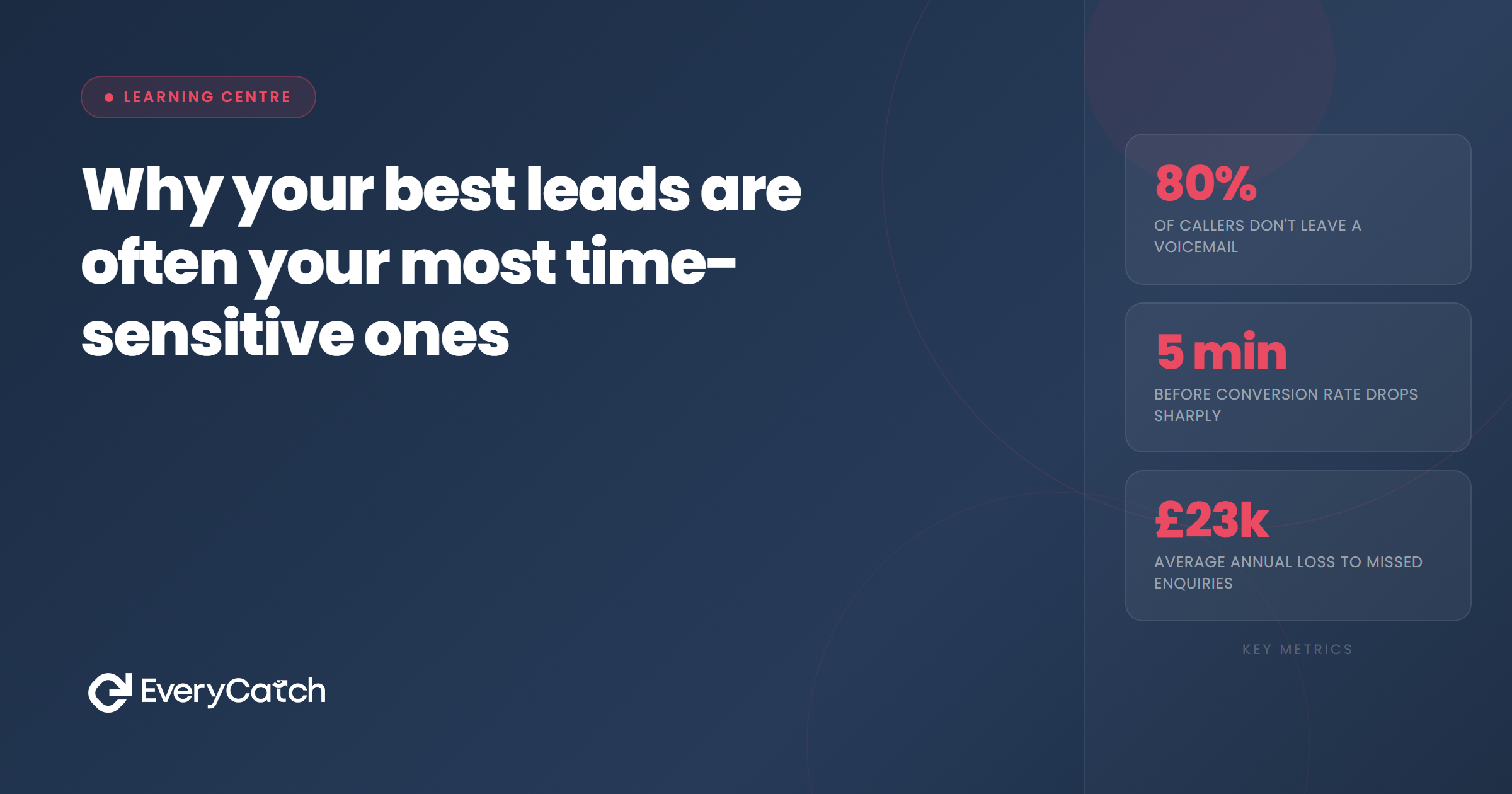

- Time-sensitive leads show higher intent because they have an urgent problem they need to solve immediately
- These leads contact multiple businesses at once, so your response window is much shorter than you think
- The first business to respond often wins the job, not necessarily the cheapest or most qualified
- Customers you win during urgent moments tend to stay longer because trust is built quickly under pressure
- Slow response times cause you to lose your highest-value prospects to faster competitors
The people calling you at 7pm on a Tuesday evening, or filling out your form on a Saturday morning, are not casual browsers. They have a problem right now, and they want someone to fix it. That makes them excellent prospects. It also makes them incredibly easy to lose.
When someone contacts you with urgency, they're showing the strongest possible buying signal. They've already decided they need help. They've already allocated budget. They're ready to move. The only question left is who they'll hire.
The uncomfortable truth is that your best leads are the ones you're most likely to lose if you wait. Because urgent customers don't wait around to hear back from you. They keep calling until someone answers.
Urgency equals intent
Customer urgency is one of the clearest predictors of conversion. Someone who needs a plumber tonight will book faster than someone who's planning a bathroom renovation for next spring. Someone whose boiler has just broken will hire whoever gets back to them first, not whoever has the slickest website or the cheapest quote.
Urgency removes friction from the decision process. Normally, people research, compare, think it over, ask for references. But when there's a leak, a breakdown, or an emergency, those steps get compressed. The job goes to whoever shows up when the customer needs them.
That's why time-sensitive leads convert at higher rates. They're not window shopping. They're not collecting three quotes to sit on for a week. They have an active problem, and they're ready to pay someone to solve it today.
But urgency also means competition. Because if a customer is contacting you urgently, they're almost certainly contacting other businesses at the same time. Which brings us to the real problem.
The problem with great timing
You'd think that being contacted by someone who's ready to buy would be a gift. And it is, provided you respond while they're still waiting. The moment you delay, the advantage flips.
When you don't respond quickly to an urgent enquiry, several things happen. The customer assumes you're too busy to take on new work. They assume you're not interested. Or they simply move on because they can't afford to wait.
Meanwhile, your competitor picks up the phone. They respond to the web form. They offer to come round this afternoon. Suddenly your great lead is their customer, and you never even knew you were in the running.
Service businesses lose more high-intent leads to slow response times than to price, quality, or reputation. The best prospects don't stick around waiting for you to notice them. They go to whoever's ready to help right now.
How customers shop in parallel
When someone has an urgent problem, they don't contact one business and wait politely for a reply. They contact three or four at the same time. They call, they fill out forms, they send messages. Then they hire the first one who gets back to them with a sensible answer.
This is why response time matters more than almost any other factor when dealing with urgent enquiries. You're not competing on quality at this stage. You're competing on availability and speed.
The customer doesn't know if you're better than your competitor. All they know is that your competitor replied, and you didn't. That's enough to make the decision for them.
This parallel shopping behaviour is invisible to you unless you're tracking it. You see an enquiry come in, and you think you have time to get back to them tomorrow. What you don't see is that the same person has already spoken to two of your competitors, and they're about to book with the one who answered their call.
How many leads are you losing to slow responses?
Find out where your enquiries are going and how fast your competitors are moving.
Book a free discovery callThe winner is usually first
In most service industries, the first business to respond to an urgent enquiry wins the job more than 60% of the time. Not the cheapest. Not the one with the best online reviews. The first one to actually engage with the customer.
This seems unfair until you put yourself in the customer's position. You've got a broken boiler, or a blocked drain, or a leak that's getting worse. You've contacted four plumbers. Three haven't replied yet. One picked up the phone, asked a few sensible questions, and said they can come this afternoon.
Do you wait to hear from the other three? Or do you book the one who's already talking to you?
Most people book. They don't want to keep shopping around. They want the problem fixed. And the person who answered the phone has already shown they're available, responsive, and interested.
That's a huge advantage. But it only works if you're the one picking up first. If you're the second, third, or fourth business to reply, you're too late. The job's already gone.
The retention bonus
There's a second benefit to winning urgent leads, beyond the immediate job. Customers you acquire during moments of urgency tend to stick around longer than those who came through slower, more deliberate channels.
When you help someone solve an urgent problem, trust gets built quickly. They remember that you showed up when they needed you. That creates a strong foundation for a longer relationship.
Compare that to a customer who contacted five businesses, got five quotes, and eventually picked you because you were £50 cheaper than the next option. That customer has already demonstrated they'll shop around for price. They're more likely to leave you next time someone undercuts your quote.
Urgent customers, by contrast, often become loyal customers. They're not price shopping. They're relationship shopping. And if you treat them well during their moment of need, they'll come back.
That makes fast response times even more valuable. You're not just winning one job. You're building a base of customers who trust you to be there when it matters.

From the EveryCatch team
We help service businesses capture and respond to every enquiry before competitors do. Our systems ensure no lead is left waiting, so you win the jobs your competitors are sleeping through.