- The fifth follow-up often converts better than the first because it reaches prospects when they're ready, not when you are
- Early follow-ups filter out tyre-kickers, while later ones engage serious buyers who need time to decide
- Most businesses quit after two attempts, leaving the majority of revenue opportunity untouched
- Persistence signals commitment and builds trust, which matters more as purchase decisions get larger
- Automated sequences let you maintain consistent, spaced contact without manual effort
Service business owners hear the same advice repeatedly: follow up fast, follow up early, strike while the iron's hot. The first contact matters, they're told, and in some ways that's true. But the data tells a more interesting story.
When you analyse conversion rates across follow-up sequences, something unexpected happens around the fourth, fifth, or sixth touch. Response rates climb. Engagement increases. Conversations turn into bookings. The fifth follow-up, which most businesses never send, frequently outperforms the first one they did.
This article explains why that happens, what it means for your follow-up strategy, and how to structure sequences that reflect buyer behaviour rather than seller convenience.
Timing beats eagerness
The first follow-up happens on your schedule. The prospect filled out a form, called your number, or requested a quote, and you responded. That's good practice. But your timing and theirs rarely match.
They might have been doing preliminary research. They could be comparing three other companies. Perhaps they need approval from a partner, or they're waiting for a tax refund, or they're just looking ahead to next quarter. Your speed doesn't change their situation.
The fifth follow-up arrives later, when more of those variables have resolved. Budgets get confirmed. Competing quotes arrive and disappoint. The problem you solve becomes more pressing. The person who needed to be consulted finally weighs in. Later follow-ups catch people at moments when buying makes sense for them, not just when selling made sense for you.
Timing matters more than enthusiasm, and later touches land during better windows.
The early drop-off effect
Early follow-ups serve a useful function: they filter out low-intent contacts. Someone who was browsing out of boredom, testing your response time, or gathering information for someone else will usually ignore the first message. That's fine. Those people were never going to convert anyway.
What businesses often miss is that serious buyers also ignore the first follow-up. They're not ready yet. They have questions they haven't formulated. They're still in research mode. Ignoring an early message doesn't signal disinterest, it signals normal human purchasing behaviour.
By the time your fifth follow-up arrives, casual browsers have moved on. The people still in your pipeline are the ones with genuine interest and slower decision cycles. Your message no longer competes with a dozen other urgent things. It arrives in a clearer field, to an audience that's more receptive because they're closer to making a decision.
Early follow-ups clear out noise. Later ones reach the signal.
Are you leaving revenue in your follow-up sequence?
We'll analyse where your current process drops leads and show you what consistent follow-up could recover.
Book a free discovery callWhy later follow-ups win
Several forces work in favour of later touches. The first is familiarity. By the fifth message, your name isn't new. The prospect has seen your company multiple times, which builds a baseline level of recognition and trust. That matters more than most businesses realise.
The second is self-selection. People who stay engaged through multiple follow-ups have higher intent. They haven't unsubscribed, blocked your number, or asked to be removed. Their continued presence in your sequence is a signal, even if they haven't responded yet.
The third is changed circumstances. A week or two is enough time for situations to shift. The project that was tentative gets approved. The current provider disappoints. The budget frees up. Later follow-ups benefit from entropy working in your favour.
The fourth is persistence as a signal. Consistent, professional follow-up demonstrates that you're organised, reliable, and interested in their business. For high-value services, where trust determines buying decisions, that persistence becomes part of your value proposition. Competitors who gave up after one email told the prospect something about their commitment level.
What the data shows
Industry studies on follow-up sequences consistently find similar patterns. Conversion rates per touch tend to peak somewhere between the fourth and seventh contact, depending on the service type, price point, and sales cycle length.
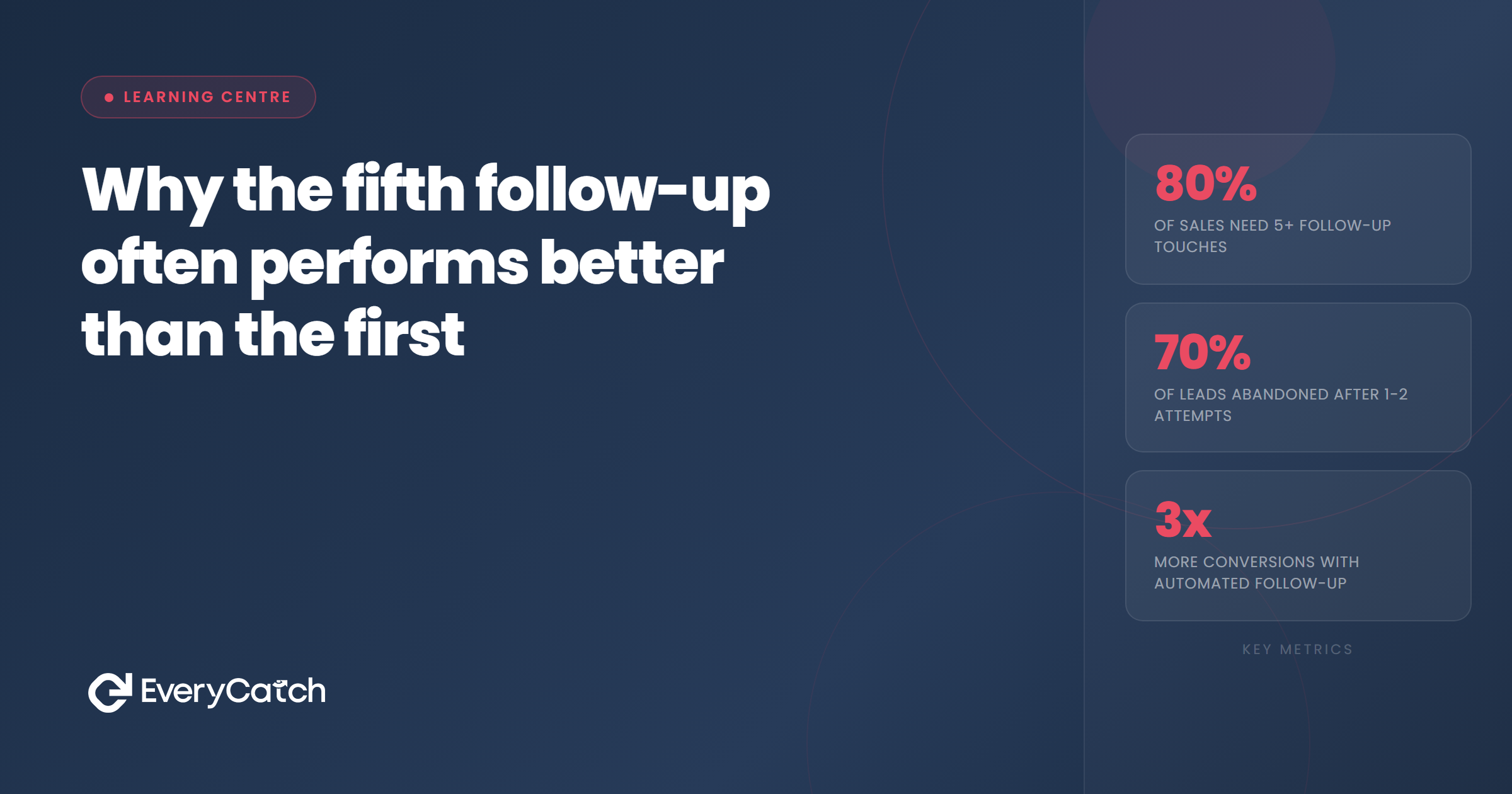
One widely cited study found that 80% of sales require five or more follow-ups, yet 44% of salespeople give up after one. Another found that response rates on the sixth follow-up often matched or exceeded the second. The exact numbers vary by sector, but the trend holds across categories.
Service businesses with higher transaction values see even more pronounced effects. When someone is choosing a builder, solicitor, accountant, or consultant, they take longer to decide. Follow-ups that arrive two, three, or four weeks after initial contact frequently perform better than the first-day response because that's when decisions actually get made.
The exception is emergency services, where immediacy drives everything. If someone needs an emergency plumber or locksmith, later follow-ups are pointless. But for planned, considered purchases, which describe most service business revenue, later touches win.
Building a sequence that reflects reality
If later follow-ups perform better, your sequence structure should reflect that. Too many businesses send three messages in four days, then stop. That's exactly backwards. You should be spacing touches out and committing to a longer timeline.
A well-designed follow-up sequence for service businesses might look like this. First contact happens immediately, confirming receipt and setting expectations. Second touch arrives after one or two days, offering value like a relevant guide or case study. Third comes a few days later with a light check-in.
Then spacing increases. Fourth follow-up arrives a week later, reframing the offer or highlighting a different benefit. Fifth comes another week after that, perhaps sharing a customer story or addressing a common objection. Sixth arrives two weeks later still.
The sequence extends across six to eight weeks, with each message spaced further apart. That matches the timeframe in which real purchasing decisions happen. It gives prospects room to breathe, which increases the chance they'll engage when they're ready rather than feeling pestered into a premature no.
The content shifts too. Early messages focus on responsiveness and information. Later ones lean into value, proof, and reframing. By the fifth or sixth touch, you're not repeating the same offer, you're addressing different angles, objections, or benefits that matter more after someone has had time to think.
This only works if it's automated. Nobody follows up manually with this kind of consistency. Automated sequences handle the timing and spacing without requiring memory or discipline, which is why businesses that use them convert more leads from the same enquiry volume.

From the EveryCatch team
We've built hundreds of follow-up sequences for service businesses across the UK, and we track what actually converts. The patterns are consistent: businesses that extend their sequences and space them properly win more work without increasing enquiry volume.