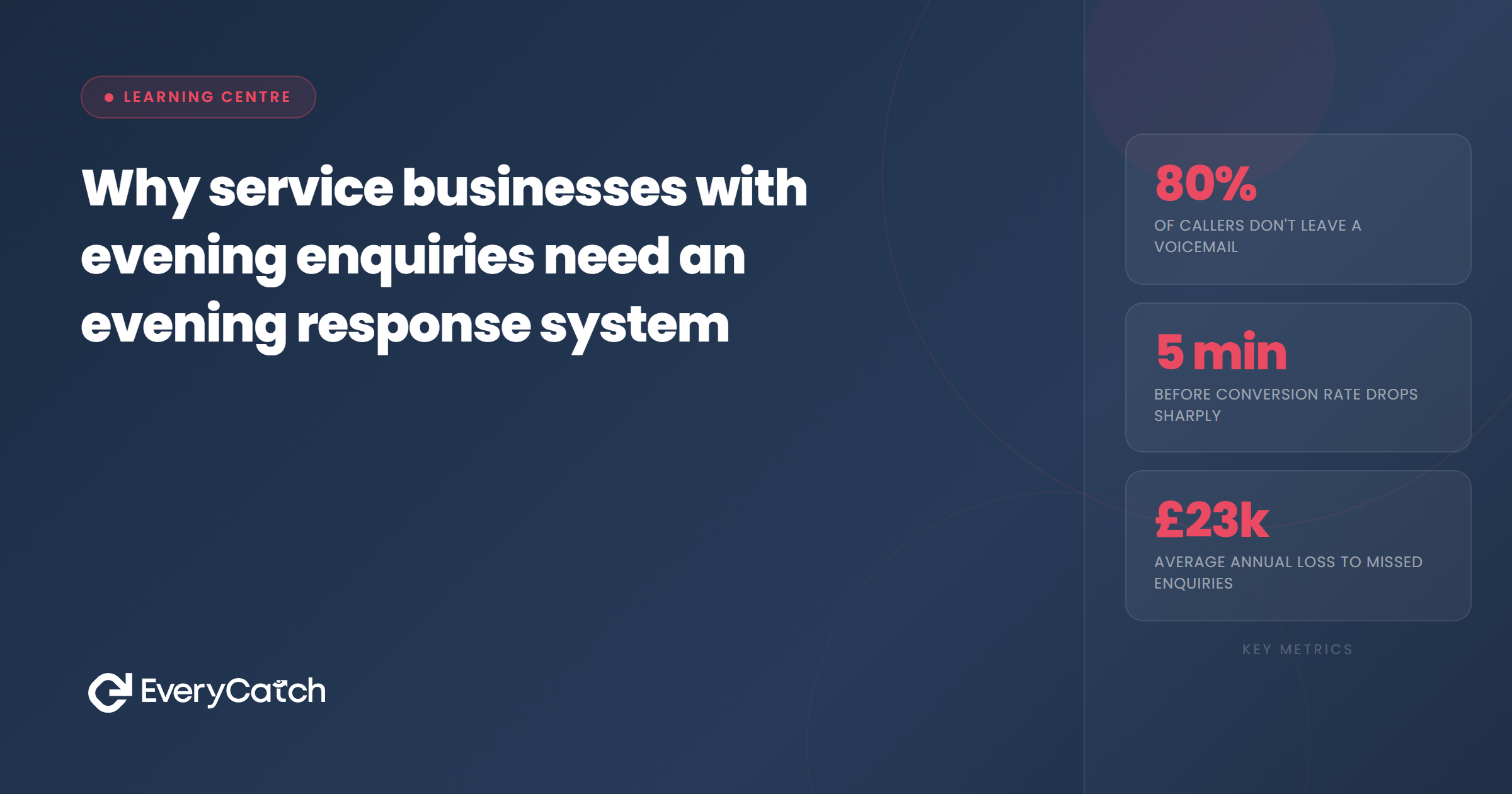
- Around 40% of service enquiries arrive outside standard business hours, with peak volume between 6pm and 10pm
- The average service business creates a 12 to 16 hour silence gap when they receive evening enquiries but respond the next morning
- Customers who enquire in the evening contact multiple businesses and often book with whoever responds first, typically within the same evening
- An evening response system doesn't need to quote or close the job, it needs to acknowledge receipt, set expectations, and keep you in consideration
- Manual evening responses are unsustainable for most owners, automated systems handle acknowledgement while you handle the follow-up when you're next working
When enquiries actually arrive
Service enquiries don't respect business hours. The vast majority arrive when customers are at home, researching their problem, comparing options, and filling in contact forms. That means evenings and weekends.
Data from thousands of service businesses shows consistent patterns. Enquiry volume starts climbing from around 5pm. It peaks between 6pm and 10pm. Weekends see similar patterns, often with Sunday evening showing the highest volume of the week.
The reason is simple. People deal with household and property issues outside work hours. A blocked drain discovered on a Tuesday at 7pm generates an enquiry that evening, not the next morning. A quote request for landscaping work gets sent after dinner when both partners have looked at the garden and agreed they need help.
Most service businesses receive between 35% and 50% of their total enquiry volume outside standard Monday to Friday, 9am to 5pm windows. If you ignore evening enquiries until the next working day, you're creating a silence gap for nearly half your potential customers.
What the silence gap costs you
An enquiry submitted at 8pm on Tuesday evening typically gets a response at 9am Wednesday morning. That creates a 13-hour gap of complete silence from your business. During those 13 hours, the customer has likely received responses from other businesses, compared options, and in many cases already booked someone.
The silence isn't neutral. The customer doesn't pause their search waiting for you. They continue the process they started when they sent the enquiry. They visit more websites, submit more forms, read more reviews. Some of the businesses they contact have evening response systems. Those businesses confirm receipt, set expectations, and remain front of mind.
When you finally respond the next morning, you're not entering a level field. You're trying to catch up with competitors who've already had a conversation. The customer has often mentally categorised you as slower or less responsive, even if they haven't consciously noticed the delay.
The cost shows up in conversion rates. Businesses that respond to evening enquiries within minutes see significantly higher quote-to-job conversion than businesses that wait until the next business day. The difference typically ranges from 15% to 25% higher conversion, which translates directly to lost revenue across a year.
How customers behave with evening enquiries
When someone submits an enquiry at 7pm on a Wednesday, they're not submitting one enquiry. Research consistently shows customers contact an average of three to five businesses for service work. For higher-value jobs, that number climbs to six or seven.
Those enquiries all go out in the same session. The customer opens multiple tabs, fills in several contact forms, and sends them all within 20 to 30 minutes. Then they wait to see who responds.
The first response creates a psychological anchor. It confirms to the customer that their enquiry was received and someone will help them. It provides relief, particularly for urgent issues. That first responder earns attention and credibility simply by being first.
Customers often engage with whoever responds first. If a business replies within minutes with a helpful acknowledgement and clear next steps, the customer feels reassured. If that same business then follows up properly the next morning, they're competing from a position of strength against businesses who only made contact at that point.
Want to see how many evening enquiries you're losing?
We'll show you exactly when your enquiries arrive and what happens to the ones you miss.
Book a free discovery callSpeed matters particularly for time-sensitive work. Emergency plumbing, urgent electrical issues, or pest problems drive customers to book quickly. If you take 14 hours to respond to a blocked toilet enquiry that came in at 9pm, the customer has already found someone else. They had no choice.
What an evening response system needs to do
An effective evening response system has one primary job: acknowledge receipt and set expectations. It does not need to quote the job, answer technical questions, or close the sale. Those tasks happen during normal business hours when you're available to have proper conversations.
The system needs to confirm that you received the enquiry, thank the customer for their interest, and tell them exactly when they'll hear from you next. That message should arrive within minutes, ideally within one to two minutes of the enquiry being submitted.
Speed of acknowledgement matters significantly. A response that arrives 30 seconds after the customer clicks submit creates a completely different impression than one that arrives three hours later. The near-instant response signals attentiveness and reliability.
The content of the acknowledgement needs to feel personal while being automated. It should reference the specific service they enquired about, use natural language, and avoid robotic phrasing that screams "automated email." The best automated responses read like a quick personal message from a business owner who's currently unavailable but will be in touch soon.
The system also needs to capture enough information for you to respond properly when you're back at work. That means ensuring the initial enquiry form asks the right questions and that all the information flows into your response workflow correctly.
Setting realistic customer expectations
The evening acknowledgement serves another function beyond confirming receipt. It manages expectations about when the real conversation will happen. Customers understand that a 9pm enquiry won't get a detailed response immediately, but they need to know when that response will come.
Clear communication prevents frustration. A message that says "Thanks for your enquiry, we'll be in touch tomorrow morning between 8am and 10am" gives the customer certainty. They can plan around that timeframe. They know they haven't been ignored.
Vague promises create problems. "We'll get back to you soon" or "We'll be in touch shortly" leave the customer guessing. Soon might mean an hour or it might mean three days. That uncertainty drives them to engage more seriously with competitors who've been more specific.
Following through on the expectation you set is non-negotiable. If your evening acknowledgement promises contact the next morning, that contact must happen. Missing your own deadline destroys the credibility you built with the quick acknowledgement.
The expectation-setting also allows you to work normal hours without guilt. You're not ignoring customers by sleeping through the night or having your evening. You've already told them when you'll properly engage, and they've accepted that timeframe because you communicated it clearly.
Some businesses worry that automated evening responses feel impersonal or damage their brand. The opposite tends to be true. Customers appreciate the acknowledgement and clear communication. The alternative, complete silence until the next day, feels far more impersonal because it suggests their enquiry doesn't matter enough to warrant even an automated confirmation.

From the EveryCatch team
We help service businesses respond to every enquiry automatically, regardless of when it arrives. Our systems handle the evening acknowledgements while you focus on running your business during normal hours.