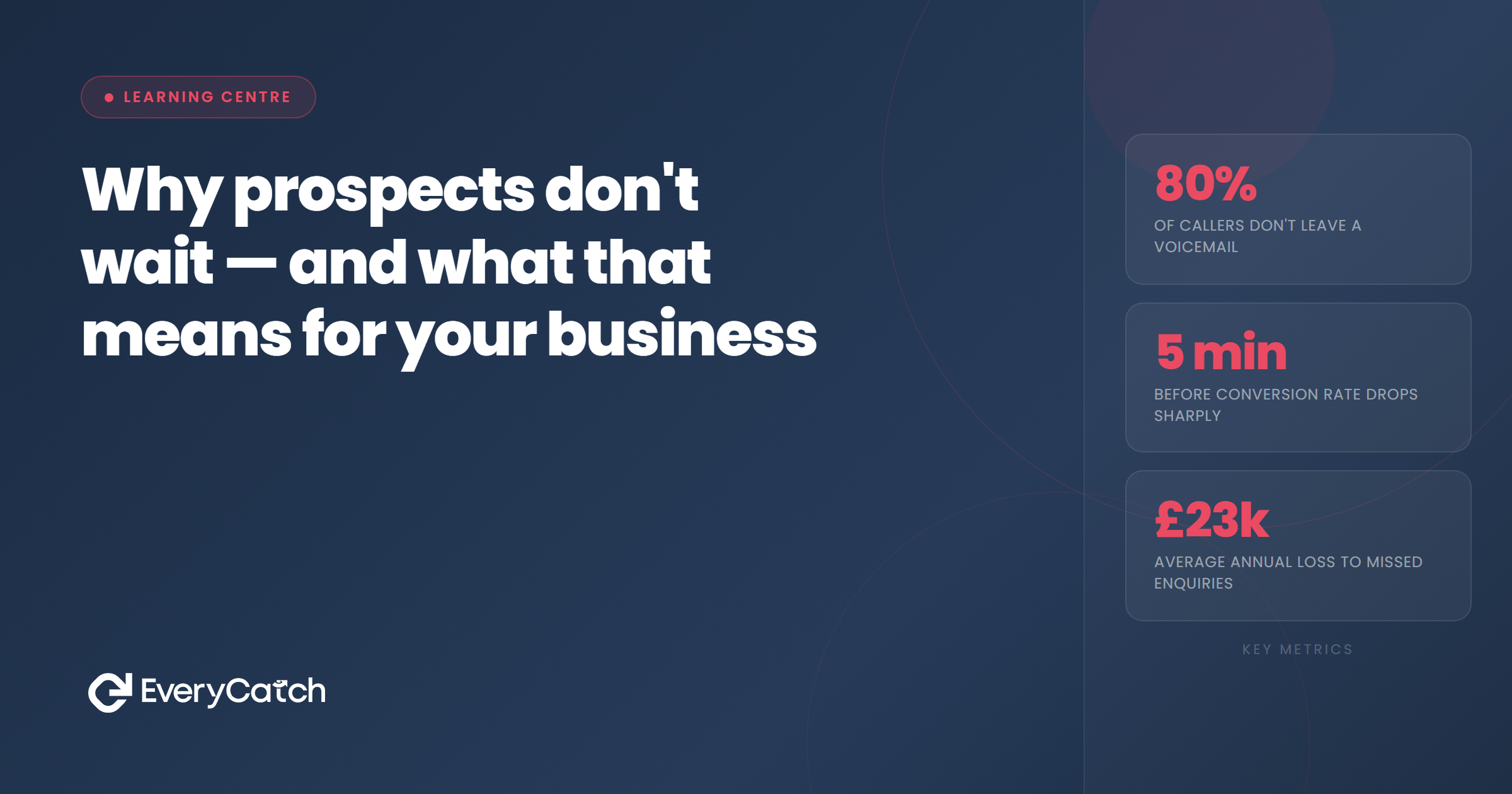

- Consumer expectations have fundamentally shifted towards instant gratification, and waiting is now seen as a service failure
- The psychological need for closure drives prospects to contact multiple businesses simultaneously and accept the first adequate response
- Most prospects make their decision based on who responds first, not who provides the best eventual answer
- The window of genuine urgency closes within minutes, and delayed responses face far more price resistance
- Businesses that understand this shift and respond accordingly gain a permanent competitive advantage in their market
When someone contacts your business, they want a response now. Not later today, not tomorrow morning, not when you finish the job you're currently on. Now. This expectation feels unrealistic to many business owners, but it reflects how consumer behaviour has fundamentally changed. The question is not whether prospects should wait. They simply don't.
This shift has happened gradually over the past decade, but the pandemic accelerated it dramatically. People who previously tolerated slower response times now expect immediate engagement. The businesses that adapted have pulled ahead, while those still operating on older assumptions about acceptable response times watch leads evaporate.
How expectations have changed
Ten years ago, most customers understood that small businesses needed time to respond. Leaving a voicemail and waiting a few hours for a callback felt normal. Today, that same wait feels like neglect. The customer assumes you don't want their business, or you're too disorganised to respond properly.
This change stems from how people now interact with technology in every other part of their lives. They order products and watch them tracked in real time. They message friends and receive replies within minutes. They search for information and get answers instantly. When your business takes hours to respond to an enquiry, you create cognitive dissonance. Your service feels outdated before the relationship even begins.
The data confirms this shift. Research from Harvard Business Review shows that 50% of buyers choose the vendor who responds first. Not the cheapest, not the most qualified, but simply the fastest. This statistic reveals something uncomfortable: most purchase decisions are made on responsiveness rather than merit. The best electrician loses to the adequate electrician who responds immediately.
Social media has intensified these expectations further. When someone can send a direct message to a brand on Instagram and receive a reply within minutes, they expect the same from local businesses. The distinction between large corporations with dedicated response teams and small service businesses has collapsed in the consumer's mind. Everyone should respond quickly.
The psychology of waiting
Understanding why prospects don't wait requires examining what happens psychologically when someone reaches out for help. Most enquiries follow a problem or need that has reached a tipping point. The boiler stops working, the toilet won't flush, the garden has become unmanageable. The customer has moved from "I should deal with this" to "I need to deal with this now."
This state of heightened motivation creates urgency, but it also creates anxiety. The customer needs closure. They need to know someone will help them, and they need to know when. Every minute without a response extends this uncomfortable state of uncertainty.
To relieve this anxiety, most people contact multiple businesses at once. They send enquiries to three, four, sometimes five different companies. They're not shopping for the best price at this stage. They're shopping for the first adequate solution that reduces their anxiety. The business that responds first ends that uncomfortable uncertainty and typically wins the job.
This explains why prospects seem unreasonably impatient. They're not evaluating your business rationally. They're in a heightened emotional state where speed signals competence, reliability and care. Your fast response tells them "you're in safe hands" before you've said anything about your qualifications or pricing.
When you take hours to respond, the prospect has usually already engaged with a competitor. Even if your eventual response is more detailed or professional, you're now competing against someone who has already reduced the customer's anxiety. You're trying to win business from a psychological disadvantage.
Your competitor's advantage
Speed creates a first-mover advantage that compounds over time. The business that responds first gets the first proper conversation. They frame the problem, suggest the solution, and set pricing expectations. When you respond later, you're not starting from neutral ground. You're either validating what the competitor already said, or you're contradicting them and creating doubt.
Most customers don't want doubt at this stage. They want confirmation that they've found someone who can solve their problem. Your late arrival forces them to reconsider a decision they were ready to make. Unless your offer is dramatically better, this reconsideration typically resolves in favour of the business they spoke to first.
The competitor who responds quickly also controls the conversation timeline. They can schedule a site visit quickly, send a quote while momentum is high, and convert the job before other businesses have even entered the picture. By the time you respond, the customer may have already committed, or they're simply too far down the path with someone else to seriously consider alternatives.
Losing leads to faster competitors?
EveryCatch ensures every prospect gets an immediate response, even when you're on the tools.
Book a free discovery callThe urgency window closes fast
The customer's sense of urgency does not remain constant. It peaks at the moment they reach out, then declines rapidly. When you respond within minutes, you catch them at maximum motivation. When you respond hours later, their emotional state has changed.
They've moved from "I need help urgently" to "I've probably overreacted." The anxiety that drove them to contact you has subsided. They start reconsidering whether they need the work done at all, whether they can delay it, or whether they should get more quotes to ensure they're not overpaying. Your late response has transformed a motivated buyer into a cautious shopper.
This shift explains why conversion rates drop so sharply as response time increases. You're not just competing with other businesses anymore. You're competing with the customer's declining sense of urgency. Even if they haven't heard from anyone else, they're now less motivated to proceed.
Price sensitivity follows the same pattern. Customers in urgent need care less about cost. They want the problem solved quickly. Customers who have had time to calm down become focused on getting the best deal. Your delayed response has moved them from "how soon can you help" to "how much will this cost," fundamentally changing the nature of the conversation.
What this means for your business
The implications are clear. Every hour you take to respond costs you jobs. Not because your service is inadequate, but because the window of opportunity closes while you're busy. Traditional business advice says to focus on quality and let the work speak for itself. That advice assumes the customer ever becomes your customer. Speed determines who gets that chance.
Many service business owners resist this reality. They believe good work should matter more than quick responses. They're right philosophically, but they're losing commercially. The market has moved on. Prospects now use response speed as a proxy for reliability, professionalism and customer service. Fair or not, this is how buying decisions get made.
The businesses winning in this environment have accepted that response speed is now a core service competency, not an optional extra. They've implemented systems to ensure every enquiry gets acknowledged immediately, even if the full response takes longer. They understand that the initial reply matters more than a perfectly crafted message that arrives too late.
This does not require you to be available 24/7. It requires systems that respond on your behalf when you're unavailable. Automated acknowledgements, chat systems, text responses. These tools maintain the connection during the critical first minutes, buying you time to provide a proper response without losing the prospect entirely.
The competitive advantage belongs to businesses that recognise prospects don't wait because they don't have to. Every service category has businesses responding fast. Your prospects will find them, work with them, and never know what they missed by not waiting for you. The question is whether you'll let that continue or adapt to how buying decisions actually happen today.

From the EveryCatch team
We've helped hundreds of service businesses compete on response speed without sacrificing time on the tools. Fast doesn't have to mean frantic when the right systems handle the first response for you.