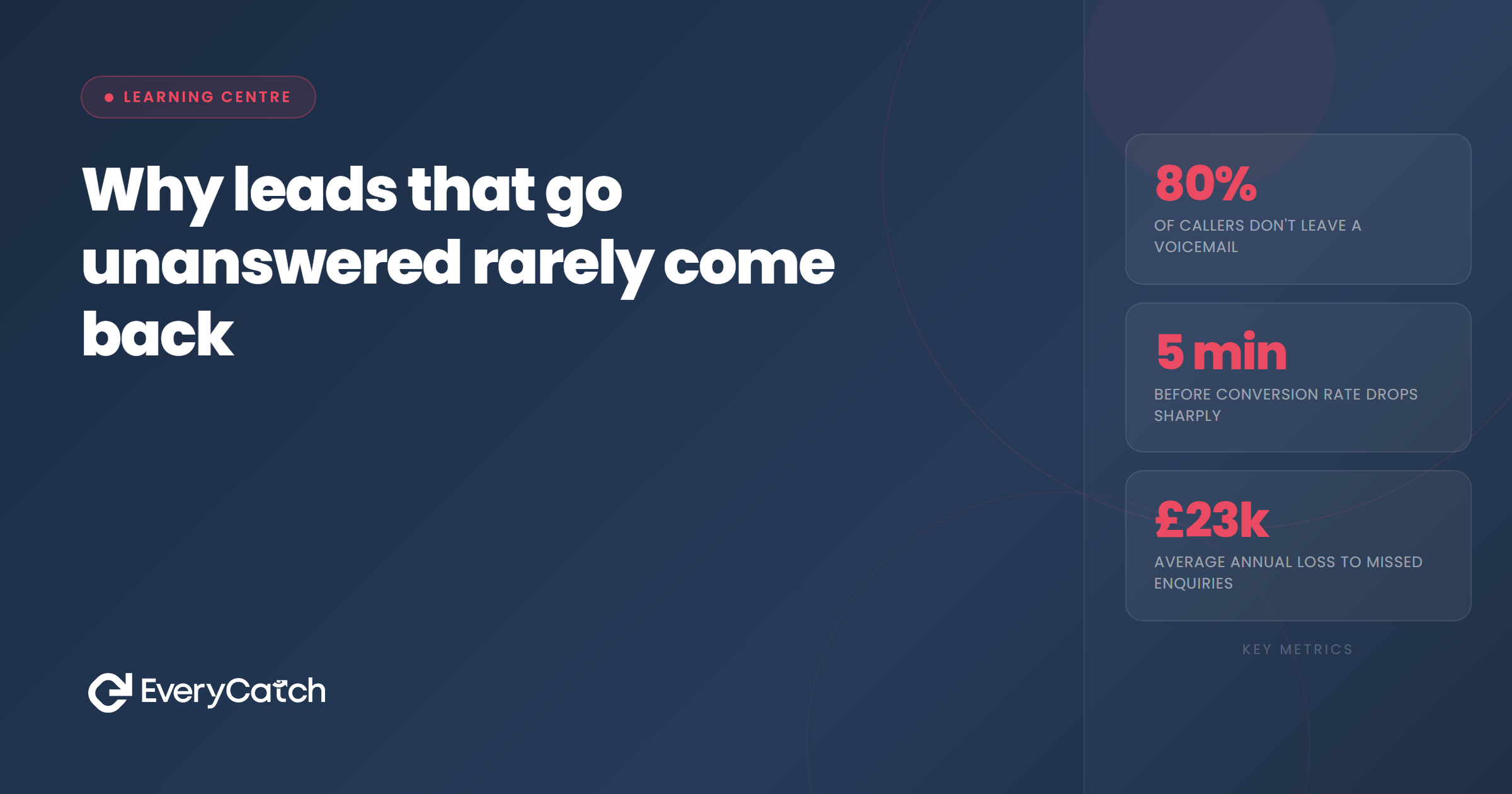

- Leads are in decision mode for hours, not days. Once they choose a provider, they stop searching.
- Your competitors respond while you deliberate. Speed wins the commercial race.
- People hate unresolved tasks. An unanswered enquiry gets closed mentally within 24 hours.
- Coming back to you requires effort and reopens doubt. Leads avoid the friction.
- No response equals no trust. Silence destroys credibility before you even get a chance to quote.
Most business owners believe that leads who don't hear back will wait, try again, or return when they're ready. The data tells a different story. When a lead goes unanswered, they vanish. Not temporarily. Permanently.
The idea that good prospects will circle back if they're genuinely interested is wishful thinking. People making buying decisions don't operate on that logic. They operate on urgency, convenience and the path of least resistance. Once they've moved on, you've lost them.
The momentum window
When someone fills out your contact form or dials your number, they're in a decision window. That window is measured in hours, not days. They have a problem. They want it solved. They've taken the action of reaching out, which means they're past the research phase and into selection mode.
This momentum doesn't last. If you don't respond while they're still actively comparing options, they move forward without you. The urgency that drove them to enquire doesn't pause while you decide whether to call back. It drives them to the next provider who picks up.
Once they've booked with someone else, that momentum is gone. They're not re-opening the search. They're not comparing quotes days later. They've made a decision, and the mental case is closed.
Your competitors act immediately
The belief that your unique value will bring leads back assumes they haven't already found value elsewhere. They have. Your competitors are answering immediately, quoting confidently and securing bookings while your lead sits in your inbox.
Most service businesses contact the same three to five providers. The first one to respond professionally gets the job more than 70% of the time. It's not because they're better. It's because they were there when the decision was being made.
By the time you follow up, the lead has already spoken to two other tradespeople, received a quote, and scheduled the work. You're not competing anymore. You're irrelevant.
Speed isn't a minor advantage. It's the entire game. Whoever shows up first controls the conversation, sets expectations and closes the deal.
How many leads have you already lost this week?
We'll show you exactly where your enquiries are going, and how to catch every one.
Book a free discovery callThe need for closure
Human beings are wired to close open loops. An unanswered enquiry sits in the back of the mind like an unfinished task. That discomfort drives action. If you don't provide resolution, the lead will find it elsewhere.
Within 24 hours, most people mentally close the enquiry. They assume you're not interested, too busy, or disorganised. They stop waiting. They stop checking their phone. They commit to the provider who responded.
Once that mental loop is closed, reopening it requires conscious effort. People avoid that effort. They don't want to restart the search, re-explain their needs or compare new options. They're done. And so are you.
Re-engagement requires effort
Even if a lead hasn't formally committed elsewhere, the effort cost of coming back to you is high. They'd need to remember your business name, find your contact details again, re-initiate the conversation and explain everything a second time.
That's friction. Friction kills conversions. People take the path of least resistance, and that path is whoever responded first and stayed engaged.
Add to that the psychological cost of doubt. If they come back to you days later, they're admitting their first choice didn't work out. That's uncomfortable. It's easier to just move forward with the provider who was there from the start.
Silence signals unreliability
When you don't respond quickly, you're not just losing momentum. You're damaging trust before the relationship even begins. A slow response, or no response at all, tells the lead that you're unreliable.
If you can't answer a simple enquiry promptly, why would they trust you to show up on time, complete the work properly or handle problems professionally? First impressions are formed in the first interaction. Silence is a terrible first impression.
Even if you do call back later, you're starting from a deficit. The lead has already formed an opinion. You're the business that didn't care enough to respond. That's a hard perception to reverse, and most leads don't give you the chance.
Trust is built through responsiveness. You prove you're reliable by being there when it matters. The enquiry is when it matters. Miss that moment, and you've lost the opportunity to build trust entirely.

From the EveryCatch team
We help service businesses respond to every lead instantly, automatically and without lifting a finger. Because the businesses that respond first don't just win more leads. They win all of them.