
- The first response time sets customer expectations for how much they matter to your business
- Fast responses create positive emotional anchors that influence how people remember the entire experience
- Customers who feel valued early are significantly more likely to leave reviews voluntarily
- Quick replies make your service stand out when compared to slower competitors
- The link between response speed and review quality persists even weeks after the initial contact
Response speed affects reviews because it affects how customers remember you. When someone reaches out and receives an instant reply, that moment creates an emotional bookmark in their mind. Every subsequent interaction gets filtered through that initial impression of responsiveness and care.
Reviews are not objective assessments. They are stories people tell themselves about whether a business made them feel important. The first response is often the clearest signal a customer receives about how much they matter to you, and that signal carries more weight than almost anything else that follows.
First response sets expectations for the entire relationship
When a customer submits an enquiry, they start forming expectations immediately. If they receive a reply within minutes, they conclude that you run a tight operation and care about new business. If they wait hours or days, they assume you are either disorganised or not particularly interested.
These expectations become a lens through which every future interaction is judged. A customer who expects speed will tolerate minor delays later because the relationship began on the right foot. A customer who started with disappointment will view even good service through a sceptical lens, looking for confirmation that their initial worry was justified.
This pattern plays out consistently across industries. Plumbers who reply fast get reviews that mention reliability. Electricians who take days to respond get reviews that mention poor communication, even if the actual work was excellent. The first interaction becomes the frame for the story.
Memory bias and the role of recency effects
Human memory favours beginnings and endings. Psychologists call this the serial position effect. When people recall an experience, the first moments and the final moments carry disproportionate weight. The middle tends to blur together.
For service businesses, this means two things. First, a fast initial response creates a positive anchor at the start of the relationship. Second, that anchor persists even if the middle of the experience is unremarkable. Customers remember that you replied instantly, and they remember the final outcome, but the time they spent waiting for a quote or the minor scheduling hiccup fades into the background.
The opposite is also true. A slow first response creates a negative anchor that colours everything else. Even if you deliver exceptional work, the customer remembers having to chase you down at the start, and that memory diminishes their overall satisfaction.
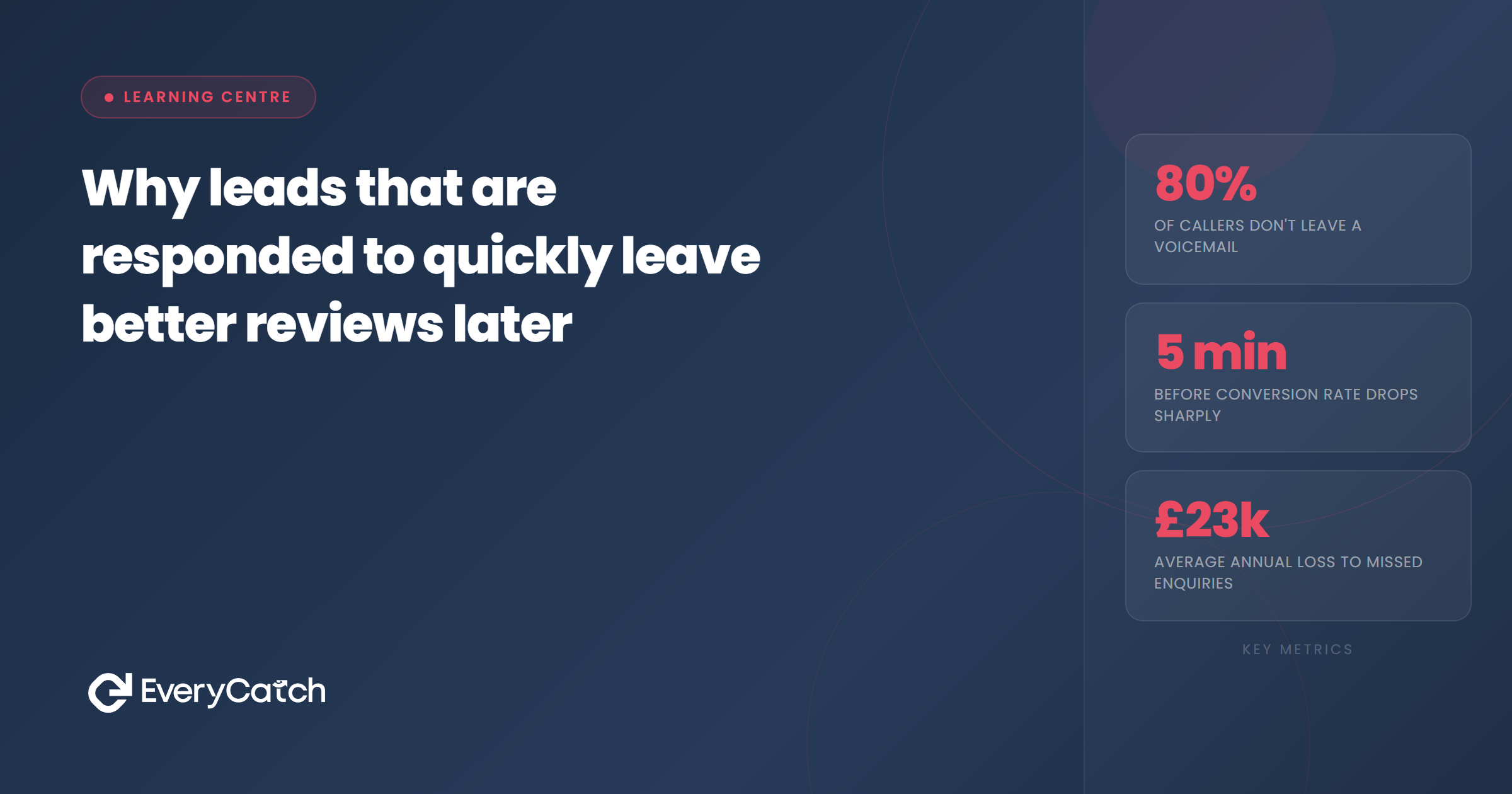
This is why leads that are contacted within the first five minutes are seven times more likely to convert and, later, significantly more likely to leave positive reviews. The emotional tone is set before the work even begins.
Feeling valued creates natural customer advocacy
People leave reviews when they feel something. Indifference does not motivate action. What separates businesses that accumulate glowing testimonials from those that struggle to get any feedback at all is how often their customers feel genuinely valued.
A fast response is one of the simplest and most powerful ways to make someone feel valued. It communicates that you were paying attention, that their enquiry mattered enough to warrant immediate action, and that you respect their time. These are the building blocks of trust and goodwill.
When customers feel this way, they do not need to be prompted to leave reviews. They volunteer them because the experience stood out. They tell their friends, post on social media, and write detailed Google reviews explaining why you were different from other businesses they contacted.
The businesses that respond slowly create the opposite effect. Even if the customer eventually books and the work is completed well, the relationship feels transactional rather than personal. There is no emotional surplus, no sense of having been treated exceptionally well, and therefore no motivation to go out of their way to recommend you.
How many reviews are you losing to slow responses?
We'll show you what instant replies can do for your reputation.
Book a free discovery callThe contrast effect with competitors makes you stand out
Most customers contact more than one business before making a decision. When they receive quotes from three plumbers, two respond the next day and one replies within five minutes, the fast responder is immediately perceived as more professional, more organised, and more eager to earn the business.
This contrast effect is powerful. It is not just that you responded quickly. It is that you responded quickly while others did not. This differentiation gets mentioned explicitly in reviews. Customers write things like "the only one who got back to me straight away" or "finally, someone who actually answers their phone."
These comparative statements matter. They signal to future customers that choosing you reduces risk. If other people had trouble getting responses elsewhere but found you reliable, that reassures someone reading the review that you will not let them down either.
The contrast effect compounds over time. As you accumulate reviews that praise your responsiveness, you attract more customers who value speed and communication. These customers are predisposed to leave positive reviews because you delivered exactly what they were looking for, and the cycle reinforces itself.
When customers leave reviews and what triggers them
Reviews are most commonly left at three points in the customer journey: immediately after the sale is confirmed, shortly after the work is completed, or weeks later when something prompts them to reflect on the experience.
For businesses that respond quickly, the first trigger happens sooner and more positively. Customers who book after a fast, helpful initial conversation often leave reviews right away, commenting on how easy and pleasant the process was. The positive emotion is fresh, and they want to express it.
Businesses that respond slowly miss this early review opportunity because there is no emotional high point to capture. By the time the work is done, the customer has forgotten the initial frustration, but they also have no reason to feel particularly enthusiastic. The result is fewer reviews overall and less vivid, less compelling testimonials.
The longer-term reviews also benefit from fast response times. When customers are asked weeks or months later to recall their experience, the businesses they remember most fondly are the ones that made them feel important from the first moment. That initial responsiveness becomes a shorthand for the entire relationship, and it gets reflected in the language of the review.
Automating speed without losing the personal touch
The fear many business owners have is that automation makes responses feel robotic and impersonal. This is a legitimate concern, but it is not an inevitable trade-off. The key is to automate the speed, not the entire conversation.
An automated acknowledgment that confirms receipt of an enquiry, provides an expected response time, and reassures the customer that a real person will follow up shortly accomplishes several things. It stops the customer from wondering if their message went into a void. It demonstrates that your systems are organised. It buys you time to craft a thoughtful, personalised response without making the customer wait in silence.
This approach preserves the benefits of speed while maintaining the human element that builds trust. The customer receives an instant reply that satisfies their need for acknowledgment, and then they receive a more detailed, personal follow-up that addresses their specific situation. Both elements matter.
Businesses that use instant lead response systems report that customers appreciate the combination of speed and personalisation. The automated acknowledgment sets a positive tone, and the human follow-up reinforces it. The result is higher satisfaction, more conversions, and ultimately, better reviews.

From the EveryCatch team
We help service businesses turn fast responses into consistently excellent reviews. Our platform makes sure every enquiry gets acknowledged instantly while you craft the personalised follow-up that wins the job.