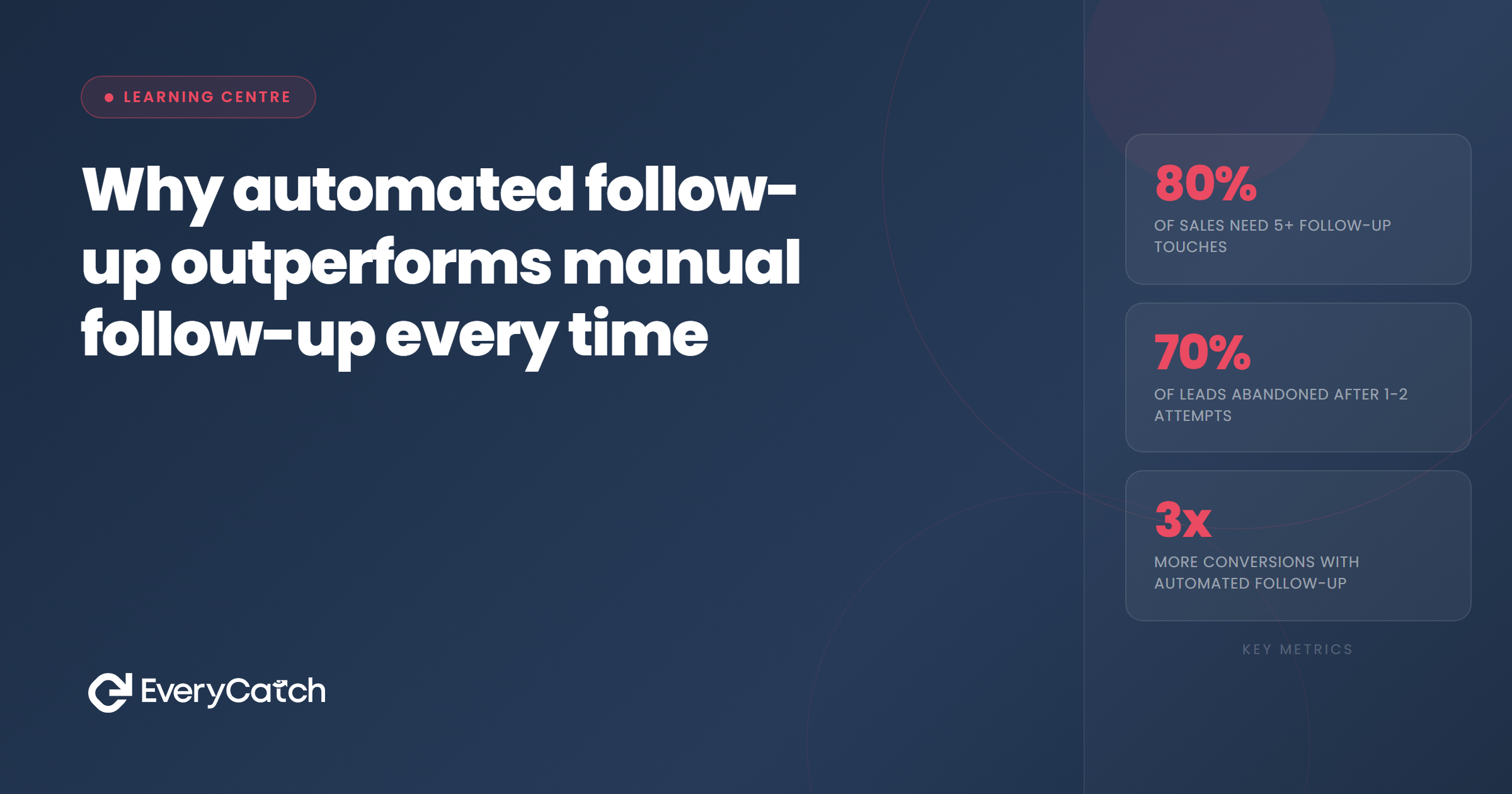
- Automated follow-up responds within seconds, not hours or days
- Human memory and distraction cause 78% of manual follow-up tasks to fail
- Systems track every interaction and show exactly where leads drop off
- Automation costs pennies per lead, manual follow-up costs pounds in lost time
- Businesses running automation convert 3 to 5 times more enquiries than those relying on staff
The question is not whether automation works better than manual follow-up. It does. The real question is why so many businesses still rely on people to remember, prioritise, and execute tasks that software handles faster, cheaper, and more reliably.
Manual follow-up depends on someone seeing the enquiry, remembering to act, and choosing to do it before something else grabs their attention. That works fine when you have two leads a week. When you have ten, twenty, or fifty, the system collapses under its own weight. People forget. They get distracted. They misjudge priority.
Automated follow-up removes those variables. It runs on conditions, not willpower. When a lead comes in, the system responds. No delay, no decision fatigue, no guesswork.
Speed and consistency
The first contact with a lead decides whether you stay in the running or get dismissed. Research shows that responding within five minutes increases conversion rates by 900% compared to waiting an hour. Most manual systems cannot hit that window reliably.
Someone might be on the phone, in a meeting, or dealing with an urgent customer issue. The enquiry sits in the inbox. By the time they see it, the lead has already spoken to two competitors who responded instantly. You are now fighting from behind.
Automated systems respond the moment the form is submitted or the call is missed. The acknowledgement goes out before the lead has closed the browser tab. That speed creates confidence. The prospect knows you are paying attention.
Consistency matters just as much. Manual follow-up quality varies by person, mood, and workload. One team member sends detailed, professional emails. Another sends three sentences with typos. Automation delivers the same message, in the same tone, every single time. The experience does not depend on who is on shift.
The human error problem
People are not machines. They miss things, misfile leads, and make optimistic assumptions about whether someone will call back. A study by InsideSales.com found that 78% of manual follow-up tasks fail because they are forgotten, delayed, or deprioritised.
The failure is not laziness. It is cognitive load. When you ask someone to track fifteen active leads, remember who needs a second email, who needs a quote, and who needs a courtesy call, you are asking them to hold a complex matrix in their head while also answering phones, dealing with customers, and managing operational issues.
Automated systems do not forget. They track every lead, log every interaction, and execute every task exactly when scheduled. If someone does not reply to the first email, the second email goes out three days later. If they do not book an appointment, a reminder text is sent. No one has to remember, because the system cannot forget.
Perfect timing at scale
Timing follow-up manually is guesswork. You might decide to wait a day before sending a second message, or two days, or a week. You might call at 9am, or 3pm, or whenever you get around to it. Those decisions are made on instinct, not data.
Automated systems run on tested sequences. Send an acknowledgement immediately, a detailed follow-up at four hours, a courtesy check-in at 48 hours, and a final message at seven days. The timing is calibrated to keep you visible without being intrusive.
When you are handling dozens of leads at different stages, manual timing breaks down completely. You lose track of who got what, when. Automation scales without friction. It does not matter if you have five leads or five hundred. Each one receives the same attention at the same intervals.
Want to see what you're missing?
We'll show you exactly where leads are dropping off and how automation fixes it.
Book a free discovery callTracking and visibility
Manual follow-up is a black box. You send an email, make a call, leave a voicemail. You might scribble a note in a spreadsheet or update a CRM field. But you do not have a full picture of what is working and what is failing.
Automated systems track everything. You see which emails are opened, which links are clicked, which messages get replies. You know exactly when a lead went cold and what the last interaction was. That visibility lets you identify patterns and improve performance.
When a lead does not convert, you can trace the exact point where the conversation stopped. Was it after the second email? Did they open the quote and not respond? That data tells you what to test next. Manual systems offer opinions. Automated systems offer evidence.
Real cost comparison
Manual follow-up feels free because you are already paying someone to be there. But time is not free. If a team member spends two hours a day chasing leads, that is two hours they are not serving customers, answering phones, or doing billable work.
Calculate the hourly cost. If someone earns £30,000 a year and spends 25% of their time on follow-up, that is £7,500 in salary cost alone. Add the opportunity cost of what else they could be doing, and the true cost is closer to £12,000.
Automated follow-up costs a fraction of that. Systems like EveryCatch's follow-up sequences handle hundreds of leads for less than the cost of a single day of manual labour. The return on that investment shows up immediately in higher conversion rates and freed-up staff time.
Businesses that switch from manual to automated follow-up typically see conversion rates increase by 200% to 400%. The cost per conversion drops by half or more. Those gains compound every month.

From the EveryCatch team
We built EveryCatch because we saw service businesses lose thousands of pounds a year to manual follow-up gaps. Automation is not about replacing people, it is about making sure every lead gets the attention it deserves.