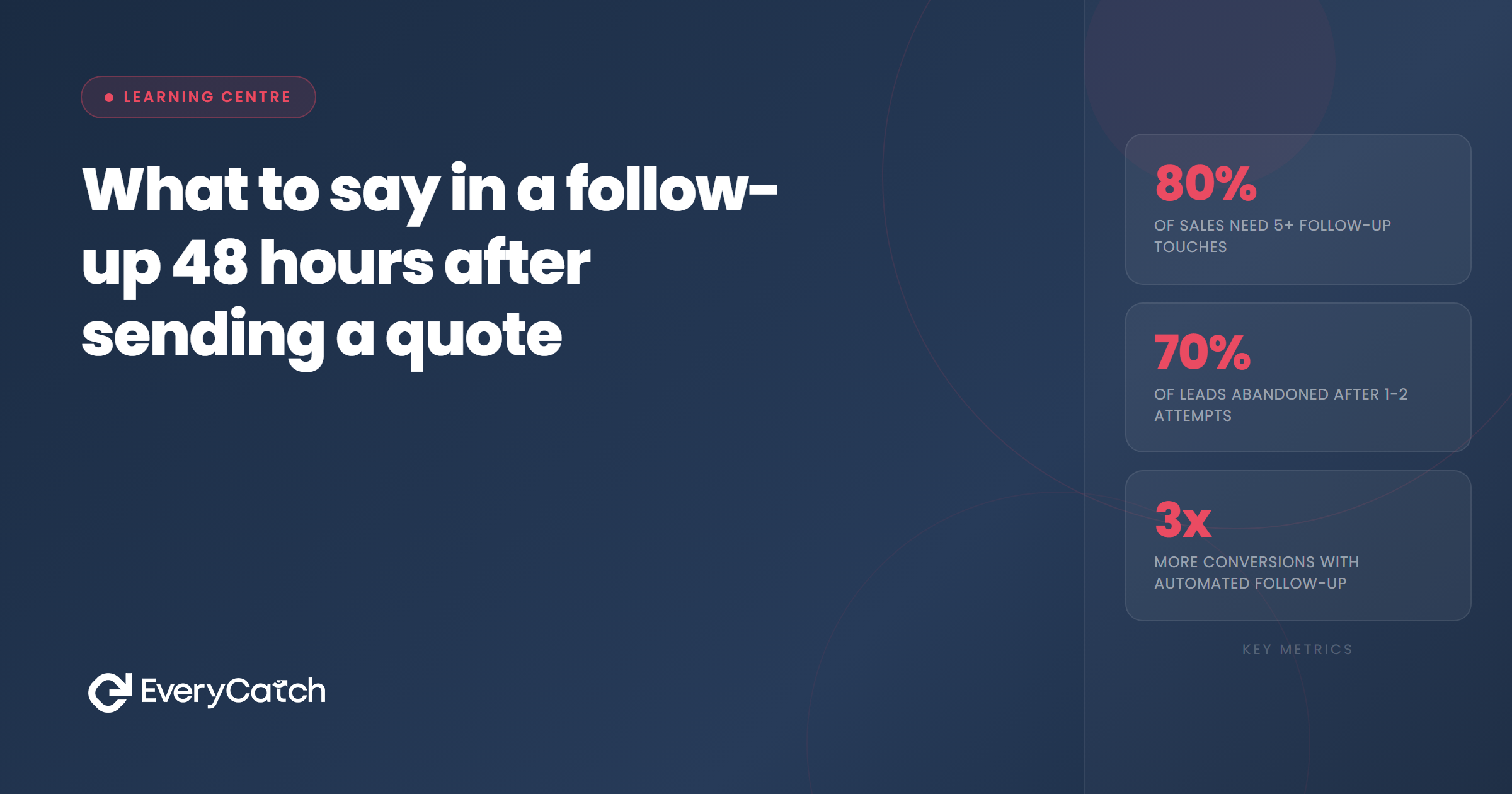
- 48 hours is the optimal window to catch prospects before they've made other plans or forgotten about you
- Effective follow-ups acknowledge silence without assumptions and offer value rather than pressure
- Your message should include one clear next action, not multiple options that create decision paralysis
- The best converting follow-ups focus on removing barriers rather than repeating selling points
- Automating this touchpoint ensures consistency and captures leads your competitors miss through manual processes
Most service businesses lose quotes in the 48-hour window. Not because the prospect went elsewhere, but because they sent nothing, or they sent the wrong message at the wrong time, or they assumed silence meant rejection.
The reality is simpler. Your prospect got busy. They meant to respond but didn't. They're interested but haven't prioritised the decision yet. Your follow-up needs to meet them in that mental space, not where you wish they were.
This article shows you exactly what to say, when to say it, and how to structure a follow-up message that feels helpful rather than desperate. The templates work because they match how real people make buying decisions, not how we wish they would.
Why 48 hours matters
The 48-hour mark sits in a sweet spot. It's long enough that you're not hassling them immediately after sending the quote, but short enough that they haven't already committed budget elsewhere or forgotten the details of your conversation.
Research from sales teams across service industries shows response rates drop significantly after three days. By day five, you're competing with everything else that's happened in their business since your quote arrived. Your window closes fast.
This timing also signals professionalism. Too soon and you seem pushy. Too late and you seem disorganised or uninterested. 48 hours demonstrates you're attentive without being overbearing.
The follow-up also serves another function. It resets the conversation clock. Many prospects genuinely intend to respond but get sidetracked. Your message gives them permission to re-engage without feeling awkward about the delay.
The wrong approach
Before we get to what works, let's eliminate what doesn't. The most common mistake is the passive check-in. "Just following up to see if you had any questions" does nothing for either party. It creates work for the prospect without offering value.
Another failure mode is the assumption close. Messages like "Looking forward to getting started" or "When would you like us to begin?" presume agreement that might not exist. When prospects aren't ready, this feels like pressure, and pressure kills deals.
Equally damaging is the multi-option ask. "Would Thursday or Friday work better? Morning or afternoon? Or should we discuss this over the phone first?" Decision fatigue is real. Each choice you present reduces the likelihood of any response at all.
The guilt trip also deserves to die. "I know you're busy but..." or "I hate to bother you..." positions you as an inconvenience from the start. You're not bothering them. You sent a quote they requested. Act like it.
Message structure that works
Effective 48-hour follow-ups follow a simple three-part structure. First, acknowledge the quote without assumptions. "I sent over the quote for your bathroom renovation on Tuesday." This orients them without implying they should have already responded.
Second, provide a reason to respond now. This isn't about creating false urgency. It's about removing friction. "I wanted to check whether the timeline and pricing make sense for what you're planning, or if we should adjust anything." You're offering help, not demanding action.
Third, give one clear next step. Not three options. One. "If this looks good and you'd like to move forward, reply with a preferred start date and I'll get you booked in." Or, if they're likely to have questions: "If you'd like to talk through any of the details, let me know a time that works and I'll call you."
That structure works because it respects their decision-making process. You're not assuming they've decided. You're not pressuring them to decide right now. You're simply making the next step as easy as possible when they're ready to take it.
Tired of manually tracking quote follow-ups?
We'll show you how to automate your entire follow-up sequence without losing the personal touch.
Book a free discovery callTemplate examples by trade
Here's what this looks like in practice across different service businesses. These templates adapt the three-part structure to specific situations while maintaining the core principles.
Bathroom fitter
"Hi Sarah, I sent over the quote for your bathroom renovation on Tuesday. Just wanted to check whether the timeline and pricing work for what you've got planned, or if there's anything we should adjust. If it all looks good, just reply with your preferred start date and I'll block out the time. If you'd like to go through any of the details first, I'm around."
Electrician
"Morning Tom, following up on the quote I sent for the rewiring work. Wanted to check if you had any questions about the scope or the pricing. If you're happy to proceed, let me know a start date that suits and I'll get it scheduled in. If you need to talk through anything, just give me a shout."
Landscaper
"Hi Rebecca, sent you the quote for the garden redesign on Wednesday. Weather's looking good for the next few weeks, so thought I'd check where you're at with it. If you want to move forward, send me your preferred start week and I'll lock it in. If you've got questions about the plant selections or the phasing, happy to talk through those."
Cleaner
"Hi James, just following up on the quote I sent for the weekly office clean. Wanted to see if the schedule and pricing work for you, or if we need to adjust anything. If you're ready to get started, let me know which week you'd like us to begin and I'll get you on the rota. Any questions, just ask."
Notice what these share. They acknowledge the quote. They check fit rather than assume it. They offer one specific action. They stay conversational without being casual to the point of unprofessional.
What not to say
Certain phrases reliably kill response rates. "Just checking in" tops the list because it asks them to do work without offering anything in return. If you're going to re-engage, give them a reason beyond your need to know.
"Did you receive my quote?" insults their intelligence. Of course they did. Email works. The question isn't whether they got it, it's whether it meets their needs.
"We'd love to work with you" or similar enthusiasm statements feel disingenuous when you've quoted dozens of jobs that week. Save the enthusiasm for when they book. Until then, stay professional and helpful.
Price reductions at this stage also backfire. If they haven't responded because of price, offering a discount now tells them your original quote was inflated. If price wasn't the issue, you've just left money on the table. Hold your pricing until you understand their actual objection.
"Let me know if you need anything else" is too vague to prompt action. What would they need? Be specific about what you're offering to do or answer.
How automation helps without feeling automated
Manual follow-ups fail because humans are inconsistent. You remember to follow up on the big quotes and forget about the medium ones. You send them at random times. Your message quality varies based on how busy you are that day.
Automated systems solve this by triggering the message exactly 48 hours after you send the quote, regardless of what else is happening in your business. The prospect who enquired on a Friday afternoon gets the same quality follow-up as the one who came in Tuesday morning.
The key is making automation feel personal. Generic templates that obviously came from a system get ignored. The message needs to reference their specific project, use natural language, and come from a real person's email or phone number.
Good automation also tracks responses and adjusts the sequence. If they reply, the system stops sending additional messages. If they don't, it triggers the next touchpoint in your sequence. This consistency captures leads that manual processes miss through simple forgetfulness or prioritisation.
Platforms like EveryCatch's follow-up sequences handle this by letting you create templates that personalise automatically based on the job details, then send them at optimal times without you touching anything. The system knows what to send, when to send it, and when to stop.
The result is better response rates and higher conversion from quote to booking, achieved through consistency rather than extra effort. Your best follow-up message becomes your standard follow-up message, every time.

From the EveryCatch team
We help service businesses stop losing quotes through inconsistent follow-up. Our platform automates your entire sequence while keeping every message personal and timely. The result is more bookings from the leads you're already generating.