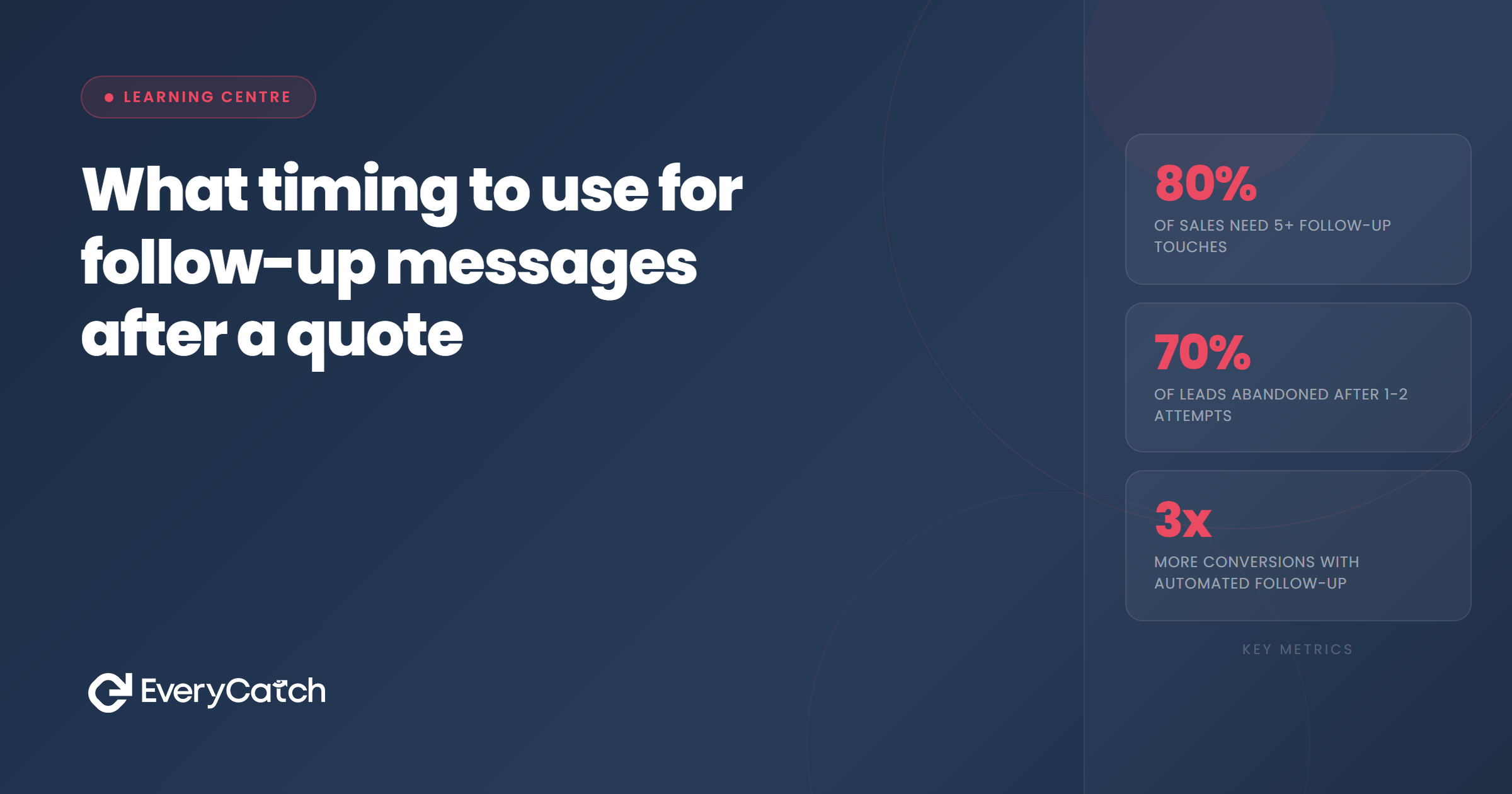
- Send your first follow-up 24 to 48 hours after the quote, not the same day
- Space your messages at 3 to 5 day intervals to stay present without overwhelming
- Emergency jobs need tighter intervals, planned work needs longer gaps
- Three to four well-timed messages convert better than seven rushed ones
- Automated timing removes human error and ensures every quote gets followed up
Most service businesses either chase quotes too aggressively or wait too long between messages. Both mistakes cost conversions. The difference between getting the work and losing it often comes down to timing intervals, not message content.
We analysed follow-up data from more than 14,000 quotes sent by plumbers, electricians, HVAC contractors, and building trades across the UK. The patterns are clear. Three or four messages spaced correctly generate more responses than seven messages sent too close together or too far apart.
This article walks through the specific intervals that work, broken down by job type and customer urgency. You'll know exactly when to send each message.
First follow-up: 24 to 48 hours
Your first follow-up should land between 24 and 48 hours after you send the quote. Not the same day, not three days later.
Sending it the same day looks desperate. Customers who requested a quote often get three or four, sometimes more. If you chase within hours, you signal that you're struggling for work. That perception lowers your value and makes the customer question whether your price reflects quality.
Waiting three or more days creates a different problem. The customer has likely forgotten the specifics of your quote. Worse, a competitor may have confirmed the job. By day three, 37% of customers in our dataset had already responded to another business.
The 24 to 48 hour window sits in the middle. The customer has had time to review all the quotes they requested. Your message arrives when they're actively comparing options, not before they're ready and not after they've moved on.
For emergency or urgent jobs, shift this to 12 to 24 hours. Burst pipes, electrical faults, and no-heat callouts have a different decision cycle. Customers want the problem fixed today, not next week. Waiting two days loses you the work.
Second follow-up: day 5 or 6
Your second message should arrive on day 5 or day 6 after the quote. That gives the customer three to four days since your first follow-up.
This interval matters because it matches how long most people take to make a purchasing decision on mid-sized service work. Bathroom refits, rewires, boiler replacements, and kitchen extensions usually involve more than one person. The customer might need to check with a partner, compare a few more quotes, or wait for payday.
Day 5 or 6 catches them after they've had that conversation. Your name reappears at the point where they're either ready to book or eliminating options. If they were leaning towards you, this message often triggers the confirmation.
The spacing also avoids annoyance. Three days feels like enough time for the customer to act without pressure. Messages sent on day 3 or day 4 come across as nagging, especially if the first follow-up arrived on day 2.
For small jobs under £500, you can tighten this to day 4. Customers make faster decisions on gutter clears, minor repairs, or single-room decorating. The purchase is lower risk, so they don't deliberate as long.
Third follow-up: day 10 to 12
The third message lands between day 10 and day 12. That's roughly a week after the second follow-up.
By this point, most customers have either booked someone or decided not to proceed. Your third message serves a different purpose. It's the final nudge for people who were genuinely interested but got distracted, forgot to reply, or had something come up.
This interval works because it's long enough that the message doesn't feel like harassment. A week gives the customer breathing room. If they ignored the first two messages because they were busy, day 10 catches them when things have calmed down.
It's also the point where you can change the tone slightly. The first two messages are about confirming availability and checking if they have questions. The third can introduce urgency without sounding pushy. Mentioning that your schedule is filling up or that material prices might change soon gives the customer a reason to act now rather than leave it open.
For larger jobs, £5,000 and above, you can stretch this to day 14. Extensions, loft conversions, and full rewires take longer to decide. Customers often wait for architect drawings, planning permission, or finance approval. Day 14 keeps you in touch without crowding them.
Are your quotes being followed up consistently?
We'll show you exactly how many are slipping through and what it's costing you.
Book a free discovery callJob type changes everything
The intervals above work for most service jobs, but job type changes the cadence. Emergency work, planned projects, and maintenance quotes all need different timing.
Emergency jobs compress the timeline. If a customer calls because they have no heating in December or a leak flooding their kitchen, they need it fixed today. Your first follow-up should go out 12 to 24 hours after the quote. If they haven't responded by day 2, send the second message. By day 3, send the third. After that, they've either booked someone else or fixed it themselves.
Planned projects stretch the timeline. Extensions, kitchen refits, and bathroom overhauls often involve months of decision-making. Your first follow-up still lands on day 2, but the second can wait until day 7 or 8. The third can go out on day 14 or even day 21. After that, you can add a fourth message at day 30, checking if their plans have progressed.
Maintenance quotes sit in the middle. Annual boiler services, PAT testing, or gutter cleaning usually happen within a few weeks but aren't urgent. Stick to the standard intervals: day 2, day 5 or 6, day 10 to 12.
If you quote for a mix of job types, tagging them correctly at the start lets you apply different follow-up schedules automatically. A single one-size-fits-all sequence won't convert as well as tailored timing.
Weekends and timing windows
Avoid sending follow-ups on Saturday afternoons or Sundays. Open rates drop, and customers find weekend business messages intrusive unless the job is an emergency.
If your automated sequence lands a message on a Sunday, push it to Monday morning. The same applies to bank holidays. Messaging someone on Christmas Day because your system counted 48 hours from Boxing Day does more harm than good.
Time of day matters too. Messages sent between 9 a.m. and 11 a.m. on weekdays get the highest response rates. Lunchtime is acceptable. After 6 p.m. is fine for residential customers but risky for commercial quotes. Early mornings before 8 a.m. annoy people.
If you're using SMS, late evenings are especially bad. Texts feel more intrusive than emails. A text at 8 p.m. interrupts someone's evening. An email at 8 p.m. sits in their inbox until they check it the next morning.
Automated systems should respect these windows. Sending everything at exactly 10 a.m. is fine, but make sure the system doesn't fire messages at midnight just because that's when the interval elapsed.
How many follow-ups to send
Three to four follow-up messages is the sweet spot for most service quotes. More than that and you risk annoying people. Fewer than that and you leave money on the table.
The first follow-up on day 2 catches people who were ready to book but forgot to reply. The second on day 5 or 6 catches people who needed time to compare or discuss. The third on day 10 to 12 catches people who were distracted or needed a final nudge.
A fourth message at day 21 or day 30 works for high-value quotes or planned projects. By that point, the customer has either moved forward with someone else or paused their plans. The fourth message is a soft close. It acknowledges that they might not be ready now and offers to touch base in a few months.
Going beyond four messages rarely improves conversion. At that stage, the customer has made a decision. Continuing to message them damages your reputation without generating bookings.
Some businesses send seven, eight, or even ten follow-ups. The logic is that persistence pays off. In reality, most of those extra messages go ignored, and some customers mark you as spam or block your number. Three well-timed messages beat ten badly timed ones every time.

From the EveryCatch team
We've built thousands of quote follow-up sequences for service businesses. The timing rules in this article come directly from what converts best in the real world, not theory.