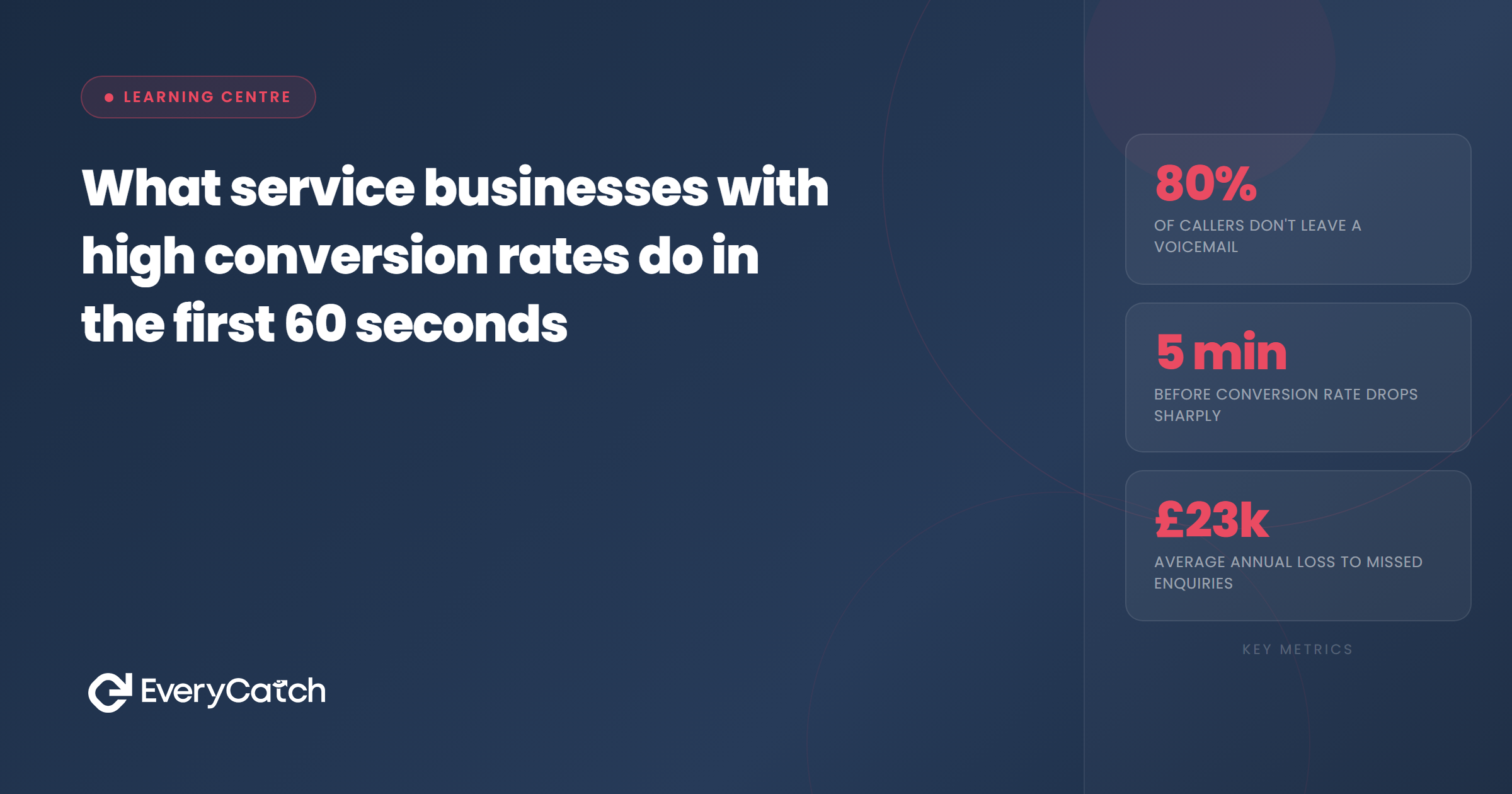
- Confirmation within 60 seconds separates high converters from everyone else
- The message acknowledges the enquiry, states a response timeframe, and sets expectations
- Businesses that automate this first step convert 3x more leads than those who don't
- Your first response is not a sales message. It's a trust signal
- Leads who receive immediate confirmation are 8x more likely to book than those who wait five minutes
The first 60 seconds after someone contacts your business are not about selling. They are about proving you exist, you received the message, and you care. That is the entire job.
Most service businesses wait an average of four hours to respond to a new lead. Some wait until the next morning. A few forget entirely. The ones converting at double the market rate respond within one minute, and what they send is not complicated.
This article shows you what they do, why it works, and how to build the same process into your business without adding work to your day.
The confirmation message
High-converting businesses send an immediate confirmation. Not a quote. Not a sales pitch. A simple message that tells the customer three things.
First, you received their enquiry. This sounds basic, but most people assume their web form failed or their message went to spam. Confirming receipt removes that doubt immediately.
Second, when they will hear from you properly. Not "soon" or "shortly". A specific timeframe. Within two hours. By 5pm today. Tomorrow morning. Whatever you can commit to.
Third, what happens next. Will you call them? Send a quote? Book them in for a site visit? Customers want to know the process, not guess at it.
That is the entire message. It takes 30 seconds to read and removes every source of anxiety a new lead feels after hitting "send".
Why 60 seconds matters
The data on this is sharp. Leads contacted within the first minute are eight times more likely to convert than leads contacted after five minutes. Eight times.
This is not about chasing people. It is about meeting them where their intent is highest. Someone filling out a contact form right now is actively looking for a solution. In five minutes, they are filling out three more forms. In an hour, they have moved on.
Speed does not mean you need to write a detailed proposal in 60 seconds. It means you confirm receipt while they still remember sending the message. The rest can happen on your schedule, as long as you set that schedule in the first response.
Businesses that automate this step win because the confirmation goes out before the customer has closed the browser tab. They feel heard instantly, and that feeling carries through the rest of the sales process.
What the message contains
The confirmation message follows a simple structure. It opens with their name if you have it. If not, "Hi there" works fine. Do not overthink the greeting.
The first line confirms what they asked for. "Thanks for your enquiry about bathroom renovations." "We've received your request for a boiler service." This proves you read it, not just auto-replied.
The second line tells them when you will respond properly. "We'll get back to you with a detailed quote by 3pm today." "One of our team will call you within the next two hours." Be specific. Do not promise same-day if you cannot deliver same-day.
The third line tells them what to expect. "We'll email you a full breakdown of costs and timescales." "We'll arrange a site visit to assess the work." This removes guesswork and gives them something to look forward to.
If you want to add anything else, include your direct contact details in case they have urgent questions. Do not add links to your blog, testimonials, or case studies. This message has one job.
Want to automate your first 60 seconds?
We'll show you how businesses like yours are converting more leads without adding workload.
Book a free discovery callSetting clear next steps
Your confirmation message should make it obvious what happens after you send the proper response. If you are quoting a job, tell them how long the quote is valid for and when you can start work. If you are booking a call, tell them how long it takes and what you will cover.
Customers trust businesses that explain their process. When you say "we will call you tomorrow at 10am to discuss your requirements and book a site visit", the customer knows you have a system. When you say "we'll be in touch soon", they assume you are disorganised.
The businesses converting at the highest rates map out their entire customer journey in advance and reference it in every message. The first confirmation tells them what comes next. The quote tells them what happens if they say yes. The booking confirmation tells them what to expect on the day. No step is left to chance.
Common mistakes that kill conversion
The most common mistake is sending nothing at all. The second most common is sending too much. A five-paragraph auto-reply explaining your company history does not reassure anyone. It signals that you care more about talking than listening.
Another mistake is confirming receipt but not committing to a timeframe. "Thanks, we'll get back to you" leaves the customer wondering if that means an hour or a week. They fill out three more forms just in case.
Some businesses send a confirmation that reads like a legal disclaimer. "Your enquiry has been logged in our system and will be processed in accordance with our standard procedures." This is not reassuring. It is corporate noise.
Others try to qualify leads in the first message. "Before we can help, please confirm your budget and preferred start date." The customer just asked a question. Let them ask it before you interrogate them.
The worst mistake is automating the confirmation but not the follow-up. If you promise a call within two hours and then forget to call, the confirmation message makes things worse, not better. Automate the reminder as well as the acknowledgment.
How automation changes the game
No human can reply to every enquiry within 60 seconds. You are on site. You are in a meeting. You are asleep. Automation removes the delay without removing the personal touch.
The best systems send the confirmation instantly, then notify you that a lead came in. You reply properly when you are free, but the customer already feels acknowledged. The pressure is off both sides.
Automation also ensures consistency. Every lead gets the same quality of first contact, whether they enquire at 9am on Monday or 11pm on Saturday. Your conversion rate stops depending on when someone happened to contact you.
Businesses that automate their first response typically see a 40% improvement in lead-to-customer conversion within the first month. Not because they changed their service or pricing, but because they stopped losing people in the gap between enquiry and reply.
The setup is simpler than most people expect. You connect your contact forms, write one template, and set a delay timer for your follow-up. After that, the system runs itself. The customer feels heard, you get notified, and nobody falls through the gap.

From the EveryCatch team
We built our lead response system by studying what the top 5% of service businesses actually do in their first contact. Everything in this article comes from businesses converting at double the market rate.