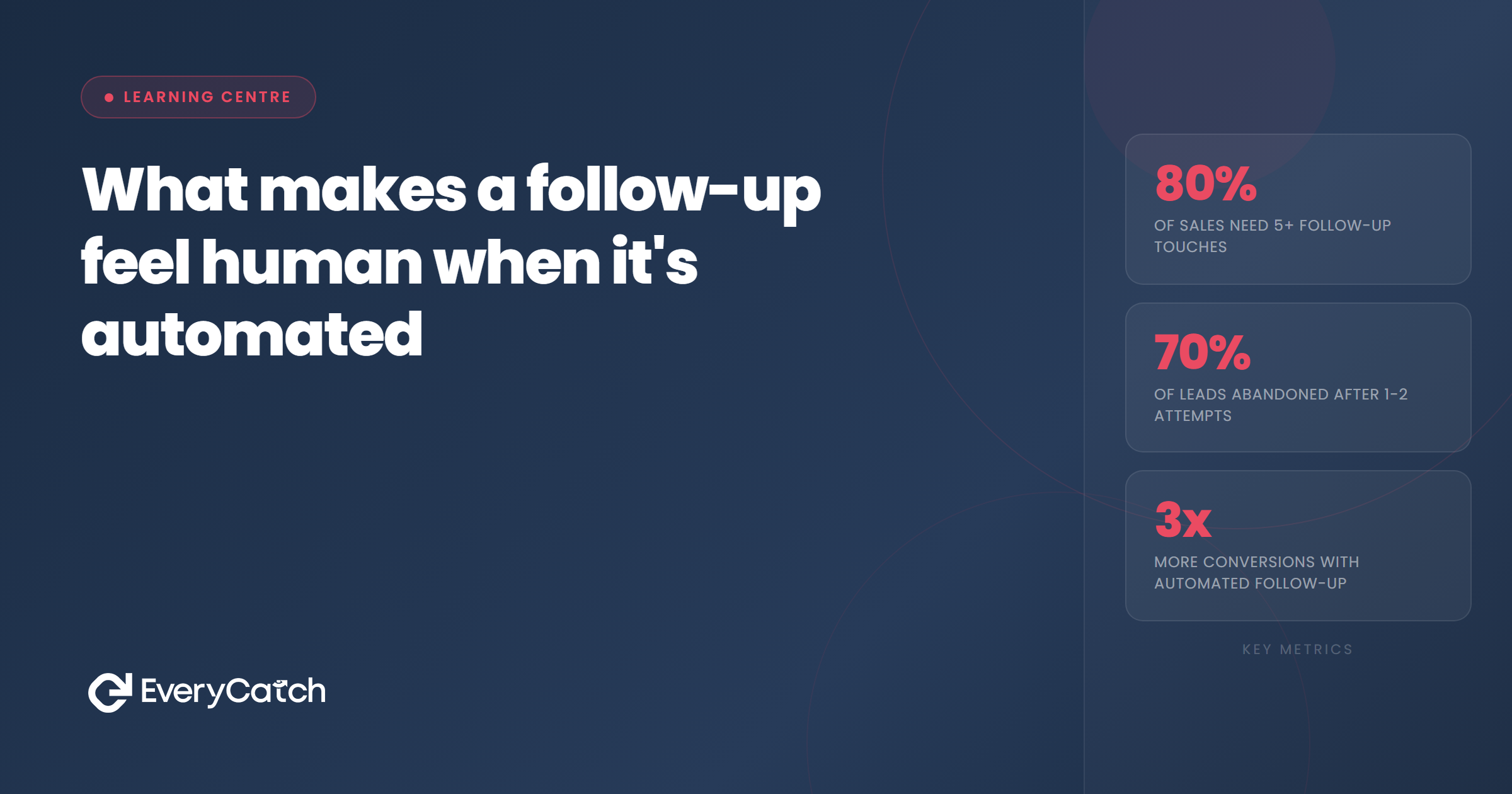

- Human-feeling follow-ups respond to behaviour, not calendar days
- Context matters more than slick copy or merge tags
- Timing variation prevents the robotic feel of fixed schedules
- Good automation stops itself when continuation makes no sense
- The worst offenders are generic tone and ignoring prior interactions
The moment someone realises they're being spoken to by a script, the conversation loses value. The disconnect happens fast. Automated follow-ups can feel efficient or suffocating, helpful or tone-deaf, depending on how they're built.
Most businesses focus on the wrong things. They polish the language, add a first name, maybe throw in an emoji. Those things help at the margins, but they don't solve the central problem. The problem is that automation usually follows a timeline, not a conversation.
A human sending a follow-up message thinks about what happened last time. They adjust based on whether the person responded, ignored them, or booked something. Automation that feels human does the same. It reacts. It notices. It stops when it should.
Context recognition
Context is the difference between "Just checking in" and "You mentioned you needed guttering work done before the end of the month, does the 14th still work?" One feels generic. The other shows someone actually listened.
Automated systems can carry context if they're designed to. When someone fills in a web form and mentions a specific service, that detail should surface in the first follow-up. When they ask a question on the phone and you promise to send over pricing, the next message should reference that promise.
Most automation forgets what was said three minutes ago. It starts fresh every time. That's how you get messages that ask for information someone already gave, or offer services they've already declined.
A well-built sequence tracks what was discussed, what was promised, and what hasn't been addressed yet. It uses that information to shape each message. The recipient doesn't need to know it's automated if the automation remembers the last three touchpoints.
Timing and pacing
Fixed schedules destroy believability. If every follow-up lands exactly 48 hours after the last one, people notice. Humans don't operate like that. They send a message mid-morning, another one late afternoon, maybe one the next day if they had a thought overnight.
Timing needs variation. Not wild randomness, but natural pacing. A message at 9:32am feels different to one at 9:00am. A three-day gap followed by a four-day gap feels more human than two identical three-day gaps.
Speed also signals care. If someone submits an enquiry at 7pm on a Tuesday and hears nothing until 9am Thursday, they assume you weren't paying attention. If they hear back within minutes, even with an automated acknowledgment, they know the enquiry registered.
The best sequences mix immediate responses with thoughtful delays. Acknowledge fast, then give space. Don't chase someone who opened your last message five minutes ago. Let them breathe. Follow up when enough time has passed that the nudge feels reasonable, not desperate.
Tone and language
The way you write matters less than how closely it matches the way you'd actually speak. If your business sounds formal on the phone, formal works in automation. If you're casual and direct in person, casual and direct is what fits.
Where most businesses go wrong is writing in a voice they think they should use rather than the one they actually do. They add corporate phrases, over-explain, or try to sound friendly by layering on exclamation marks. All of it reads as performance.
Good automated copy is short, clear, and sounds like one person talking to another. It doesn't announce itself. It doesn't say "we're reaching out to follow up on your recent enquiry." It just says "Hi James, are you still looking to get the fascia replaced before winter?"
Pronouns help. "I" instead of "we" often reads warmer, even if the message is generated by a system. Questions work better than statements. A sentence like "Does Thursday morning suit you?" feels conversational. "We have availability on Thursday morning" feels like a brochure.
Want follow-ups that actually get replies?
We'll show you how EveryCatch handles the context, timing, and tone automatically.
Book a free discovery callBehavioural triggers
The strongest signal that a follow-up is human is that it responds to what someone just did. They opened the message but didn't reply. They clicked a link but didn't book. They visited the pricing page twice in one day. Each of those actions tells you something.
Behaviour-based automation builds sequences around those signals. If someone clicks through to your availability calendar but doesn't pick a slot, the next message should acknowledge that. "I saw you were looking at times, did something not suit?" If they don't open the last two messages, the sequence should either change approach or stop.
Calendar-based sequences ignore behaviour. They fire regardless of engagement. That's how you end up sending a sixth message to someone who hasn't opened any of the previous five. It's not persistent, it's oblivious.
Real people adjust based on feedback. Automation that feels human does the same. It notices silence and interprets it. It tracks clicks and uses them to shape the next move. It doesn't assume interest just because the person hasn't opted out.
Personalisation depth
Using someone's first name is table stakes. It doesn't make a message personal, it just prevents it from being obviously generic. Real personalisation goes deeper.
A message that references the street name they gave when they called in feels specific. A message that mentions the service they asked about, the timeframe they need it done, or the problem they described feels relevant. That level of detail requires systems that actually capture and store the information during the first interaction.
The gap between shallow personalisation and useful personalisation is whether the details change the message. "Hi Sarah" followed by a completely irrelevant offer doesn't feel personal. "Hi Sarah, you mentioned the kitchen extension needed sign-off from the conservation team, have you had any progress on that?" feels like someone was listening.
Automated sequences can do this if the data flows through properly. When the enquiry form asks the right questions, or the person taking the call logs the key details, those facts become usable in later messages. Most businesses collect this information and then never refer back to it. That's the missed opportunity.
Where automation shows
There are specific tells that give automation away. Repetition is the most obvious. Asking the same question twice because two different sequences are running. Sending a "checking in" message after someone already booked. Offering a discount when they've already paid.
Inconsistent tone is another. If the first message sounds conversational and the third one reads like a legal notice, the shift is jarring. If one message uses "I" and the next switches to "our team," people notice.
Generic subject lines flag automated email immediately. "Following up" or "Just checking in" don't tell the recipient anything. A subject line that references the specific enquiry, the service they asked about, or the question they had feels purposeful.
The biggest giveaway is persistence in the wrong direction. Following up when follow-up makes no sense. A human would stop. Automation that doesn't stop reveals itself as a machine doing what it was told, not a person thinking about whether it's appropriate.
The solution isn't to hide the automation. The solution is to build sequences that behave the way a thoughtful person would. That means stopping when someone engages elsewhere. It means pausing when they book. It means recognising when continued contact would be intrusive rather than helpful.

From the EveryCatch team
We've spent years building follow-up systems that respond to behaviour, not blind schedules. Every sequence we design stops when it should, adapts when it needs to, and never pretends to be something it's not.