- UK service businesses typically pay £20 to £150 per enquiry across Google Ads, lead directories and social advertising.
- A lost lead costs the full job value plus lifetime value and referrals, which often reaches ten to twenty times the acquisition cost.
- Generation costs sit on invoices you can see, while losses never appear anywhere, which is why most owners misjudge the ratio.
- You can calculate your own loss figure with four numbers: leads per month, missed percentage, close rate and average job value.
- Improving lead handling is almost always cheaper than buying more leads to replace the ones you drop.
Ask a business owner what a lead costs and most can answer within a few seconds, because the figure sits on an invoice. Ask what a lost lead costs and the room goes quiet. That imbalance drives some expensive decisions. Owners keep increasing marketing budgets to buy more enquiries while the leak in their lead handling quietly swallows the extra spend. This article puts real numbers against both sides of the equation so you can see which problem deserves your money first.
What it actually costs to generate a lead
Acquisition costs vary by trade and channel, but the ranges are well established. A plumber or electrician running Google Ads in a competitive UK city will typically pay between £20 and £60 per enquiry once click costs and conversion rates are worked through. Higher-value trades pay more. A kitchen fitter, landscaper or damp-proofing specialist can easily pay £80 to £150 for a single qualified enquiry, because the clicks cost more and fewer visitors fill in a form.
Lead directories such as Checkatrade, Bark and MyBuilder charge per lead or per shortlist, and those fees land whether you win the work or not. Social advertising tends to produce cheaper enquiries, often £15 to £40 each, but the leads need more qualifying before they turn into booked jobs. Even so-called free channels carry a cost. A referral scheme, a van wrap or hours spent posting in local Facebook groups all consume money or time that has a price.
The honest average for a UK service business sits somewhere between £30 and £100 per lead across a blended mix of channels. If you generate forty leads a month, you are spending £1,200 to £4,000 just to make the phone ring. That is the visible half of the equation.
What it costs to lose one
Losing a lead does not just waste the acquisition fee. It wastes everything the lead would have become. Start with the immediate job. If your average job is worth £600 and you close half the enquiries you actually speak to, every lead that never gets a response costs you £300 in expected revenue. The £45 you paid to generate it is almost a rounding error next to that figure.
Then add lifetime value. A customer who has one good experience tends to come back. A plumber who fixes a leaking valve today gets called for the boiler service next winter and the bathroom refit two years later. Across trades, a retained customer is commonly worth three to five times the first job. That £300 of expected revenue becomes £900 to £1,500 over a few years.
Referrals compound the loss further. Service businesses live on word of mouth, and each happy customer typically introduces at least one more over time. A single lost lead can therefore represent a lost chain of customers rather than one transaction. Put conservatively, a lead that cost £45 to generate carries £1,000 or more of expected long-term value. The ratio between generating and losing is rarely better than one to ten, and often closer to one to twenty.
Why the loss never shows up in your accounts
Marketing spend produces paperwork. Google sends a bill, the directory takes a direct debit, and your accountant files both under advertising. Lost leads produce nothing. There is no invoice for the enquiry that rang while you were under a floor, no line item for the form submission that waited two days for a reply and booked a competitor instead. The money simply fails to arrive, and revenue that fails to arrive is invisible unless you go looking for it.
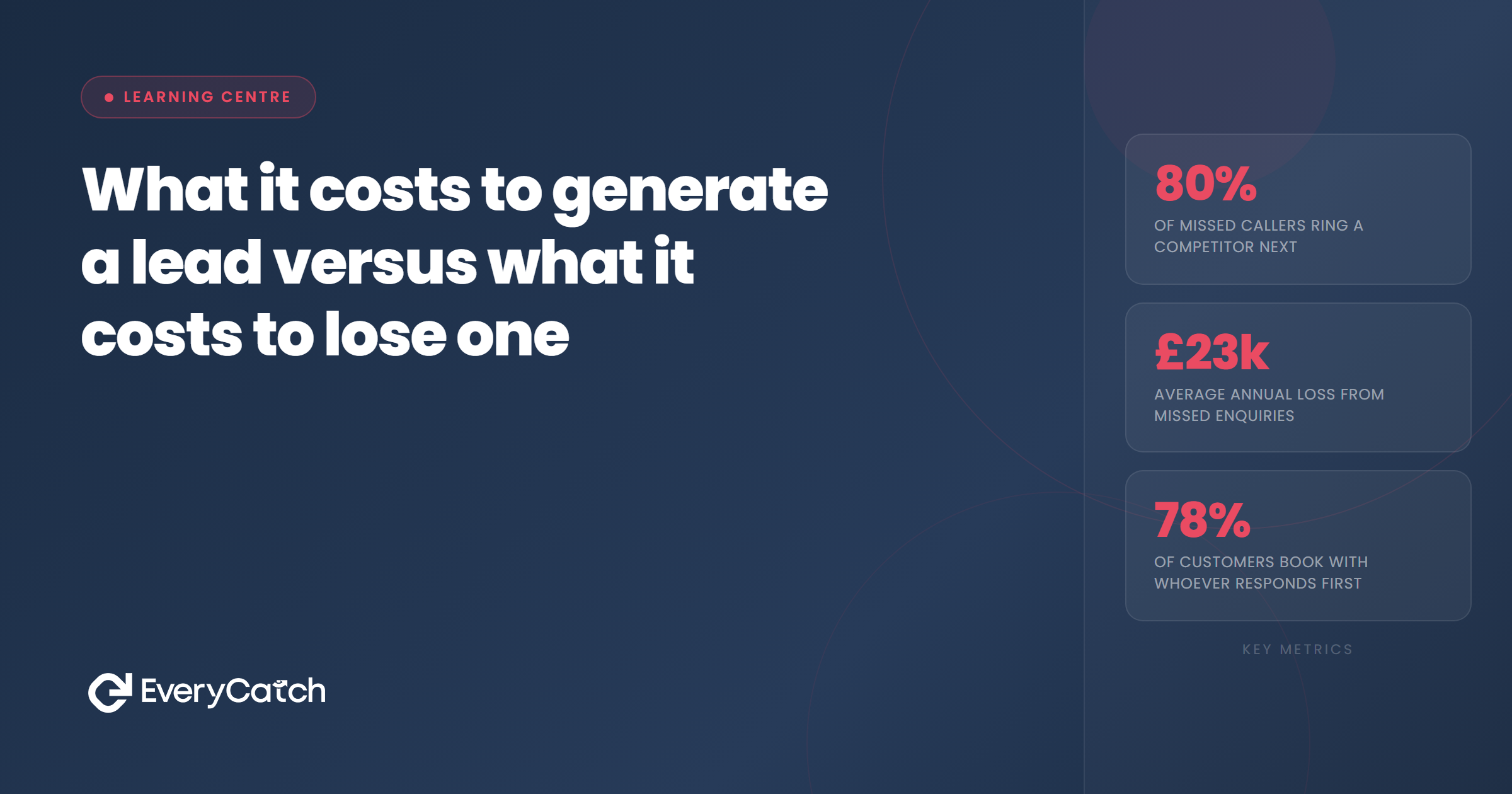
This is why so many owners conclude they have a lead generation problem when they actually have a lead handling problem. The evidence for the first sits in a spreadsheet. The evidence for the second has to be dug out of call logs and unanswered inboxes. We covered how to run that audit in how to find where your leads are leaking, and most businesses that do it find they miss or under-respond to between 20 and 40 per cent of enquiries. Research from missed call studies suggests a similar pattern, with a large share of callers refusing to leave a voicemail and simply ringing the next name on the list.
Want to know what your missed leads are actually costing?
We will walk through your enquiry volume, response gaps and job values on a short call and put a real number on the leak.
Book a free discovery callWorking out your own numbers
You do not need software to estimate the gap. Four figures will get you close. First, count your monthly enquiries across every channel, including calls, forms, emails and messages. Second, estimate the percentage that get no response or a response too slow to matter. If you have never measured this, assume 25 per cent, because that is where most businesses land when they check. Third, take your close rate on the enquiries you do handle properly. Fourth, take your average job value.
Run a worked example. A business receiving 60 enquiries a month, missing a quarter of them, closing 40 per cent of handled leads at an average job value of £550 is losing 15 leads a month. Those 15 leads represent six jobs, which is £3,300 in monthly revenue, or nearly £40,000 a year before lifetime value and referrals enter the picture. Compare that with the same business's monthly marketing spend of perhaps £2,500 and the imbalance becomes obvious. It is paying to fill a bucket with a hole in the bottom.
The cheapest lead is the one you already paid for
Once you see both numbers side by side, the priority order changes. Buying more leads at £45 each to replace the ones you drop is the most expensive way to grow. Catching the leads you already generate costs a fraction of that, because the acquisition fee is already spent. The fix is usually operational rather than clever. Answer faster, because speed to lead decides who wins the job. Text back every missed call within seconds so the caller has a reason to wait rather than ring a competitor. Follow up every quote more than once, since most jobs are won on the second or third contact rather than the first.
This is the problem EveryCatch was built for. It responds to every enquiry instantly, texts back missed calls automatically and runs follow-up sequences so no lead goes cold through silence. Whether you use our system or build your own, the arithmetic in this article stays the same. Every pound spent generating leads is only as good as your ability to catch them, and right now the leak is probably costing you more than the marketing.

From the EveryCatch team
EveryCatch helps service businesses respond to every enquiry instantly, so the leads they pay for never slip away unanswered. We write these guides to share what we learn from the businesses we work with every day.