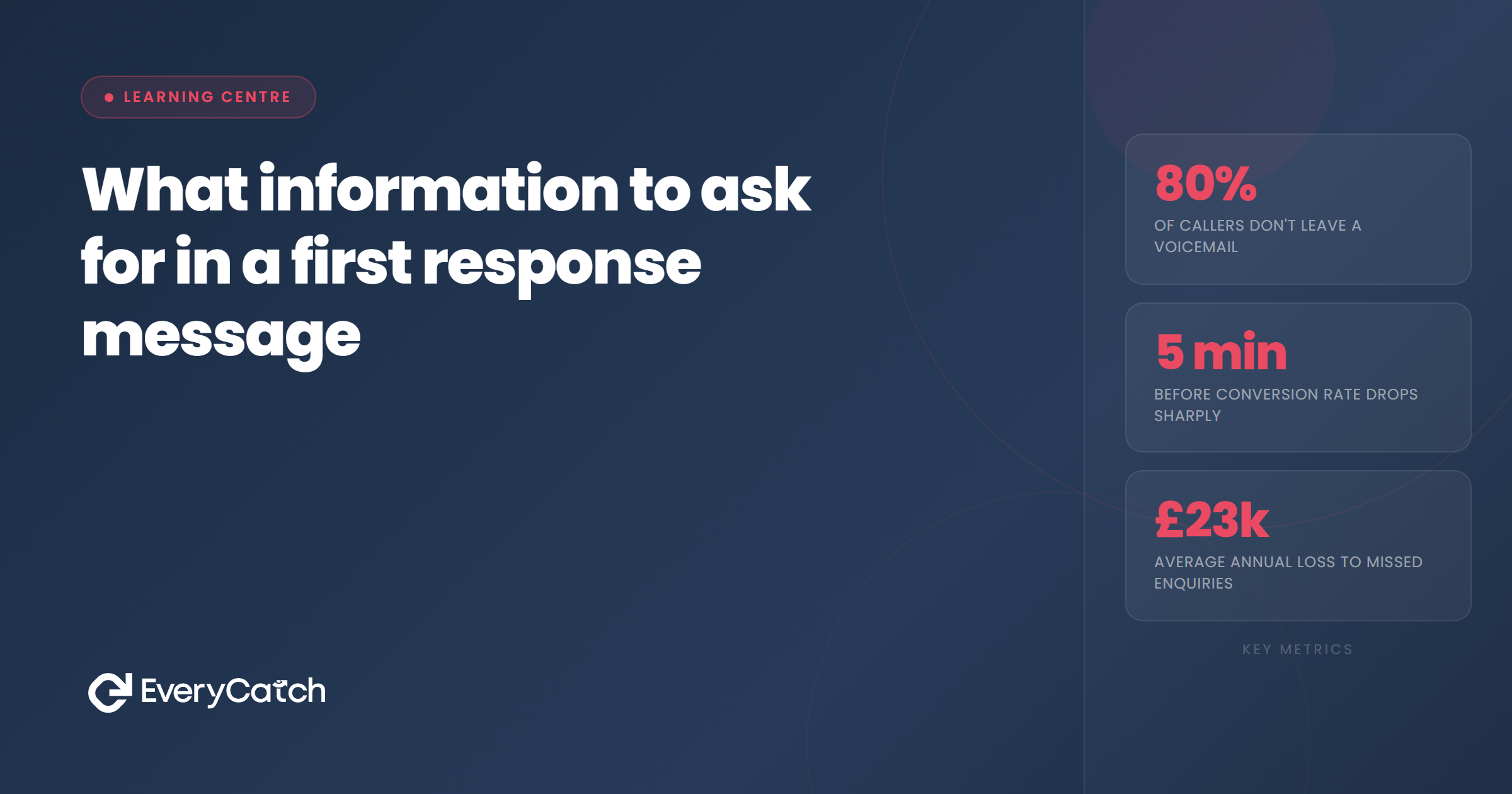
- Ask for name, postcode, and a one-line description of the job in your first message
- Avoid multi-step forms or technical questions in the first contact
- Your goal is to continue the conversation, not collect exhaustive detail
- Save detailed qualification questions for the call or follow-up messages
- Make it easy to reply by text or book a call directly from your message
When someone gets in touch with your business, the first reply you send needs to balance two things. You want enough information to help them usefully, and you want to keep the conversation moving forward. Get the balance wrong and leads drop off before you have a chance to speak to them.
Most service businesses either ask for too much or nothing at all. The first approach frightens people away with long forms. The second approach wastes time chasing detail later when you should already be quoting.
The right approach sits in the middle. You ask for three key pieces of information, make the next step obvious, and keep the door open for a conversation. This article explains what those three fields are, why they matter, and how to adapt them for your trade.
Ask for less than you think
You do not need to know every detail about the job before you respond. Your first message exists to acknowledge the enquiry, show you are paying attention, and invite the lead to take a next step. That next step is usually a phone call or site visit, and that is where the detailed questions belong.
If your first message includes five or six questions, the customer has to stop what they are doing and think through every answer. Many will decide to come back to it later. Most never do. The simplest way to reduce drop-off is to reduce friction in the first exchange.
What you need at this stage is enough information to decide whether the job is relevant to you, whether you can help, and how urgently the person needs a response. Three fields cover all of that.
The three essential fields
Name
You need a name so you can address the person properly in your replies. First name only is fine. This is basic courtesy and sets a professional tone from the start. If someone does not want to give their name at all, they are probably not a real enquiry.
Postcode or location
Most service businesses operate within a defined area. Asking for a postcode tells you immediately whether the job is geographically viable. It also helps you estimate travel time if you need to visit site. If the lead is outside your patch, you can politely let them know straight away and avoid wasting their time or yours.
You can phrase this in different ways depending on how formal your business tone is. "What's your postcode?" works for most trades. "Where are you based?" works if your messaging is more conversational. Either way, the information you need is the same.
Brief description of the job
This is the most important field. You need to know what kind of work the customer is asking about. A single sentence is enough. You do not need technical specifications, measurements, or detailed descriptions at this point. You just need to know whether it is a job you do.
Phrasing this as an open question works better than a dropdown menu. "What can we help with?" or "Tell us briefly what you need" gives the customer freedom to describe the job in their own words. You get more context than you would from a tick-box form, and the reply feels less transactional.
Want to automate your first response?
EveryCatch sends the right message within seconds of every enquiry, no setup friction.
Book a free discovery callCommon mistakes to avoid
The most common mistake is asking for information you do not actually need yet. Budget, preferred start date, property type, and detailed technical requirements are all useful to know, but they belong in a later conversation. Asking too early creates unnecessary friction and reduces the chance that someone will reply at all.
Another mistake is asking the same question twice. If the initial enquiry already includes some detail about the job, do not ask them to repeat it. Acknowledge what they have told you and ask only for what is missing. If someone says "I need a new boiler fitted" in their original message, your reply should not include "What do you need help with?" It makes you look like you are not reading their messages.
Some businesses ask for a phone number in the first reply. This can work, but only if you are clear about why you need it. "Can I grab your number so we can arrange a time to chat?" is fine. Just asking "What's your number?" with no context feels intrusive and makes people hesitate.
Finally, avoid multi-step forms. If someone has to click through three screens to tell you their postcode, most will give up. Keep everything in a single message or a single short reply wherever possible.
Examples by trade
How you phrase these questions depends on your trade and the tone of voice your business uses. Here are examples for common service industries.
Plumbing and heating
"Thanks for getting in touch. To help us respond quickly, can you let me know your name, postcode, and a quick description of the issue or job?"
Electrical work
"Hi, thanks for your message. What's your name and postcode, and what electrical work are you looking to get done?"
Building and renovation
"Thanks for reaching out. Can you send over your name, where you're based, and a brief outline of the project so we can point you in the right direction?"
Roofing
"Cheers for the enquiry. What's your name, postcode, and a quick description of the roofing work you need?"
Landscaping and gardening
"Thanks for contacting us. To get you a quick response, please share your name, postcode, and a brief description of what you're looking to do in the garden."
In each case the structure is the same. You thank them for the enquiry, ask for three pieces of information, and set the expectation that you will respond quickly. The language adjusts slightly depending on whether your business is formal or informal, but the underlying approach does not change.
If you use automated responses, this same structure applies. EveryCatch templates follow this three-field model because it strikes the right balance between qualification and keeping the conversation moving. The system sends the message immediately after an enquiry comes in, so the customer receives a reply within seconds and knows their message has been seen.
Once you have these three pieces of information, you can decide how to follow up. If the job is a good fit and in your area, you reply with next steps. If it is not something you do, you can let them know straight away and recommend someone else if appropriate. Either way, you have not wasted time on a lengthy qualification process before you know whether the lead is viable.
The goal of the first message is not to close the sale. It is to keep the door open and make it easy for the customer to take the next step. Ask for what you need to know, make your reply personal and prompt, and move the conversation forward.

From the EveryCatch team
We help service businesses respond faster and follow up smarter. Every template, workflow, and feature is built from what actually works in the field.