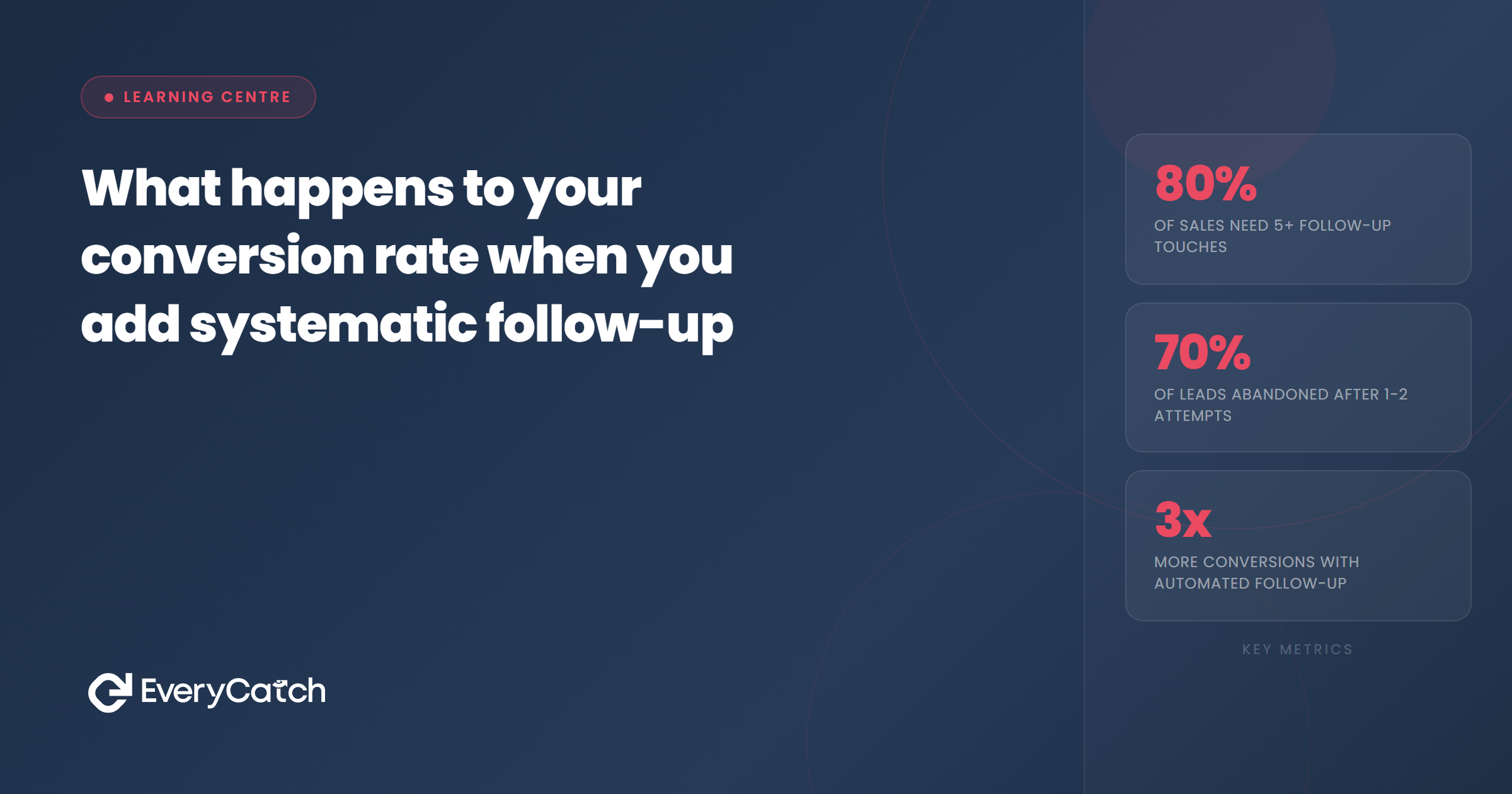
- Conversion rates typically improve by 30-50% when you add systematic follow-up
- Results appear within 2-4 weeks once sequences are active
- The biggest gains come from enquiries that were previously abandoned
- Consistency matters more than clever messaging or perfect timing
- You don't need complex sequences, you need reliable ones that actually run
Most service businesses lose between 40% and 60% of their enquiries simply because they don't follow up systematically. That number sounds dramatic until you audit your own inbox and calendar. How many quotes did you send last month that never got a reply? How many people called, asked you to send information, then disappeared?
When you add a proper follow-up system, you stop the leakage. The impact on your conversion rate is immediate and measurable.
The typical impact
Businesses moving from manual follow-up to systematic sequences see conversion rate improvements between 30% and 50%. If you currently convert 20% of enquiries into paying customers, you'll typically reach 26% to 30% within a month of going live.
The range depends on three factors. First, how bad your current follow-up actually is. If you're already disciplined about chasing leads, you'll see smaller gains. If you're honest that half your enquiries get forgotten, the improvement will be closer to 50%.
Second, your buying cycle length. Short-cycle businesses like locksmiths or emergency plumbers see faster results because decisions happen within days. Longer-cycle trades like landscaping or extensions take more touches to convert, but the eventual lift is just as real.
Third, the quality of your enquiries. A systematic process doesn't fix fundamental problems with lead quality, but it does extract maximum value from every enquiry that comes in.
Why systematic follow-up works
People don't go silent because they've decided not to buy. They go silent because life got in the way, another job became urgent, or they simply forgot. Your enquiry sits in their mental queue waiting for a moment of attention that never arrives.
A follow-up sequence gives them multiple opportunities to re-engage. The first message might arrive when they're busy. The second catches them during a quieter moment. The third reminds them that their problem still exists and you're still available to solve it.
Manual follow-up fails because it depends on you remembering every conversation, tracking every date, and having the discipline to chase people who didn't reply the first time. Systematic follow-up removes all three failure points. The system remembers. The system tracks. The system chases.
The improvement in conversion rate doesn't come from magical messaging. It comes from being consistently present when the customer is finally ready to decide.
How quickly you see results
You'll see the first conversions from follow-up sequences within two weeks of going live. These are enquiries that would have gone cold under your old approach but got converted because you stayed in touch.
The full impact becomes clear around the four-week mark. By then, enough enquiries have moved through your sequences for patterns to emerge. You can see which messages drive responses, which touchpoints matter most, and where people drop off.
The speed of results correlates directly with enquiry volume. If you receive 50 enquiries a month, you'll have statistically meaningful data within three to four weeks. If you only get 10 enquiries monthly, it takes longer to see clear trends, but individual conversions still happen faster than they would manually.
Want to see what systematic follow-up does for your numbers?
We'll show you exactly what to expect based on your current enquiry volume and conversion rate.
Book a free discovery callWhat good performance looks like
A well-performing follow-up system converts 35-45% of total enquiries for most service businesses. That's the realistic ceiling when you combine immediate responses, systematic sequences, and proper lead qualification.
Not every enquiry is winnable. Some people are price shopping with no intention of buying. Some have unrealistic expectations. Some were never serious. A systematic process doesn't convert the unconvertible, but it does ensure you never lose a convertible enquiry through neglect.
The best performers we see hit 40-45% conversion rates. They achieve this through three behaviours. They respond to every enquiry within minutes. They run consistent follow-up sequences that persist for weeks, not days. They track every interaction and adjust sequences based on what actually drives decisions.
The businesses stuck at 15-20% conversion rates share different behaviours. They respond slowly to initial contact. They chase once or twice, then give up. They have no system to track who's been contacted, when, and what was said.
Where the gains actually come from
The biggest conversion rate improvement comes from enquiries that never got a second touch under manual follow-up. These are the people who asked for a quote, received it, then went quiet. Your old process assumed silence meant no. The systematic approach knows silence often means "not yet."
You also recover enquiries where the initial contact was poor. Someone called when you were busy, you promised to call back, then forgot. An automated sequence catches these immediately and keeps them warm until you can engage properly.
The third source of gain is timing. Your manual follow-up happened when you remembered or had time. Systematic sequences reach people at intervals proven to generate responses. Day three after quote. Day seven if still no reply. Day fourteen as a final check-in. The timing creates multiple decision windows instead of one.
Smaller gains come from better qualification. When you track every enquiry systematically, you spot patterns in who converts and who wastes time. You adjust your sequences to qualify hard early, which means you spend effort on winnable business, not tyre-kickers.
Why consistency beats everything else
The businesses with the best conversion rates don't have the cleverest follow-up messages. They have the most reliable systems. Every enquiry gets the same treatment. Every sequence runs to completion. No one falls through gaps because someone was on holiday or forgot to update the spreadsheet.
Consistency builds three advantages. First, every enquiry gets the same number of chances to convert. You're not accidentally writing off good prospects because they happened to contact you during a busy week.
Second, you can actually measure what works. When every enquiry follows the same path, you can see which messages get opened, which get replies, and which convert to sales. That data lets you improve the system over time.
Third, your customers experience professionalism. They receive timely responses at sensible intervals. They never feel forgotten or chased too hard. The systematic approach creates the experience manual follow-up promises but rarely delivers.
The conversion rate improvement from systematic follow-up isn't a one-time boost. It's a permanent elevation of performance because the system doesn't forget, doesn't get distracted, and doesn't need motivation to chase that next follow-up.

From the EveryCatch team
We've helped hundreds of service businesses implement systematic follow-up. The numbers in this article come from real customer data, not theory. The gains are real, repeatable, and permanent once the system is running.