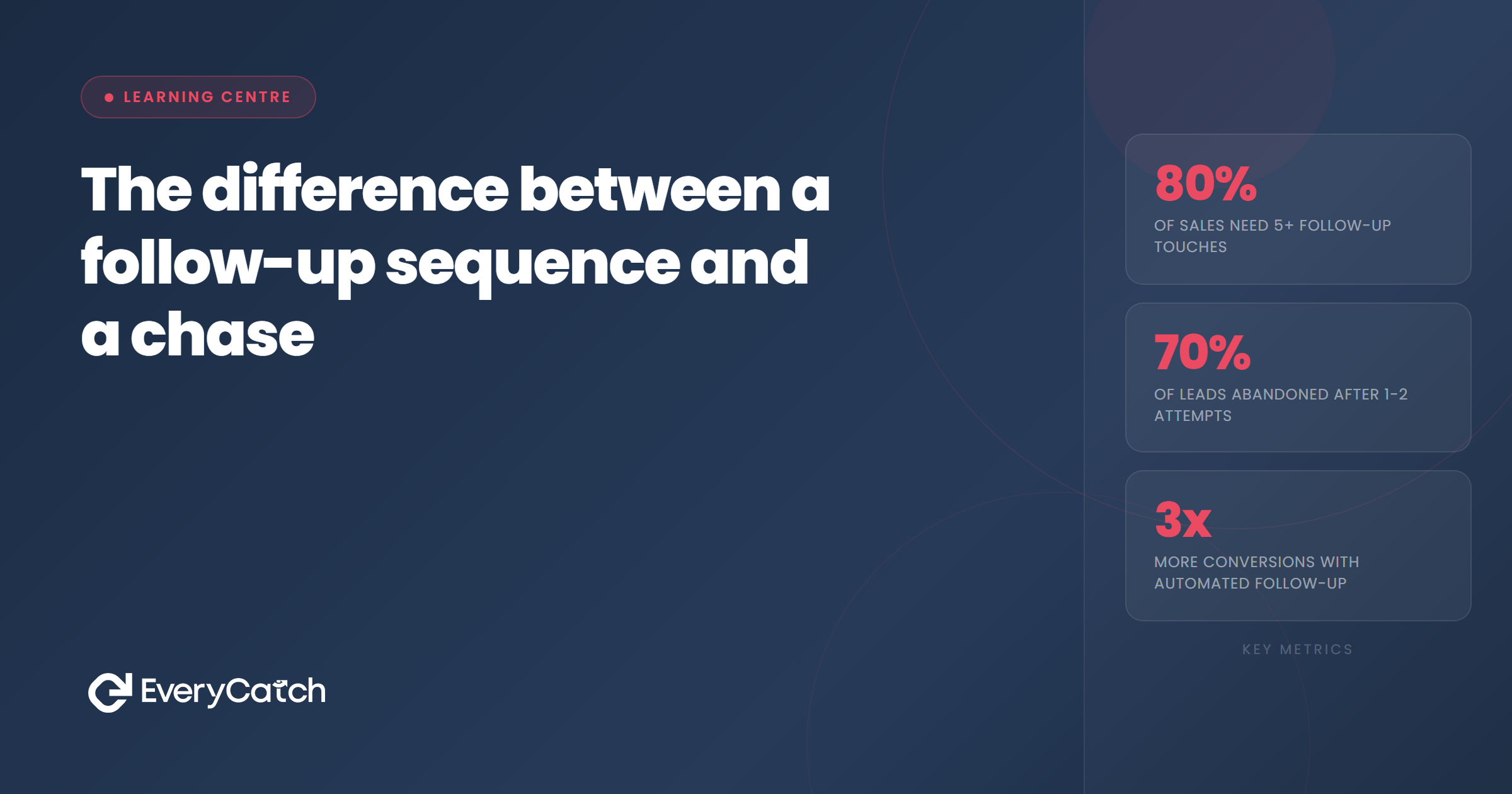

- A chase is reactive, unplanned, and damages your brand by making you look desperate
- A follow-up sequence is structured, consistent, and positions you as a professional service provider
- The psychology of each approach is completely different for your prospects
- Moving from chasing to sequencing requires upfront planning but removes daily stress
- Most service businesses chase because they lack systems, not because chasing works
Most service business owners think they have a follow-up system. They send emails, make calls, and try to stay in touch with leads. But if you feel like you're constantly chasing prospects, you probably don't have a sequence. You have a chase.
The difference matters. One makes you look professional and increases conversion rates. The other makes you look desperate and trains prospects to ignore you. Here's how to tell which one you're running.
What a chase looks like
A chase starts when someone expresses interest in your service. You call them back. They don't answer. You send a text saying you tried to reach them. No response. You wait a day or two, unsure whether you're being too pushy, then call again. Still nothing.
Three days later, you send an email with "Just following up" in the subject line. The message references your previous attempts to reach them. You're now listing the ways they haven't responded to you. The dynamic has shifted from helpful to needy.
You decide to wait a week before trying again, but the lead is now cold. When you finally do reach them, they tell you they went with someone else who "got back to them quickly". You did get back to them quickly. They just didn't pick up the first time.
That's a chase. It's reactive, inconsistent, and built around hoping the prospect will engage. Each touchpoint feels like you're nudging them to remember you exist. The message, whether you mean it or not, is that you need them more than they need you.
What a sequence looks like
A sequence starts before the lead even arrives. You've decided in advance what happens when someone enquires, books a quote, or fills in your contact form. The first response goes out immediately, confirming you've received their enquiry and explaining what happens next.
If they requested a callback, the system books it for a time that suits them and sends a confirmation. If they don't pick up when you call, the second message goes out straight away, offering alternative ways to connect. The tone is professional, not apologetic.
Three days later, they receive educational content relevant to the service they asked about. Not a sales pitch. Not a reminder that they haven't responded. Just useful information that positions you as an expert. A week later, another touchpoint. Maybe a case study. Maybe a reminder about seasonal demand. The timing is consistent, the value is clear.
Throughout this, the prospect never feels chased. They feel informed. If they're not ready to move forward, they stay on the sequence until they are. You don't have to think about them individually, because the system handles it. And when they do respond, they're more qualified and more ready to buy.
The psychological difference
When you chase someone, you create a power imbalance. The prospect knows you want their business. Every time you reach out without adding new value, you reinforce that imbalance. They start to wonder if your eagerness means you're struggling for work. That creates doubt about your quality.
A sequence removes that dynamic entirely. You're not asking them to respond. You're providing value on a predictable schedule. The prospect stops feeling pressured and starts feeling served. Even if they're not ready to buy, they appreciate that you're not hounding them. When they are ready, you're the obvious choice because you've been helpful without being pushy.
The other psychological shift happens inside your business. Chasing creates stress because every lead requires manual decision-making. Do I follow up today? Have I left it too long? What do I say this time? A sequence removes that cognitive load. You set it up once, and it runs. The mental energy you used to spend worrying about follow-up timing now goes into delivering great work.
Want to stop chasing and start converting?
We'll help you build a follow-up sequence that runs on autopilot.
Book a free discovery callWhy people chase instead of sequence
Most service business owners know chasing doesn't feel right. They do it anyway because they don't have an alternative. Building a proper sequence takes upfront work. You need to decide what happens at each stage, write the messages, set the timing, and test the flow. That feels like a big project when you're already busy.
So instead, people wing it. They respond to each lead individually, making it up as they go. That works fine for the first few enquiries each week, but it falls apart at scale. When you're juggling multiple leads at different stages, something always slips. You forget to follow up with one person, double-message another, and lose track of where each prospect sits.
The other reason people chase is because they confuse persistence with professionalism. They've been told that follow-up matters, so they keep following up in whatever way feels natural. But repetition without structure isn't persistence. It's just noise. The prospect stops reading your messages because there's nothing new in them. You're not following up, you're repeating yourself.
Sequences fix this by forcing you to plan the entire journey before the first lead arrives. That initial investment pays off immediately, because every subsequent lead flows through the same proven system. You're not improvising under pressure. You're executing a strategy.
Moving from chase to sequence
The shift from chasing to sequencing doesn't require complicated software or expensive consultants. It requires clear thinking about what should happen at each stage of your lead journey. Start by mapping the path a typical enquiry takes through your business. First contact, quote request, proposal sent, decision stage. Write down every touchpoint that currently happens.
Now look at the gaps. Where do leads disappear? Usually, it's between touchpoints where nothing is scheduled to happen. The quote goes out and you wait for them to respond. That's where a sequence step belongs. A message two days after the quote that answers common questions, or shares a relevant case study, or reminds them of your availability to discuss details.
Once you've mapped the ideal flow, write the messages. Each one should add value, not just request a response. The first message confirms what they asked for and what happens next. The second provides useful information. The third might offer a time-limited incentive or explain seasonal factors. None of them say "just checking in" or "following up on my previous email".
Then automate it. Use whatever CRM or automation tool fits your business, or work with a provider like EveryCatch that builds the entire system for you. The technology matters less than the structure. A well-designed sequence running on basic email automation will outperform random chasing with expensive software.
Test the sequence with real leads and watch what happens. You'll notice prospects responding at different stages depending on their readiness. Some convert after the second touchpoint, others after the fifth. That variability is exactly why sequences work better than chasing. You're not guessing when to follow up. You're covering all the bases systematically.

From the EveryCatch team
We help service businesses replace manual chasing with automated sequences that convert more leads without the stress. Everything is set up for you, and you stay in full control.