
- Qualified leads cool rapidly because their intent peaks at the moment of enquiry
- You need both automated acknowledgement and fast human contact within the first hour
- The gap between first reply and actual conversation is where most leads drift
- Manual follow-up processes create enough friction to lose interested buyers
- Automation maintains momentum when you can't respond personally in real time
A qualified lead arrives. Your system captures their details, you see the notification, and you know this is someone worth speaking to. You plan to call them within the day. By the time you do, they have already moved on.
The gap between qualification and conversation is where most enquiries die. Not because the lead was never serious, but because you allowed the window of intent to close. The question is not whether you respond, but how fast you make contact, and what happens in the hours immediately after.
Why qualified leads go cold
Someone fills in your form, calls your number, or books a callback. At that exact moment, they have decided your business is worth their attention. They have a problem that needs solving, and they are ready to speak to someone. That readiness is temporary.
A qualified lead does not remain in the same state of interest indefinitely. Within an hour or two, other distractions arrive. Competitors get back to them faster. The urgency fades. What felt pressing at 2pm is forgotten by 5pm. If your first human contact happens tomorrow morning, you are often competing with a lead who has already made a decision elsewhere.
The colder truth is that qualification itself does not protect you. A lead might meet every criterion on your checklist, but if they do not feel any momentum from your end, they interpret your silence as disinterest. Psychologically, the absence of rapid acknowledgement signals low demand or poor organisation. Neither impression helps.
The window of intent
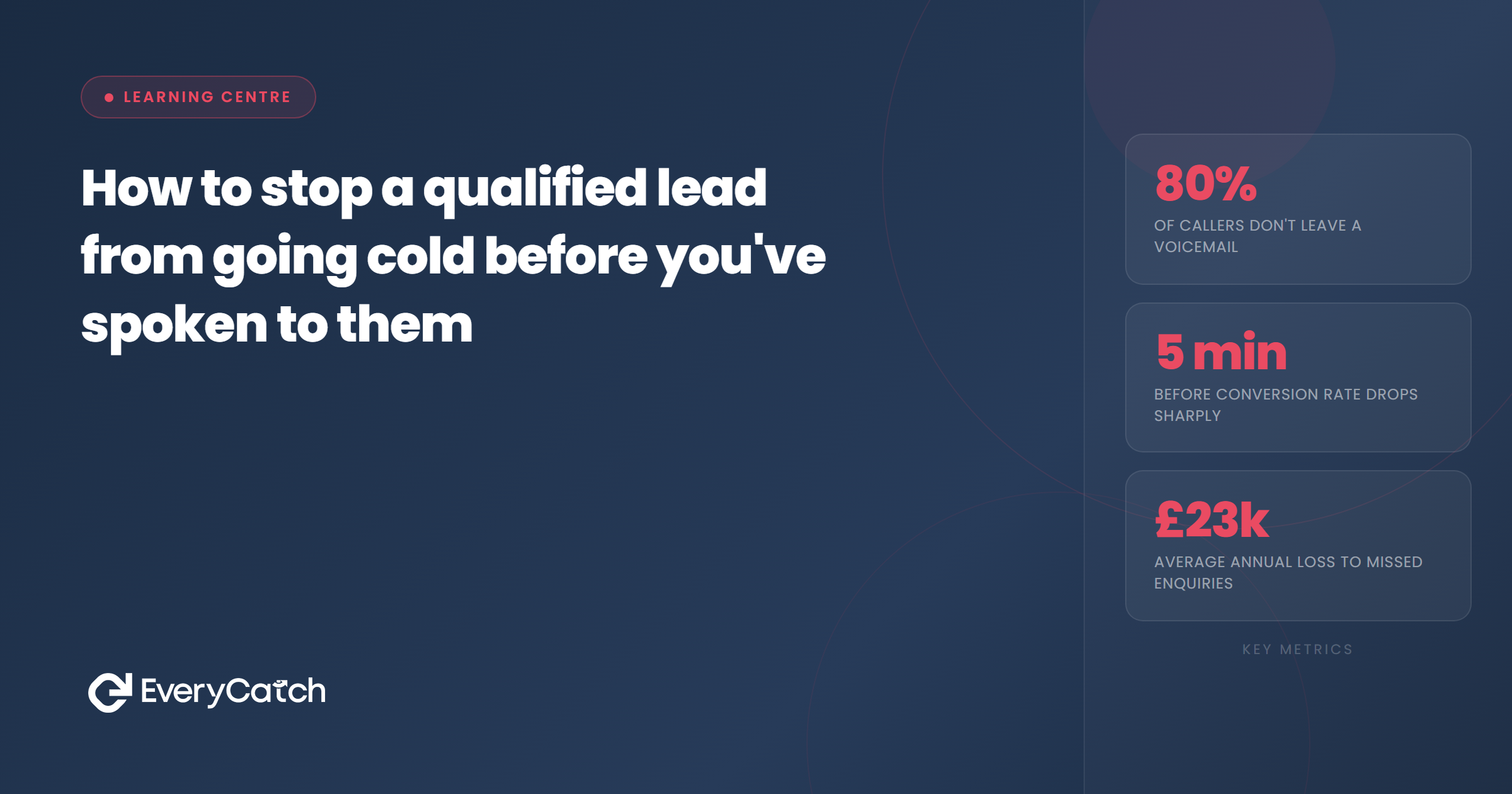
The window of intent is the period immediately after someone contacts you, during which they are most receptive to your reply. Research consistently shows this window is measured in minutes, not hours. Leads contacted within five minutes are significantly more likely to convert than those contacted after an hour. Delay by 30 minutes and the advantage starts to disappear.
This is not about panicking or dropping everything. It is about recognising that the lead's state of mind changes over time. When they submit an enquiry, they are focused on your service. Ten minutes later, they are reading emails. An hour later, they have moved on to something else entirely. By the next day, you are no longer top of mind, and your call feels like an interruption rather than a response.
The window of intent applies equally to qualified and unqualified leads, but the stakes are higher with someone who already meets your criteria. If you know they are worth speaking to, every minute you delay is a minute they spend looking elsewhere.
Immediate acknowledgement
The first step in keeping a qualified lead warm is acknowledging their enquiry the moment it arrives. An automated text message or email sent within seconds tells the lead their message has been received and that someone will be in touch shortly. This alone does not close the deal, but it stops the lead from assuming they have been ignored.
Acknowledgement should include three things. First, confirmation that you have received their enquiry. Second, a clear timeframe for when they will hear from you. Third, an option to take action immediately if they prefer, such as a link to book a call or a phone number they can ring.
Many service businesses skip this step because they plan to call the lead quickly anyway. The problem is that "quickly" is subjective. If you intend to call within the hour but the lead hears nothing in the first ten minutes, they have no way of knowing your plan. Silence feels the same whether you are two minutes away from calling or two days away.
Automated acknowledgement bridges that gap. It keeps the lead engaged while you prepare for the real conversation. It also separates you from competitors who send nothing until they are ready to talk, which is often too late.
How many leads cool off before you reach them?
We can show you where your response speed is costing you work.
Book a free discovery callMake first contact count
Acknowledgement buys you time, but it does not replace human contact. The next step is to speak to the lead while their interest is still high. If your acknowledgement message says you will call within the hour, you need to call within the hour. Failing to meet your own timeframe undermines the trust you just built.
First contact should focus on two things. Confirming the lead's need and moving them forward. You are not trying to close the job on the first call, but you are trying to establish momentum. Ask what prompted them to get in touch, clarify what they need, and agree on a next step. That next step might be a site visit, a quote, or a follow-up call, but it must be concrete and scheduled.
Qualified leads respond well to decisiveness. They contacted you because they have a problem, and they want to know you can solve it. If your first conversation feels vague or unhurried, the lead starts to question whether you are the right choice. Speed matters, but so does certainty.
When you cannot reach the lead on your first attempt, leave a message and follow up immediately with a text. The text should reference your voicemail and include a direct link to book a convenient time to talk. This gives the lead control over the next step without losing momentum.
Fill the gap
Even when you make fast contact, there is often a gap between your first conversation and your next action. You might need to visit the site, prepare a quote, or wait for the lead to check their calendar. During this gap, the lead's interest continues to cool unless you give them a reason to stay engaged.
The solution is to keep the conversation going. If you have agreed to send a quote by Friday, send a message on Wednesday confirming you are working on it. If you are waiting for the lead to confirm a date, send a reminder the following day. Small touches keep you present in the lead's mind and prevent them from drifting toward a competitor who happens to follow up more consistently.
Filling the gap does not mean pestering the lead. It means maintaining a rhythm of communication that matches the pace at which they expect things to move. If the lead is ready to book quickly, your follow-up should be frequent. If they need time to think, your follow-up should give them space while still reminding them that you are ready when they are.
Many service businesses assume that once they have spoken to a lead, the lead will come back to them when ready. Some do, but most forget. Qualified leads are busy people. If you are not reminding them of the next step, someone else will.
Remove barriers
Leads go cold not just because of slow responses, but because the process of booking or progressing feels harder than it should be. If a lead has to ring during office hours, wait for a callback, or reply to multiple emails just to arrange a simple visit, they are more likely to lose interest.
The businesses that convert qualified leads consistently are the ones that make it easy to say yes. They offer online booking for site visits, they send calendar links instead of playing email tennis, and they provide clear next steps at every stage. The fewer obstacles between the lead and the outcome, the less chance there is for the lead to drift.
This is not about over-automating or removing the human touch. It is about respecting the lead's time. A qualified lead has already decided they want to speak to you. If you make them jump through hoops to do that, you are creating friction that did not need to exist.
Look at your own process. How many steps does it take for a qualified lead to book a call, receive a quote, or arrange a visit? If the answer is more than two, you have room to simplify. Every extra step is an opportunity for the lead to reconsider or get distracted.

From the EveryCatch team
We built EveryCatch specifically to solve this problem. Every qualified lead gets an instant response, every follow-up happens on time, and every gap gets filled without you lifting a finger.