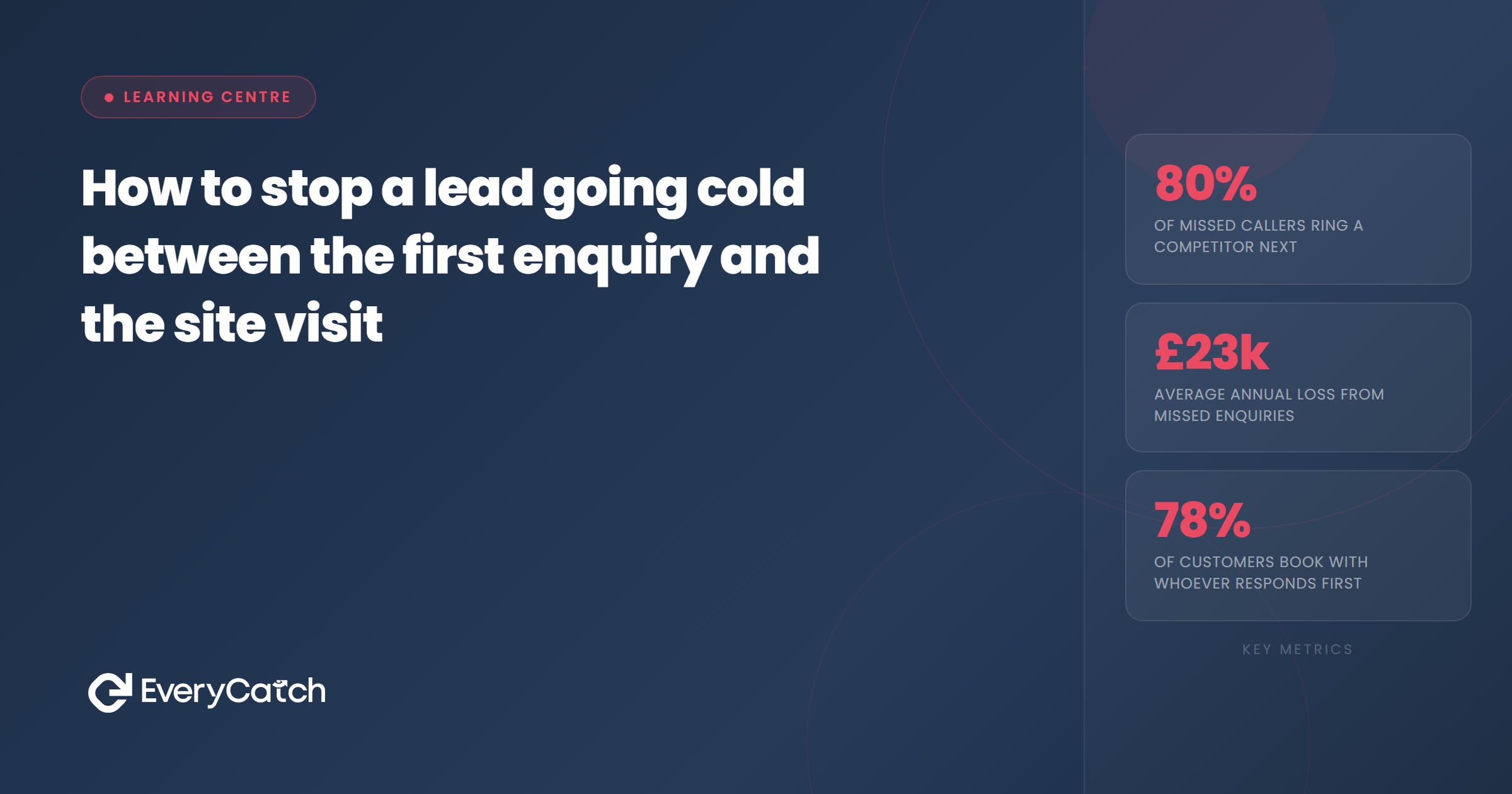

- Most leads that go cold before a site visit were never rejected. They were simply left in silence and another firm filled the gap.
- The single biggest fix is shortening the wait. A visit booked within three days holds far better than one booked next week.
- A written confirmation sent immediately after booking turns a vague verbal agreement into a real commitment.
- Two or three short touchpoints between booking and visit keep you at the front of the customer's mind without pestering them.
- Automating confirmations and reminders means every lead gets the same treatment, even when you are on the tools all day.
You answered the call. You had a good chat. The customer said "great, come round and take a look" and you agreed a day. By every reasonable measure that lead was won. Then the visit rolls around and they cancel, or they stop replying, or you turn up and they mention another quote they have already accepted.
Nothing went wrong in the conversation. The lead went cold in the gap after it. That gap, between the first enquiry and the site visit, is where a surprising share of service business revenue quietly disappears. The good news is that the fix is mostly mechanical. It comes down to timing, confirmation, and a handful of well placed messages.
Why leads cool off in the gap
A customer's motivation peaks at the moment they make the enquiry. The leaking gutter is dripping, the boiler is playing up, the extension idea is exciting. Every day after that, the urgency fades a little. Life gets in the way. The problem starts to feel less pressing, or the budget starts to feel more frightening.
At the same time, most customers do not enquire with one business. They ring three or four. Whichever firm responds fastest and stays visible tends to win, which is the same dynamic covered in why fast lead response wins more jobs. If your site visit is booked for next Thursday and a competitor can get round on Tuesday, they will often walk away with the job before you have even seen it.
Silence makes all of this worse. A customer who hears nothing between booking and visit starts to wonder whether you actually wrote it down. Doubt creeps in. Doubt is what makes people accept the other quote, or feel comfortable cancelling on you at short notice.
Shorten the gap wherever you can
Before you think about messages and reminders, look at the length of the gap itself. Every extra day between enquiry and visit gives motivation more time to decay and competitors more time to move. If your default is "I can pop round a week on Wednesday", you are handing the intervening seven days to whoever answers next.
Three practical ways to compress it are worth considering.
- Hold visit slots. Keep one or two late afternoon slots free each week specifically for new enquiries. A visit within two or three days feels responsive and stays ahead of most competitors.
- Offer a video walkthrough. For straightforward jobs, a five minute video call where the customer shows you the problem can replace or bring forward the physical visit. You engage them the same day instead of next week.
- Book on the first call. Never end an enquiry with "I'll check my diary and get back to you". That creates a second gap before the first one has even started. Agree a date while they are on the phone.
None of this requires software. It requires deciding that new enquiries get priority access to your diary, because a new enquiry is the most perishable thing your business handles.
Confirm the visit in writing, immediately
A verbal agreement on the phone is not a commitment. It is an intention, and intentions are easy to abandon. The moment the call ends, the customer should receive a text or email confirming the date, the time, your name, and what will happen at the visit.
That message does three jobs at once. It proves you are organised, which matters enormously in trades where reliability is the customer's biggest fear. It gives them something to check the diary against, which reduces genuine forgetfulness. And psychologically, a written confirmation turns "someone is coming round at some point" into "Andrew is coming at 4pm on Tuesday". Named, specific commitments are far harder to cancel casually.
Add one line that sets expectations, something like "the visit takes around thirty minutes and you'll have a written quote within 48 hours". Customers who know what happens next have less reason to keep shopping around in the meantime.
How many site visits are cancelling on you?
We will look at your enquiry-to-visit process and show you exactly where leads are cooling off, free and with no obligation.
Book a free discovery callThe touchpoints that hold interest until you arrive
If the gap between booking and visit is more than a couple of days, the confirmation alone is not enough. You need a small number of deliberate touchpoints in between. Two or three is plenty. The aim is presence, not pressure.
A sequence that works well for most service businesses looks like this. The day after booking, send something useful rather than salesy, such as a short note on what to think about before the visit, or a link to a recent job similar to theirs. Two days before the visit, send a simple reminder confirming you are still coming and asking them to reply if anything has changed. On the morning of the visit, send a brief "see you at 4pm today" message with your name and, ideally, a photo or company logo so they know who to expect at the door.
Each message reduces cancellation risk in a different way. The useful message builds trust and quietly demonstrates expertise. The reminder surfaces any problem early, so a clash becomes a reschedule rather than a no-show. The day-of message makes cancelling feel personal, because now they would be letting a specific person down.
Keep every message short. Three sentences is a ceiling, not a target. Long messages read as marketing and get ignored. Short ones read as a real person keeping them informed.
Automate the sequence so it happens every time
Here is the honest problem with everything above. It works, and almost nobody does it consistently, because the person who needs to send those messages is up a ladder or under a floor at the moment they need sending. Manual follow-up depends on memory and spare time, and busy weeks have neither. That inconsistency is exactly how missed leads accumulate without anyone noticing.
This is where automation earns its keep. When a visit is booked, a system like EveryCatch can send the written confirmation instantly, deliver the touchpoint messages on schedule, and flag any reply so you can respond personally. The customer experiences a business that seems remarkably on the ball. You experience nothing at all, because it runs while you work. Our follow-up sequences exist for precisely this gap.
Whether you automate it or run it from a checklist on the van dashboard, the principle stands. The lead you spoke to on Monday is not the same lead by Friday unless you have done something to keep them warm. The businesses that win the most site visits are rarely the cheapest or even the best known. They are the ones the customer never got a chance to forget.

From the EveryCatch team
EveryCatch helps service businesses catch, confirm, and convert every enquiry with automated responses, reminders, and follow-up. We write these guides so you can fix leaks in your lead process, whether you use our software or not.