- Most sales cycles lengthen because gaps appear between touchpoints, not because prospects need more time to decide
- Structured follow-up removes decision friction by delivering the right information at the right moment
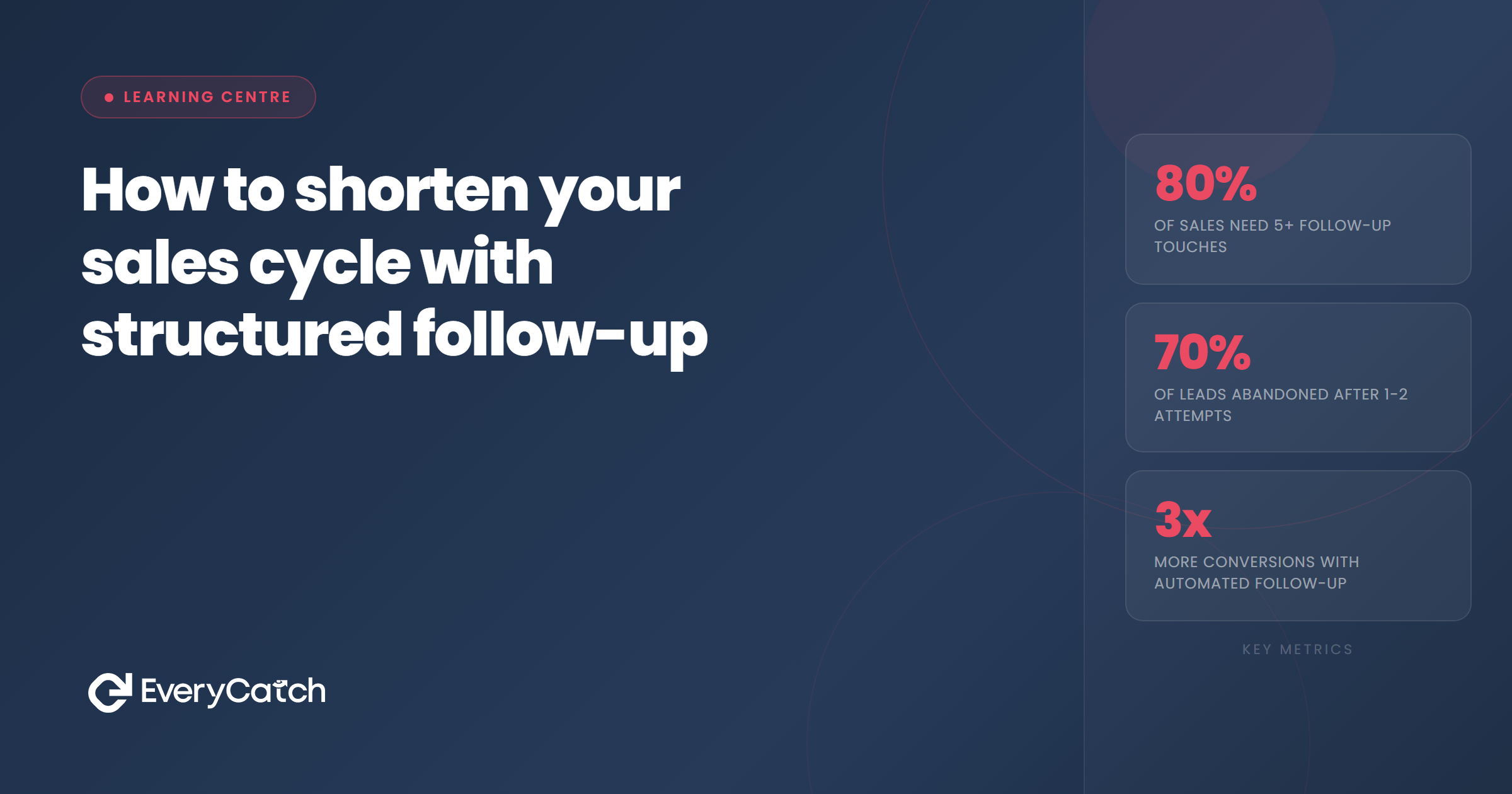
- Automated sequences cut typical cycle length by 40 to 60 per cent in service businesses
- Early momentum in the first 48 hours determines whether a prospect converts quickly or drifts away
- You measure success by tracking days from enquiry to booking, not just conversion rate
Your sales cycle probably takes longer than it needs to. Not because your prospects are slow to decide, but because the time between your touchpoints stretches out. A day passes before you reply. Another few days before you follow up. A week goes by with silence. The prospect cools off, you lose positioning, and what could have closed in five days takes three weeks.
Service businesses often accept long cycles as unavoidable. The thinking goes that people need time to think, compare quotes, discuss with partners. That's partly true. But the length of your cycle is determined far more by when and how often you make contact than by how long your prospects need to make up their minds.
Structured follow-up cuts cycle time by removing the gaps. Every prospect moves through the same sequence at the same pace. Information arrives when it's needed. Questions get answered before they become objections. The path from enquiry to decision stays smooth and fast.
Why sales cycles drag on
Most service business cycles lengthen for predictable reasons. The first gap appears right at the start. An enquiry comes in, but you're on a job or in a meeting. By the time you respond, several hours or a full day has passed. The prospect has already reached out to two other companies. You've lost the first-mover advantage.
The second gap opens after the initial conversation. You send a quote or proposal and then wait for the prospect to come back to you. Days pass. You're not sure if they received it, read it, or forgot about it. When you do follow up, it feels pushy because you're reacting to silence rather than continuing a conversation.
The third gap happens when prospects go quiet. They're not saying no, but they're not saying yes either. You follow up sporadically, hoping to catch them at the right moment. Each attempt feels more awkward than the last. The cycle drags on because there's no structure driving it forward.
Manual follow-up makes these gaps worse. You rely on memory, sticky notes, or a CRM you don't check often enough. Some leads get followed up quickly. Others sit for a week. The experience varies wildly depending on how busy you are that day.
How structure changes timing
A structured sequence eliminates randomness. Every lead enters the same process at the same speed. The first message goes out within minutes. The follow-up arrives two days later, whether you're available or not. The third touch happens on schedule. Prospects move through a consistent experience designed to maintain momentum.
This consistency shortens cycles in three ways. First, it removes the dead time between touches. Instead of waiting for you to remember to follow up, the next message arrives automatically. The prospect stays engaged because the conversation never stalls.
Second, structured sequences deliver information in the right order. Instead of dumping everything into one email and hoping they read it, you spread key points across multiple messages. Pricing comes first. Social proof follows. Answers to common objections arrive before the prospect even raises them. Each message builds on the last, moving the decision forward.
Third, structure creates urgency without being pushy. When messages arrive on a clear schedule, prospects understand that things are moving. They don't feel pressured, but they do feel momentum. The sequence itself signals that decisions happen on a timeline, not in limbo.
How much time are you losing to follow-up gaps?
We'll show you exactly where your cycle slows down and how to fix it.
Book a free discovery callBuilding your sequence
The best sequences for shortening cycles focus on speed and clarity in the first 72 hours. That's when most buying decisions get made. If you can't get traction in that window, the cycle will stretch out no matter what you do later.
Start with an instant response. The first message should go out within two minutes of the enquiry. This doesn't need to answer every question. It confirms you've received the enquiry, sets an expectation for when you'll follow up properly, and keeps you top of mind while they're still comparing options.
The second message should arrive within 24 hours. This is where you provide real value. Include pricing if possible. Answer the questions they asked in their enquiry. Add a piece of social proof that's relevant to their situation. Make it easy for them to take the next step, whether that's booking a call, confirming availability, or asking follow-up questions.
The third message comes 48 hours after the enquiry if they haven't responded. This one addresses common objections without making them feel like you're chasing. You might share a quick case study, clarify what's included in your service, or offer a time-limited availability window. The goal is to remove friction, not apply pressure.
After that, the sequence should slow down but not stop. Messages at day five and day seven keep you visible without overwhelming them. Each one should offer something new, whether that's an answer to a question you anticipate, a different angle on the value you provide, or simply a check-in that feels helpful rather than sales-heavy.
Timing between touches
The gaps between your messages matter as much as the content. Too frequent and you annoy people. Too slow and they forget about you or choose someone else. The ideal rhythm varies by industry, but most service businesses see the best results with tight spacing early and wider gaps later.
In the first 48 hours, daily contact works. Prospects expect quick responses during this window. They're actively comparing options, and your presence during this period signals reliability and professionalism. After 48 hours, shift to every two or three days. This keeps you visible without feeling relentless.
After a week, move to weekly check-ins if they still haven't responded. At this stage, they've either gone cold or they're genuinely still deciding. Weekly messages give them space while keeping the door open. You're not writing them off, but you're also not burning energy on prospects who aren't moving.
The key is consistency within each stage. Don't send a message at 9am one day and 6pm the next. Pick a time that works for your audience and stick to it. Predictability builds trust. Randomness feels chaotic.
Maintaining momentum
Shortening your cycle isn't just about sending messages faster. It's about keeping the prospect moving toward a decision at every step. Momentum dies when prospects hit friction or uncertainty. Your sequence should anticipate both and remove them before they slow things down.
One tactic is to include clear next steps in every message. Don't end with "let me know if you have questions." End with "reply with your preferred date and I'll send you a booking link." Give them a specific, easy action that moves the process forward. The easier the next step, the faster they'll take it.
Another tactic is to use proof strategically. Don't save all your testimonials and case studies for one big email. Spread them across the sequence. Show a before-and-after result in message two. Share a short testimonial in message four. Link to a portfolio or gallery in message six. Each piece of proof reduces doubt and keeps them engaged.
You can also use scarcity honestly. If you genuinely have limited availability, mention it early. If you're booking three weeks out, say so. Prospects who know they need to decide soon will move faster. Just don't manufacture urgency where it doesn't exist. People can tell, and it damages trust.
Measuring cycle reduction
Most businesses track conversion rate but ignore cycle length. That's a mistake. Two businesses can have the same conversion rate but completely different revenue outcomes if one closes deals in five days and the other takes 20. Shorter cycles mean you book more jobs in the same period, improve cash flow, and reduce the number of leads you need to hit revenue targets.
To measure cycle length, track the number of days between first enquiry and booking confirmation. Break this down by lead source if possible. Enquiries from Google might convert faster than referrals, or vice versa. Knowing which sources close quickly helps you prioritise where to focus.
You should also track how cycle length changes over time. If you implement a structured sequence and your average cycle drops from 18 days to ten, that's a measurable win. If it doesn't change, your sequence needs adjusting. Look at where prospects drop off and what messages get the most engagement.
Finally, compare cycle length to conversion rate. Sometimes a faster cycle comes at the cost of lower conversions, which means you're pushing too hard. Other times, a shorter cycle actually improves conversion because you're catching people while they're still hot. The goal is to find the balance that maximises both speed and close rate.

From the EveryCatch team
We help service businesses build follow-up sequences that shorten sales cycles without adding manual work. Our clients typically see cycle times drop by 40 to 60 per cent in the first 90 days.