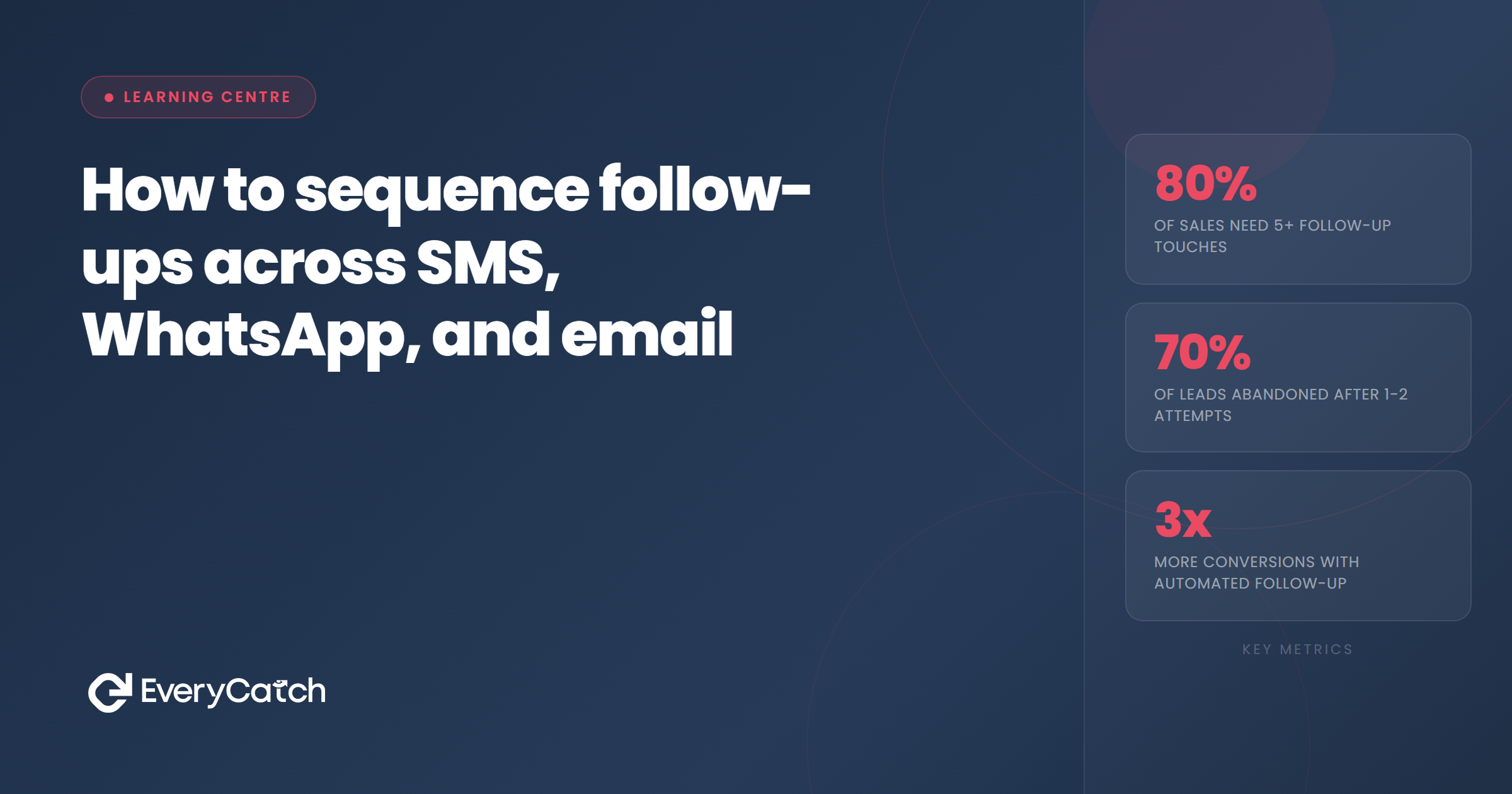
- SMS works best for immediate first contact, WhatsApp for mid-sequence conversation, and email for detailed information
- Effective sequences layer channels based on urgency, message complexity, and lead behaviour
- Timing matters more than frequency. Space messages to respect attention without losing momentum
- Every message in a sequence needs a clear purpose and should move the conversation forward
- Test response rates by channel and adjust sequences based on what your specific audience prefers
Most service businesses now have access to SMS, WhatsApp, and email. The question is no longer whether to use them, but how to combine them into a follow-up sequence that feels natural and gets results.
A badly planned sequence hits leads with the same message across every channel within minutes. A well-designed one uses each channel for what it does best, with timing and content that work together. The difference shows up in conversion rates.
Channel strengths and natural use cases
Each channel has different open rates, response patterns, and expectations. Understanding these differences lets you build sequences that feel appropriate rather than aggressive.
SMS gets read within minutes. Most people check text messages instinctively. Open rates sit around 98%, with the majority opened in the first three minutes. This makes SMS perfect for first contact, time-sensitive offers, and urgent updates. Keep messages short. People expect texts to be quick and scannable.
WhatsApp sits between SMS and email. It carries more conversational weight than SMS but feels less formal than email. People use it for back-and-forth exchanges, not one-way broadcasts. This makes WhatsApp ideal for mid-sequence touch points where you want to invite dialogue, answer questions, or share images and documents. The interface supports richer media without feeling like marketing.
Email handles complexity. It works for longer explanations, detailed proposals, multiple links, and content people might want to reference later. Response times are slower, sometimes hours or days, but email lets you say more without feeling intrusive. Use it for information that needs structure or for leads who have gone quiet on faster channels.
Sequencing principles that drive conversion
The best sequences follow a logic. You start where attention is highest, then adjust based on response and timing. Speed matters early. Delay costs you momentum.
Start with SMS for new leads. When someone fills in a form, calls and misses you, or requests information, they are thinking about your service right now. An SMS within 60 seconds keeps that attention. The message confirms receipt and sets expectations for what happens next.
Layer in a second channel if the first gets no response. If your SMS goes unanswered after two hours, follow up with WhatsApp or email. This gives the lead another way to engage without repeating the exact same message on the same channel. Some people ignore texts but check WhatsApp religiously, or vice versa.
Switch to email for detail. Once you have engagement on SMS or WhatsApp, send a follow-up email with more information. The faster channels get the conversation started. Email fills in the gaps and gives the lead something to forward, save, or review when they are ready to decide.
Use WhatsApp to re-engage cold leads. If a lead has gone silent after your initial sequence, a WhatsApp message two or three days later often gets a response where another SMS or email would not. The conversational tone feels less formal, and people are more likely to reply with a quick answer.
Starter sequences for common scenarios
Here are three sequences that work across most service industries. Adjust the timing and content to fit your lead type and response patterns.
New web enquiry sequence
Minute 0: SMS thanking them for the enquiry and confirming you will call within the hour. Include your name and business.
Minute 15: Phone call attempt.
Hour 2: WhatsApp message if no answer on the call, offering to send details or answer questions over message.
Hour 6: Email with full service overview, pricing guide, and next steps if still no response.
Day 2: WhatsApp check-in asking if they have had a chance to review the email or if anything is unclear.
Day 5: Final email summarising the offer and inviting them to get in touch when ready.
Missed call sequence
Minute 1: SMS acknowledging the missed call and offering to call back or continue over text.
Minute 10: Return call attempt.
Hour 1: WhatsApp message if still no contact, offering a quick reply option or a link to book a callback.
Day 1: Email with an overview of services and a calendar link if you have not connected.
Day 3: SMS checking in and offering one more chance to connect.
Quote follow-up sequence
Day 0: Email with the full quote, terms, and a clear call to action.
Day 2: SMS checking if they received the quote and if they have any questions.
Day 4: WhatsApp message offering to walk them through the quote or adjust anything.
Day 7: Email with social proof, testimonials, or case studies relevant to their project.
Day 10: Final SMS offering a small incentive or deadline to move forward.
Want follow-ups that run on autopilot?
We build multi-channel sequences that respond to lead behaviour in real time.
Book a free discovery callTiming intervals that respect attention
Sequence timing determines whether you look persistent or desperate. Too fast feels pushy. Too slow loses momentum.
The first 60 minutes are critical. This is when leads are most engaged and most likely to respond. Your first message should arrive within one minute. Your second touch point, whether it is a call or a second message, should happen within the hour.
After the first hour, slow down. Space your next few messages across hours, not minutes. A message at hour two, another at hour six, and one the next day gives leads breathing room without letting them forget you.
Days two to five are your re-engagement window. Leads who have not responded in the first 24 hours need a different approach. Switch channels, change your message angle, and offer something new. A check-in on day two, more detail on day four, and a final nudge on day five works for most sequences.
After day seven, slow the cadence further. Weekly check-ins are enough for leads who have shown interest but are not ready to commit. Monthly nurture emails keep you visible without being intrusive.
Channel switching logic that adapts to behaviour
The best sequences do not just follow a script. They adapt based on how the lead responds, or does not respond.
If a lead replies to your SMS, stay on SMS until they stop responding or the conversation needs more detail. Do not switch to email mid-conversation unless they ask for it. People prefer to keep chatting where they started.
If a lead opens your email but does not reply, follow up with SMS or WhatsApp. The open tells you they are interested, but email might not be their preferred response channel. A quick text nudges them back into conversation.
If a lead ignores SMS and email but engages on WhatsApp, make WhatsApp your primary channel for that lead. Some people treat SMS as transactional and email as spam, but reply instantly on WhatsApp. Watch the data and adjust.
If a lead goes completely silent across all channels after initial engagement, drop to a slow nurture cadence. A monthly email or quarterly check-in keeps you on their radar without burning goodwill.
Content variation across channels
Repeating the same message across SMS, WhatsApp, and email wastes the strengths of each channel. Vary your content to match the format.
SMS should be direct and actionable. One clear idea, one clear next step. No fluff. Examples include confirming receipt, offering a callback time, or sharing a single link.
WhatsApp can be warmer and more conversational. Ask a question. Invite a reply. Share an image or a short video if it adds value. The tone should feel like you are messaging a contact, not broadcasting to a list.
Email gives you space to explain. Use it for full service descriptions, multiple links, FAQs, and anything that benefits from formatting. Break up text with headings and bullet points. People skim emails, so make it easy.
Across all channels, change your angle with each message. Your first touch might confirm interest. Your second could offer additional information. Your third might share a customer story. Your fourth could introduce urgency or an incentive. Each message should give the lead a new reason to respond.

From the EveryCatch team
We build multi-channel sequences that respond intelligently to lead behaviour. Every message is timed, targeted, and designed to move the conversation forward without overwhelming the person on the other end.