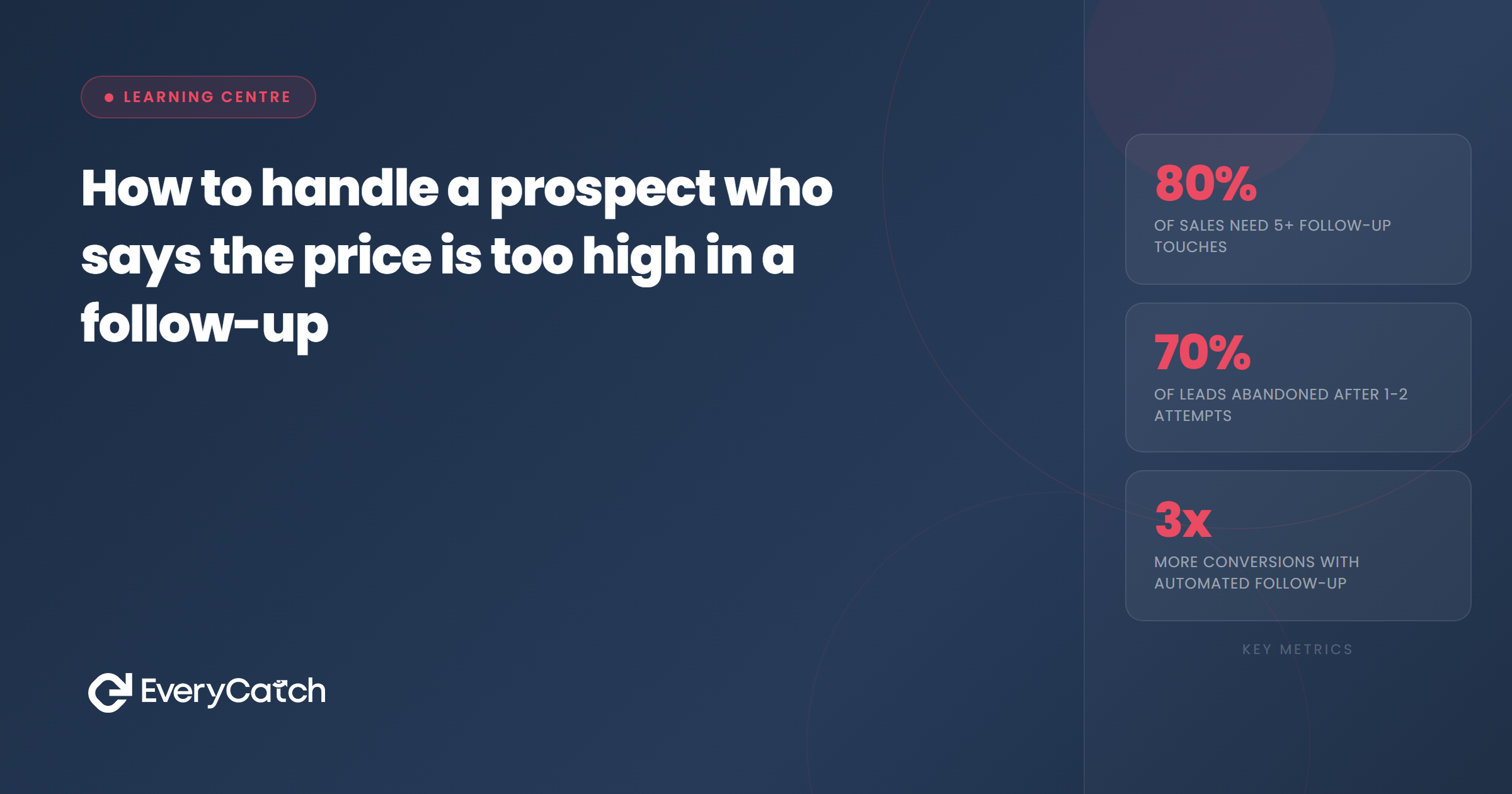
- Price objections usually mean the prospect doesn't see enough value or has misunderstood what you're offering
- Reframe the conversation to focus on outcomes, not features, and tie price to tangible results
- Use comparison with competitor pricing, DIY costs, or the cost of inaction to anchor your price
- Distinguish between genuine budget constraints and timing problems that can be solved with flexible payment structures
- Know when to walk away from prospects who aren't the right fit for your service or pricing model
The moment a prospect says your price is too high, your instinct may be to defend, discount, or disengage. None of those responses work. The price objection is not a rejection. It's a request for reassurance that the value you're offering justifies the investment. That reassurance rarely comes from dropping your price. It comes from reframing the conversation.
Service businesses lose more deals to poor objection handling than they do to high prices. When a prospect raises a pricing concern during follow-up, you still have control. The question is whether you respond with clarity or concession.
What the objection really means
When a prospect says your price is too high, they are communicating one of three things. They don't understand the value you're delivering, they're comparing your price to something irrelevant, or they have a genuine budget constraint that wasn't surfaced earlier in the conversation.
The first scenario is the most common. You've explained what you do, but you haven't connected it to what they care about. They've heard features, but they haven't absorbed outcomes. Your follow-up needs to close that gap before you even think about defending the number.
The second scenario happens when prospects anchor your price to the wrong comparison. They've looked at a cheaper competitor who doesn't deliver the same scope, or they've confused your service with a DIY alternative that takes weeks to deliver poor results. Your job is to reset the anchor by showing what they're actually comparing.
The third scenario is the most straightforward. They genuinely don't have the budget right now. That's not a failure of your pricing, it's a timing or qualification issue. The response is different, and we'll address that later.
Reframe the conversation around value
The worst response to a price objection is to immediately talk about price. Instead, you acknowledge the concern and redirect to outcomes. Ask what result they're trying to achieve and how they'd measure success. Then tie your price directly to that outcome.
If you're a landscaper and a prospect balks at your quote for a garden redesign, the response isn't to break down labour costs. It's to ask how much more they think their property value would increase with the work done, or how much they value outdoor space that actually gets used. You're moving the conversation from cost to return.
Service businesses that handle price objections well don't defend numbers. They show numbers in context. A £5,000 bathroom renovation sounds expensive until you explain that it adds £12,000 to a property's resale value. A £1,200 monthly retainer for social media management sounds high until you demonstrate that the client currently spends three hours a week managing it themselves, which equates to £2,000 a month in opportunity cost.
The reframe doesn't rely on manipulative language. It relies on specificity. You're showing them what they get, what it solves, and what changes as a result.
Use comparison to anchor price
Prospects rarely object to your price in isolation. They object because they've compared it to something else, often the wrong thing. Your job is to control the comparison by making it explicit.
If they're comparing you to a cheaper competitor, acknowledge the difference and explain what the competitor doesn't include. You're not dismissing the alternative, you're showing what happens when they choose it. A £3,000 website from a freelancer may look appealing next to your £8,000 quote, but if your package includes ongoing support, SEO optimisation, and conversion tracking that the freelancer doesn't offer, the comparison shifts.
If they're comparing you to doing it themselves, show them the time cost. Ask how long it would take them to learn the skill, execute the work, and troubleshoot the mistakes. Then translate that into their hourly rate. A business owner earning £100 an hour who spends 30 hours building their own website has spent £3,000 in opportunity cost. Your £4,000 quote no longer looks expensive.
The third comparison is the cost of doing nothing. If they delay the decision, what does that cost them? A plumber quoting £1,500 to fix a heating system can reframe by asking what they'll spend on emergency call-outs over the next year if they don't fix it now. A marketing consultant can show what they'll lose in revenue if they continue running ineffective campaigns for another six months.
Losing prospects to pricing objections?
See how EveryCatch helps you stay in the conversation and convert more follow-ups.
Book a free discovery callWhen timing is the real issue
Not every price objection is about the number. Sometimes the prospect wants the service, understands the value, but doesn't have the cash available right now. That's a different problem, and it has different solutions.
Ask if budget timing is the constraint. If they say yes, offer a payment plan. Many service businesses leave money on the table because they assume every sale has to be paid upfront. A £6,000 project becomes a £2,000 deposit and three monthly payments. The price hasn't changed, but the barrier has.
If they need time to allocate budget, ask when their next review cycle is. You're not chasing them, you're booking a specific follow-up date tied to their internal process. That keeps the conversation alive without making you look desperate.
The other timing option is to offer a phased approach. Break the project into stages and let them start with stage one. They pay less upfront, you deliver visible results, and they commit to the rest once they've seen value. This works particularly well for projects where the ROI becomes clear early, like website redesigns or digital marketing audits.
When to walk away
Some prospects will never see the value at your price point, and that's fine. Trying to convince someone who fundamentally doesn't value your work wastes your time and theirs. The key is knowing when the objection is genuine and when it's a signal to disengage.
If they've compared you to competitors, understood what you deliver, and still say it's too expensive, they're probably not your customer. That's not a failure, it's qualification working as it should. You respond with clarity, not concession. Explain that your pricing reflects the service level you provide and that if they need something cheaper, they'll need to compromise on scope or quality. Then wish them well.
Walking away with professionalism often has a secondary benefit. Prospects who see you hold your ground on pricing sometimes come back later, either because the cheaper option didn't work out or because your confidence made them reconsider what they were willing to pay.
The businesses that struggle with pricing objections are the ones who discount at the first hint of resistance. They've trained their market to push back, because the pushback works. The businesses that handle objections well treat their prices as fixed and their value as negotiable only in terms of scope. If the price is too high, the scope shrinks. The rate doesn't.
Structure your follow-up sequence
Price objections rarely get resolved in a single message. Your follow-up sequence needs to handle the objection over time, with each message adding a new angle that reinforces value without repeating the same argument.
The first follow-up acknowledges the concern and reframes the conversation around outcomes. The second follow-up introduces a case study or testimonial that shows someone else getting results at your price point. The third follow-up might include a comparison to alternatives or a breakdown of what happens if they delay. Each message builds on the last without sounding repetitive.
This structure works because it respects the prospect's decision-making process. They don't go from objection to purchase in one step. They move through understanding, comparison, and reassurance before they commit. Your follow-up sequence mirrors that process.
Automated follow-up systems handle this better than manual sequences because they maintain consistency without requiring you to remember where each prospect is in the conversation. Tools like EveryCatch let you map out the entire objection-handling sequence in advance, so every prospect gets the right message at the right time without you managing it manually.

From the EveryCatch team
We help service businesses structure their follow-up so pricing objections get handled systematically, not left to chance. Consistent objection handling turns price conversations into closed deals.