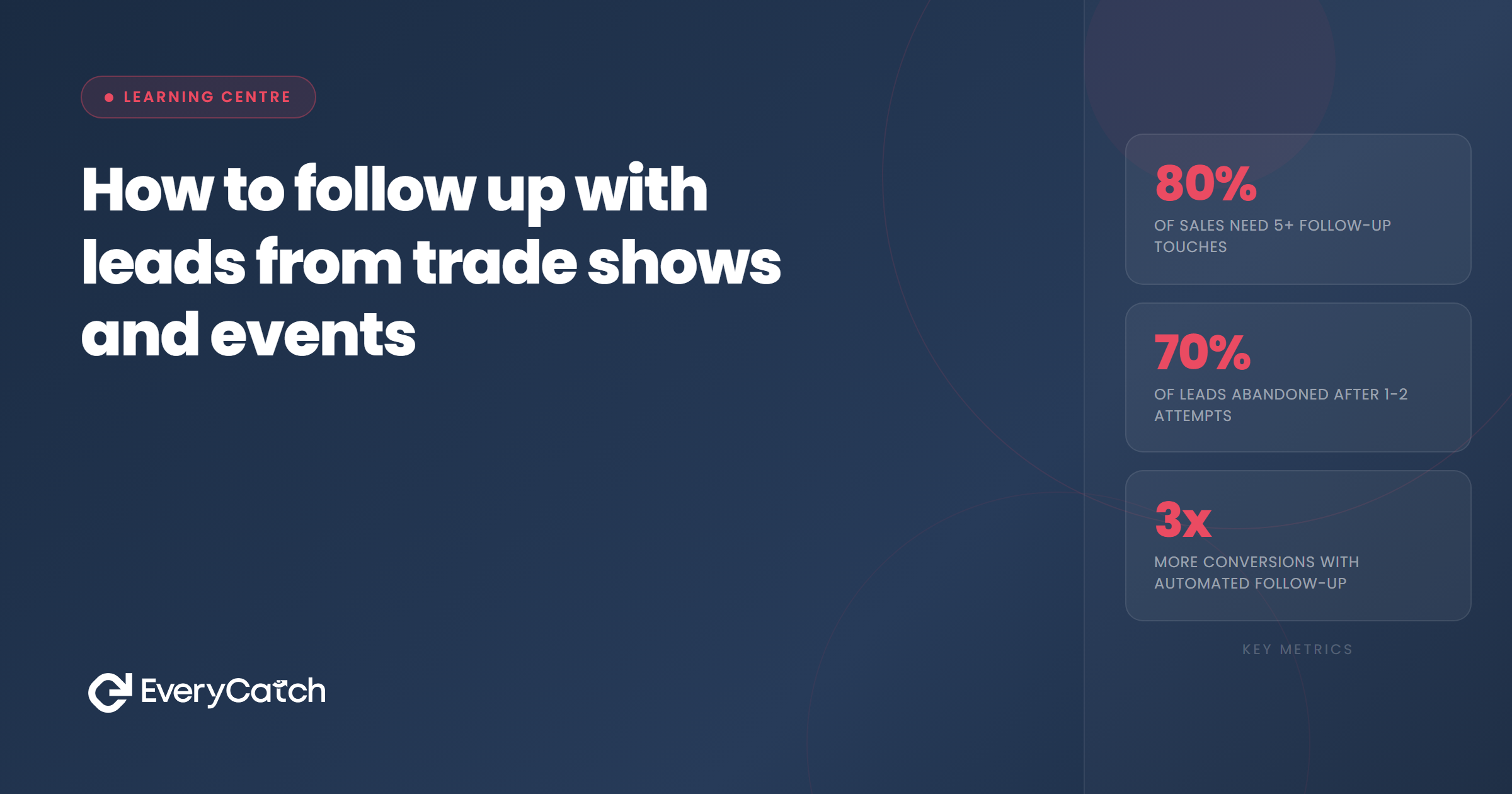
- You need to contact every trade show lead within 24 hours, ideally within two hours of leaving the stand
- Leads should be categorised into hot, warm, or cold groups the moment you capture contact details
- A multi-channel sequence (SMS, email, phone) gets better response rates than relying on one method alone
- Automation removes the manual work but still requires personalised messaging that references the event
- Most trade show leads convert weeks or months after the event, so your nurture sequence matters more than the initial contact
You spend thousands on a trade show stand. You talk to hundreds of people. You collect business cards, scan badges, fill up a notebook with names. Then you get back to the office, the pile sits on your desk, and a week later you finally send a generic "nice to meet you" email that nobody opens.
Trade show leads die from neglect. The conversations felt promising on the day, but without fast follow-up, you're just another forgettable stand in a sea of competitors.
Speed wins. The businesses that contact leads the same day or the next morning book more meetings, convert more sales, and actually justify the cost of attending. The ones that wait lose to whoever got there first.
Why timing matters more than you think
When someone stops at your stand, you have their full attention. They're interested, they're there in person, and they're open to a conversation. Walk away without capturing that interest properly, and you've wasted the opportunity.
Research shows leads contacted within an hour are seven times more likely to convert than leads contacted after two hours. By the time you've waited 24 hours, you're competing with every other exhibitor who collected the same contact details.
Trade shows create urgency. People expect to be followed up with quickly because they've just had a conversation with you. Wait too long and they forget who you are, what you talked about, and why they handed over their details in the first place.
The best-performing businesses send the first message before the lead has even left the event venue. That could be a quick SMS thanking them for stopping by, an email with the brochure they asked for, or a calendar link to book a call. The method matters less than the speed.
Set up a capture process that actually works
Most exhibitors rely on business cards or badge scanners. Both create problems. Business cards get lost, badge scanners export messy data, and neither system captures context about the conversation you just had.
A proper capture process records the lead's name, phone number, email, and a few notes about what they need. It should take 30 seconds or less, and it needs to feed directly into your follow-up system without manual re-entry.
You can use a tablet with a form, a CRM app, or even a shared spreadsheet that syncs to the cloud. The tool doesn't matter. What matters is that every person on your stand uses the same process and captures the same information every time.
Ask for mobile numbers, not just email addresses. SMS gets read faster than email, and it feels more personal. If someone gives you their mobile, they're genuinely interested.
Tag each lead with a category as you capture them. Hot means they want a quote or a demo now. Warm means they're interested but not ready yet. Cold means they took a brochure to be polite. Different categories need different follow-up sequences.
Categorise leads properly from the start
Not every conversation at a trade show is equal. Treating all leads the same wastes time and annoys people who weren't actually prospects.
Hot leads should get a phone call within hours. These are the people who asked about pricing, wanted to know about availability, or told you they're actively looking for a solution right now. They need immediate attention.
Warm leads get an email or SMS the same day, followed by a call within 48 hours. They're interested, but they're still comparing options or waiting for budget approval. Stay on their radar without being pushy.
Cold leads go into a longer nurture sequence. They might not need your service now, but they could need it in six months. Send them helpful content, keep your brand visible, and check in periodically without expecting an immediate sale.
If you didn't categorise leads at the event, do it the moment you get back. Go through your list, recall the conversations, and sort them. A quick decision now saves hours of wasted effort later.
Day one follow-up sequence that converts
The first message you send sets the tone for everything that follows. Make it specific, reference the event, and give them a clear next step.
A strong opening message mentions something you talked about at the stand. Generic templates kill response rates. If they asked about installation times, mention that. If they were curious about a specific feature, lead with it.
For hot leads, send an SMS or email within two hours with a calendar link. Keep it short: "Hi Sarah, great to meet you at the Home Improvement Show this morning. You mentioned wanting a quote for your Glasgow project. Here's a link to book a 15-minute call this week."
For warm leads, send a thank-you message the same evening with a piece of relevant content. That could be a case study, a pricing guide, or a video showing what you discussed. Make it useful, not salesy.
For cold leads, send a polite acknowledgment and add them to your monthly newsletter. Don't chase them hard, but stay visible so they think of you when the time comes.
Losing leads after trade shows?
We'll build you an automated follow-up system that contacts every lead within hours.
Book a free discovery callBuild a nurture sequence for long-term conversions
Most trade show leads don't convert immediately. They might be six months away from needing your service, or they're still getting quotes from competitors. A nurture sequence keeps you in front of them until they're ready to buy.
The sequence should run for at least three months. Start with weekly touches for the first month, then switch to fortnightly, then monthly. Mix email, SMS, and occasional phone calls to vary the channel.
Each message should offer something valuable. Share a customer story, send a tip related to their industry, or invite them to a webinar. The goal is to stay helpful, not to hard-sell every time.
Include clear exit points. If someone replies and says they're not interested, remove them from the sequence. Continuing to message people who've opted out damages your reputation and wastes time.
Track engagement. If a lead opens every email but never replies, they're still interested. If they haven't opened anything in six weeks, they've gone cold. Adjust your approach accordingly.
Automate the entire process without losing the personal touch
Manual follow-up doesn't scale. If you met 50 people at an event, you can't personally craft 50 unique messages and remember to send them at the right time. Automation handles the logistics so you can focus on the conversations that matter.
A proper system sends the first message automatically as soon as a lead is captured. It queues up follow-up messages based on the lead category and adjusts the sequence if they reply or take action.
The messages should still feel personal. Use the lead's name, reference the event, and include details from your notes. Templates save time, but they need to be customised with real information before they go out.
Set up triggers for different actions. If a lead clicks a link, tag them as engaged and send a follow-up email. If they book a call, pause the automated sequence and switch to manual outreach. If they don't respond after three attempts, move them to the long-term nurture list.
Review your automation regularly. What worked at one event might not work at another. Test different subject lines, message timings, and content formats to see what gets the best response. Small tweaks add up to big improvements in conversion rates.
EveryCatch handles the entire flow. You capture leads at the event using a form or integration, and the system sends the right message at the right time based on how each person is categorised. Hot leads get immediate attention, warm leads get nurtured, and cold leads stay on your radar without manual work.

From the EveryCatch team
We help service businesses turn trade show leads into customers with automated follow-up that feels personal. Every lead gets contacted at the right time, with the right message, without you lifting a finger.