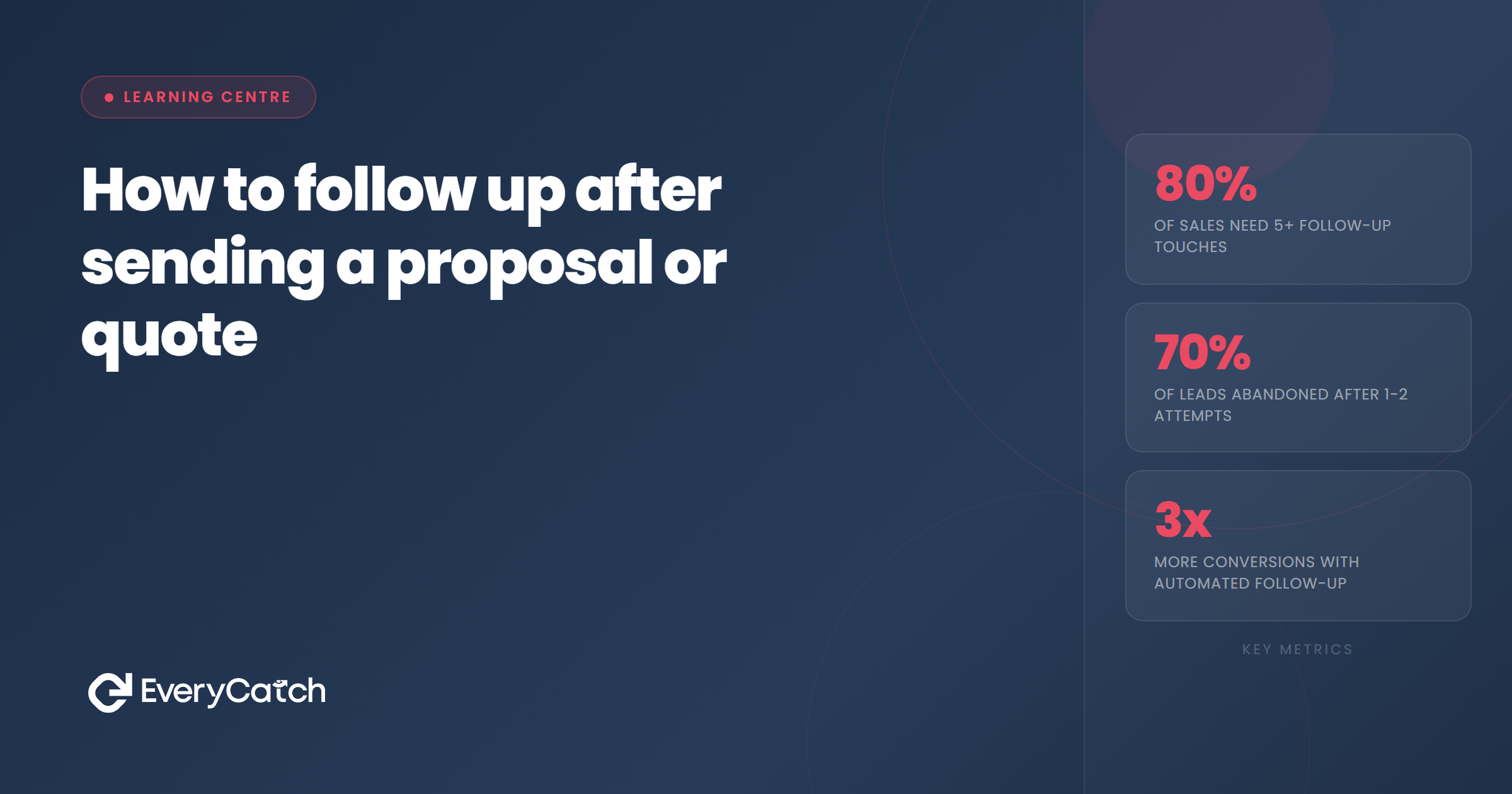
- You need at least five to seven follow-up touchpoints after sending a proposal to reliably convert warm leads
- The first follow-up should go out within 24 hours, while the quote is still fresh in the prospect's mind
- Mix educational value with gentle reminders across email, SMS, and phone to avoid becoming background noise
- The best follow-ups assume positive intent and focus on helping the prospect make an informed decision, not pressuring them
- Automation keeps you consistent and frees you up to handle conversations when prospects reply
You send a proposal. The prospect says they'll review it. Then silence. A week passes. You wonder if you should reach out again. You decide to wait, not wanting to seem pushy. Another week. Still nothing. You write them off and move on.
This pattern plays out thousands of times a day in service businesses. The work goes into crafting a solid quote, presenting it clearly, and then nearly everyone drops the ball on what happens next. You assume the prospect will get back to you if they're interested. They assume you'll follow up if you're serious. Both sides wait, and the opportunity dies quietly in an inbox.
The reality is that most prospects need multiple reminders before they act. Not because they're not interested, but because they're busy running their own businesses. Your proposal gets buried under client work, urgent emails, and daily fires. Following up isn't pushy. It's professional, expected, and necessary if you want to convert warm leads into customers.
Why most proposals go unanswered
When you send a proposal, the prospect might genuinely intend to review it. They open it, scan the top section, think "I'll read this properly later," and close the tab. Later never arrives because something more urgent takes priority. A few days pass. Now they feel awkward replying because they've left it too long. You never hear from them again.
Some prospects need to check with a business partner or spouse before committing to a purchase. Others are comparing multiple quotes. Some are waiting on cash flow to clear. Very few people say yes the moment they receive a proposal, especially for higher-value services. They need time to process, consider options, and justify the spend.
If you only send one reminder, you catch a small fraction of these delayed decisions. Most people who eventually convert need three, five, or even seven touchpoints before they reply. This isn't about badgering them. It's about staying visible during the natural decision-making process that happens over days or weeks.
The businesses that win more work from proposals are the ones that treat follow-up as a system, not an afterthought. They set reminders, send consistent messages across different channels, and give prospects multiple opportunities to engage. You're not chasing. You're making it easy for people who already expressed interest to take the next step.
When to send your first follow-up
The first follow-up should go out within 24 hours of sending your proposal. This timing achieves two things. First, it confirms the prospect received the quote and knows where to find it. Second, it keeps your business at the front of their mind while they're still thinking about the project.
Wait too long and they've moved on mentally. They've opened ten other emails, dealt with customer issues, and your proposal is buried three pages down in their inbox. When you do follow up a week later, they have to scroll back, re-read your quote, and rebuild context. That friction kills conversions.
The 24-hour follow-up isn't a hard sell. It's a soft check-in. You're confirming they got the proposal, asking if they have any immediate questions, and setting the expectation that you'll stay in touch. This message takes 30 seconds to send, costs nothing, and immediately separates you from competitors who go silent.
After the first touchpoint, space your follow-ups strategically. Day three, day seven, day fourteen, and day 21 work well for most service businesses. The exact intervals matter less than the consistency. You want to be visible without overwhelming their inbox. Each message should offer something new, not just repeat "Have you had a chance to look at my proposal?"
The complete follow-up sequence
A proper follow-up sequence runs for at least three weeks and includes between five and seven touchpoints. Each message serves a different purpose and uses a different angle to prompt engagement. You're not sending the same email seven times. You're building a narrative that helps the prospect move from consideration to decision.
Day one is the confirmation. You acknowledge you sent the proposal, make sure they received it, and leave the door open for questions. Day three is the value-add. You send a relevant case study, article, or example that reinforces your credibility. Day seven is the gentle nudge. You ask if they've had a chance to review the quote and whether anything is unclear.
Day fourteen shifts focus. Instead of asking about their decision, you check if their circumstances have changed. Maybe they got busy with another project, or the timeline shifted. This opens the conversation without applying pressure. Day 21 is the polite close. You acknowledge they might not be ready right now, offer to circle back in future, and make it easy to re-engage later if they want.
If they haven't responded by day 21, you can either pause the sequence or move them into a longer-term nurture campaign with monthly check-ins. The key is knowing when to stop active follow-up on one proposal while keeping the relationship warm for future opportunities. Not every lead converts immediately, but many convert eventually if you stay visible.
Tired of chasing quotes manually?
EveryCatch automates your entire proposal follow-up sequence so you never lose track of warm leads.
Book a free discovery callWhat to say in each message
The messaging in each follow-up needs to feel natural, helpful, and low-pressure. You're not begging for a response. You're offering clarity and making it easy for the prospect to move forward when they're ready. The tone should assume positive intent. They asked for a quote because they're interested. You're just helping them through the process.
In the first message, keep it simple. "Hi [Name], I've just sent over your quote for [project]. Let me know if you have any questions or need anything clarified. Happy to jump on a quick call if that's easier." Short, friendly, and action-oriented. You're removing friction, not adding it.
The value-add message on day three might look like this. "I thought this [case study / example / article] might be helpful as you're considering the project. We worked with [similar business] on something comparable and [result]. No rush on the quote, just wanted to share this while it's fresh." You're staying present without asking for anything.
Day seven can be more direct. "Just checking in to see if you've had a chance to look at the proposal I sent last week. Any questions or concerns I can help with?" This is a straightforward nudge. You're giving them permission to ask for help, which often prompts a reply even if they haven't decided yet.
By day fourteen, shift the focus. "I know things get busy. Has anything changed on your end, or is now not the right time for this project? Happy to adjust the quote or circle back later if that works better." This message acknowledges reality and removes pressure. Many prospects reply at this stage to explain their situation, which reopens the conversation.
The final message on day 21 closes the loop gracefully. "I haven't heard back, so I'm assuming this isn't a priority right now. No problem at all. I'll drop you a note in a few months to see if things have changed, or feel free to reach out whenever suits you." You're ending on good terms and leaving the door open without making them feel guilty.
Which channel to use when
Email works well for most follow-ups because it's non-intrusive and easy to digest. Your prospect can read and reply on their own schedule. But email alone isn't enough. Inboxes are crowded, and messages get missed or ignored. Mixing channels increases your chances of getting through.
SMS works brilliantly for quick, timely reminders. A short text on day three saying "Just sent a quick case study to your email, thought it might be helpful for your project" feels personal and immediate. People check texts more reliably than email, and the brevity makes it less formal, which can prompt faster replies.
Phone calls sit at the higher end of effort but can break through when email and text haven't landed. A call on day seven or day fourteen works if you've already established rapport during the initial consultation. The key is to frame it as a check-in, not a sales pitch. "I wanted to make sure you got the proposal and see if I can answer any questions."
For longer follow-up sequences, consider adding LinkedIn messages or even a short video. A 30-second video walking them through one section of the proposal can stand out when text-based messages haven't. The specific mix depends on your industry and how your prospects prefer to communicate, but variety beats repetition every time.
How to automate without losing the personal touch
Manually tracking every follow-up for every proposal is impossible once you're quoting more than a handful of jobs a month. You forget who you messaged when, what you sent, and which prospects you've already closed out. This is where automation becomes non-negotiable.
A good system triggers follow-ups automatically based on when the proposal was sent. Day one, day three, day seven, all happen without you needing to remember or set manual reminders. The messages go out on time, every time, and you only step in when someone replies. This consistency alone doubles conversion rates for most businesses.
The trick is making automated messages feel personal. Use the prospect's name, reference the specific project, and tailor the content to their situation. Template the structure but customise the details. Modern automation tools let you insert dynamic fields and even pause sequences if the prospect engages, so you're not sending a follow-up while you're already having a conversation.
Systems like EveryCatch's follow-up sequences handle the scheduling, tracking, and multi-channel coordination so you never drop a lead. The software knows when to send the next message, which channel to use, and when to stop if the prospect converts or opts out. You stay in control of the strategy while the system handles execution.
Automation doesn't replace relationship-building. It creates space for it. When you're not chasing every quote manually, you have time to handle replies properly, jump on calls, and focus on high-value conversations. The system keeps leads warm. You close them.

From the EveryCatch team
We build follow-up systems for service businesses so no lead, quote, or proposal falls through the cracks. Our tools handle the boring bits so you can focus on the work that actually grows your business.