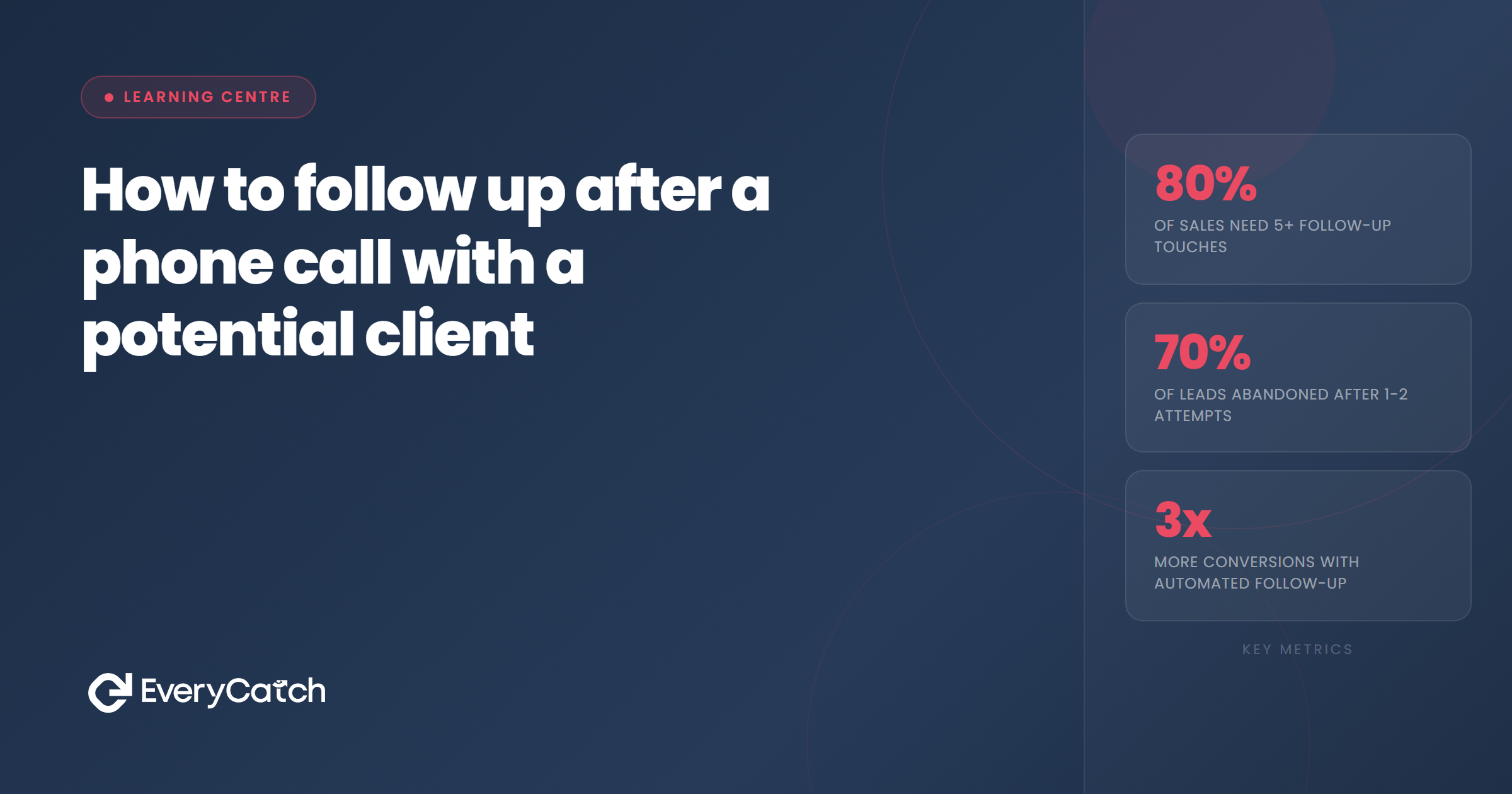

- Send your first follow-up within one hour while the conversation is still fresh in their mind
- Reference specific details from the call to prove you were listening and understand their needs
- Confirm next steps with precise dates, times, and expectations rather than vague promises
- Space subsequent follow-ups strategically based on urgency and where they are in the buying process
- Use multiple channels (text, email, voicemail) to increase the chance your message gets seen
Most service businesses lose potential clients in the hours after the phone call ends. You had a good conversation, they seemed interested, you said you'd be in touch. Then nothing happens, or you send a generic email three days later, and the momentum dies.
The follow-up determines whether that call converts into a booking. Speed matters. Specificity matters. Clarity about next steps matters. Get these right and you turn more enquiries into paying clients without having to chase hard or sound desperate.
The first hour matters most
Your potential client just hung up. They might be calling other businesses, reading reviews, or getting distracted by other priorities. You need to stay present in their mind while the conversation is still warm.
Send something within 60 minutes. This does not need to be a lengthy email. A short text message confirming what you discussed and what happens next keeps you at the front of the queue. The businesses that respond quickly are the ones that get the work.
This first message serves three purposes. It shows you are organised and reliable. It reassures them they made contact with a professional business. It keeps your name visible while they are still comparing options.
What to send immediately
Your first follow-up should acknowledge the conversation and confirm understanding. Reference something specific they mentioned. This proves you were paying attention and differentiates your message from a template.
For example, if they mentioned a deadline or a particular concern, repeat it back. "Thanks for the call earlier. I understand you need the work completed before your event on the 15th." This shows you listened properly.
Confirm what you agreed to do next. If you said you would send a quote, say when they can expect it. If you arranged to call back, restate the time. Vague language like "I'll get back to you soon" creates uncertainty. Precision builds confidence.
Include one clear call to action. This might be to review the quote you are sending, to confirm a time slot, or to reply with additional information you need. Make it obvious what they should do next.
Confirming next steps properly
Potential clients appreciate knowing exactly what will happen and when. If you arranged an appointment, send a confirmation with the date, time, and address. If they need to do something before you can proceed, spell it out.
Many service businesses create unnecessary friction by leaving next steps ambiguous. The client is not sure if they need to do something or wait for you. This confusion kills conversions because people default to inaction when they are uncertain.
Use calendar invites for appointments. Send links to any forms they need to complete. Provide clear instructions for anything you need from them. Remove every possible source of confusion or delay.
Losing potential clients after phone calls?
EveryCatch automates your follow-up sequence so no enquiry falls through the cracks.
Book a free discovery callThe second touch point
If your first message was immediate and transactional, your second touch should add value. This typically comes a day or two later, depending on the urgency of their need.
Send something relevant to their situation. This might be a case study from a similar project, answers to questions they raised, or useful information related to their problem. The goal is to demonstrate expertise and keep the conversation moving forward.
This second message also gives you an opportunity to check in without sounding pushy. "Did you have a chance to review the quote?" or "Let me know if you have any questions about what we discussed" keeps the door open.
Avoid generic content. Sending a link to your blog or a newsletter they did not ask for adds no value. Every message should relate directly to their enquiry and help them make a decision.
Building a follow-up schedule
Different enquiries need different follow-up frequencies. Someone who needs emergency work tomorrow requires a different approach than someone researching options for next month.
For urgent jobs, follow up the same day if you have not received a response. Send a text mid-afternoon checking if they received your quote or confirming the appointment. Speed is your advantage here.
For less urgent enquiries, space your follow-ups across several days. Day one is immediate confirmation. Day two or three adds value or checks understanding. Day five or six closes the loop and asks for a decision.
Stop after three or four attempts if you get no response. Persistence is good, but there is a line where it becomes irritating. Make your final message clear. "I'll assume you have chosen another provider, but if your plans change, I'm here to help."
When they don't respond
Silence after a good phone call is frustrating but common. People get busy, priorities shift, or they are comparing multiple quotes and have not decided yet.
Try different channels. If your texts go unanswered, send an email. If emails are ignored, leave a voicemail. Some people prefer one channel over another, and you increase your odds by varying your approach.
Change the nature of your message. Instead of asking for a decision, offer something new. "I just had a cancellation for next week if that timing works better for you" or "I came across an article about your exact problem that might be useful."
Do not take silence personally. You are running a business, not managing friendships. Some leads will not convert, and that is acceptable. The system you build should make follow-up efficient so you can focus energy where it matters most.
The businesses that win are the ones that follow up consistently, personally, and professionally. Every potential client who enquires deserves a proper response. When you deliver that reliably, your conversion rate improves without any other changes to your business.

From the EveryCatch team
We build follow-up systems for service businesses that turn more enquiries into booked work. Every article reflects what we see working in real businesses every day.