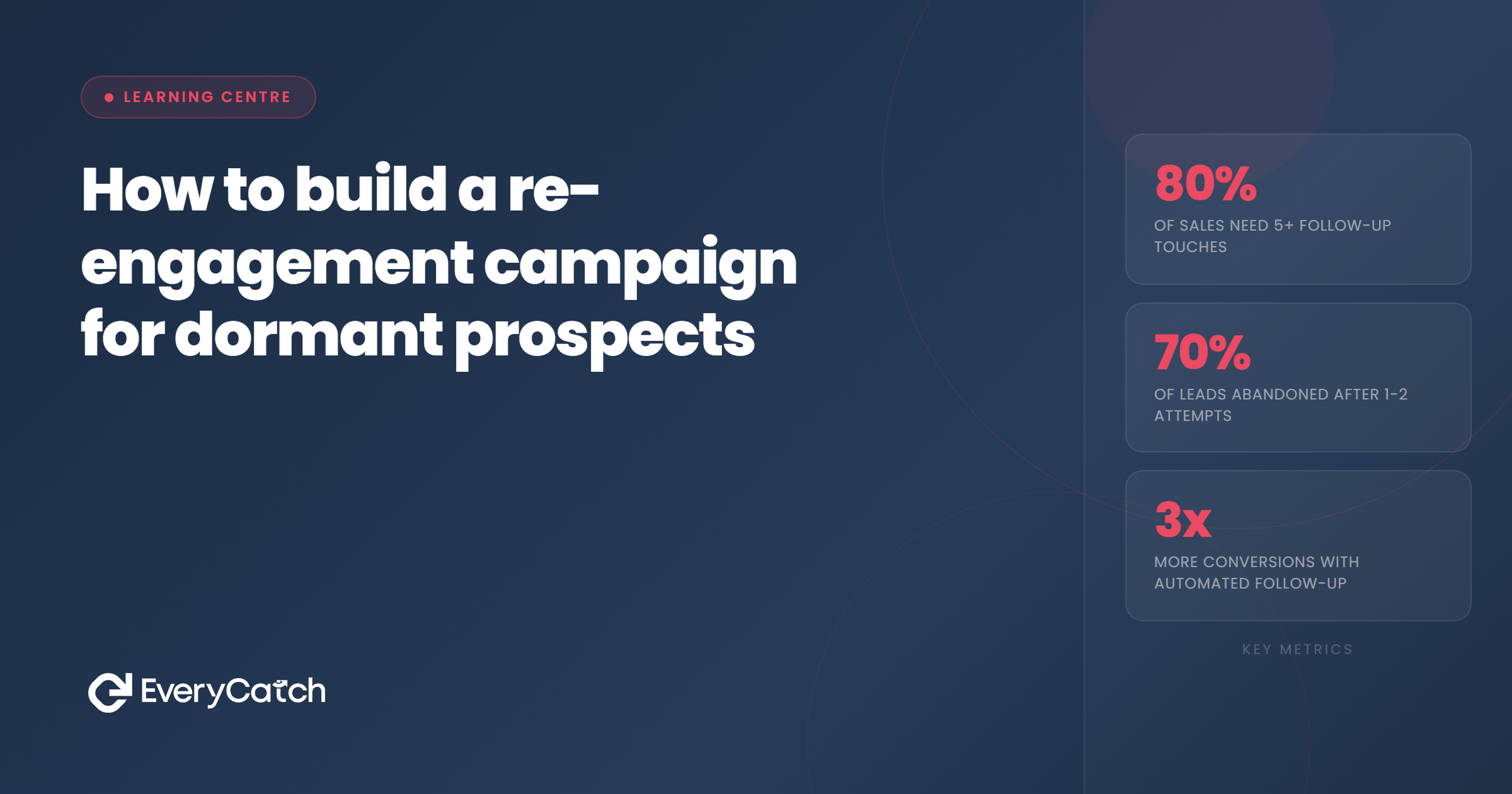

- Dormant prospects cost nothing to acquire and already showed initial interest, making them high-value targets
- Segmentation by engagement history, enquiry type, and time dormant improves response rates dramatically
- Re-engagement campaigns need 4-6 touchpoints over 2-3 weeks, each with distinct value
- Messaging must acknowledge the gap without guilt-tripping, offering fresh reasons to reconsider
- Automated workflows track engagement and route warm responses to sales immediately
You already paid to acquire them. They enquired, asked questions, maybe even requested a quote. Then silence. Your dormant prospect list contains people who demonstrated interest but never converted. Most businesses write them off. That's a mistake.
A re-engagement campaign systematically revives these cold prospects using targeted messaging, multiple channels, and clear value propositions. When executed properly, it converts prospects at a fraction of the cost of new lead generation. The key is understanding why they went dormant and addressing those reasons head-on.
Why dormant prospects matter
Dormant prospects already cleared the hardest hurdle. They found you, trusted you enough to make contact, and expressed interest in solving a problem you can address. That puts them miles ahead of cold contacts.
The cost comparison tells the story. Acquiring new leads through paid advertising costs between £15 and £150 per lead depending on your industry. Re-engaging a dormant prospect costs you the time to set up a campaign and the marginal cost of sending messages. If you convert even 10% of dormant prospects, the ROI dwarfs new lead generation.
Timing plays a role too. Prospects go dormant for reasons unrelated to your service quality. Budget constraints, internal delays, competing priorities, or simply forgetting can all stall a decision. Three months later, those obstacles may have resolved themselves. Your re-engagement message arrives exactly when they're ready to move forward.
Service businesses see particularly strong results because purchase cycles can stretch over months. A homeowner who enquired about a bathroom renovation in January might have postponed due to timing, but by June they're ready to proceed. Your competitors likely forgot about that prospect. You didn't.
Identify and segment your list
Not all dormant prospects deserve the same treatment. Segmentation separates people who showed genuine interest from those who submitted vague enquiries or clicked out of curiosity. Start by defining what "dormant" means for your business. For some, it's 30 days since last contact. For others with longer sales cycles, it might be 90 or 120 days.
Pull prospects based on specific criteria. Look for people who enquired, received a quote, or engaged multiple times before going silent. Exclude anyone who explicitly said no or requested removal from communications. You want prospects who showed intent but didn't convert, not people who actively rejected your service.
Segment by enquiry type. Someone who asked detailed questions about a specific service differs from someone who filled out a generic contact form. The detailed enquirer gets messaging focused on their specific need. The generic enquirer gets broader value-based messaging that re-establishes relevance.
Time dormant matters too. Prospects who went silent 40 days ago need different messaging than those who enquired nine months ago. Recent dormants might need a gentle nudge. Older dormants need a stronger reason to re-engage, often framed around what's changed since they last spoke with you.
Engagement history shapes your approach. Did they open previous emails? Visit your website multiple times? Request additional information? High-engagement prospects who went dormant might just need a single well-timed message. Low-engagement prospects need more nurturing before they'll respond.
Campaign structure and timing
A re-engagement campaign runs between four and six touchpoints over two to three weeks. Fewer touchpoints fail to break through the noise. More than six and you risk annoying people who genuinely aren't interested. The sequence needs to build momentum without feeling pushy.
Your first message acknowledges the gap. It references your previous interaction without dwelling on the silence. The tone is friendly, not guilt-inducing. You're checking in, not demanding a response. This message typically gets the lowest response rate, but it primes recipients for what follows.
The second touchpoint delivers value. Share something useful related to their original enquiry: industry insights, a case study, a checklist, or a problem-solving tip. This demonstrates that you're not just following up for the sake of following up. You have something worth their attention.
Message three introduces urgency or scarcity without resorting to false pressure. Genuine reasons work best: upcoming price changes, seasonal availability, new service launches, or limited booking slots. If you can't honestly claim urgency, skip this approach and focus on reinforcing value instead.
The fourth message makes the ask simple. What's the smallest action they can take to move forward? That might be booking a call, answering a single question, or confirming they're still interested. Reducing friction at this stage converts fence-sitters who were interested but overwhelmed by too many options.
Subsequent messages (five and six if you use them) can combine testimonials, address common objections, or offer a fresh angle on the solution you provide. Space these 3-5 days apart. Too close together feels aggressive. Too far apart loses momentum.
How many dormant prospects are sitting in your system?
We'll show you exactly how to identify, segment, and re-engage prospects who went cold.
Book a free discovery callMessaging that converts
Re-engagement messaging walks a fine line. You need to acknowledge the previous interaction without making prospects feel guilty for not responding. You need to offer value without sounding desperate. You need to create urgency without applying false pressure.
Start with a subject line that references familiarity. "Following up on your bathroom enquiry" performs better than "Special offer inside" because it connects to a specific moment. Prospects remember enquiring, even if they can't recall the details.
The opening sentence acknowledges reality. "We spoke a few months ago about your extension project" or "You enquired about our electrical services back in March" reminds them of the context without making them feel bad for not following through. No judgement, just facts.
Then pivot to what's changed or what's new. This could be new services, updated pricing, customer success stories, or seasonal factors. The change gives them a reason to reconsider that feels fresh, not like you're repeating yourself. "Since we last spoke, we've expanded our team and can now start projects within two weeks" provides new information that might address why they delayed originally.
Address the most common objections directly. If prospects typically stall on price, acknowledge that you offer flexible payment options. If timing is usually the issue, highlight your scheduling flexibility. If decision paralysis is common, simplify the next step to something small and non-committal.
End with a clear call to action that removes friction. "Reply with 'yes' if you'd like to pick up where we left off" takes less effort than filling out a form or making a phone call. The easier you make it to respond, the more responses you'll get.
Multi-channel approach
Email forms the backbone of most re-engagement campaigns, but relying on email alone limits your reach. People change email habits, inbox filters improve, and attention spans shrink. A multi-channel approach multiplies your chances of breaking through.
SMS text messages get opened more reliably than emails. A short text that says "Hi Sarah, just checking if you're still interested in the quote we sent for your driveway" feels personal and prompts action. Keep texts brief, friendly, and spaced at least a week apart to avoid annoyance.
Phone calls work for high-value prospects who engaged deeply before going dormant. If someone spent 30 minutes on a video call discussing their project, a personal phone call three months later doesn't feel intrusive. It feels like genuine follow-up from someone who remembers them.
Direct mail stands out precisely because few businesses use it anymore. A postcard or letter referencing a previous enquiry can jolt dormant prospects back to attention, especially in industries where physical presence matters. A landscaping business sending a postcard with before-and-after photos of a completed project creates tangible impact.
Retargeting ads complement your direct outreach. Prospects who visit your website after receiving a re-engagement email can see ads that reinforce your message. This creates multiple touchpoints without sending more direct communications.
The channel mix depends on your industry and prospect value. High-ticket services (home renovations, commercial installations) justify phone calls and direct mail. Lower-value services might stick to email and SMS. Test different combinations and track which channels drive responses for different segments.
Automation and tracking
Manual re-engagement campaigns don't scale and rarely get executed consistently. Automation ensures every dormant prospect gets the same quality of follow-up regardless of when they went cold or how busy your team is.
CRM systems with workflow automation can trigger re-engagement sequences based on specific criteria. When a prospect hits 60 days with no activity, the system automatically starts the campaign. No manual list-pulling, no forgotten prospects, no gaps in coverage.
Automated workflows track engagement in real-time. When someone opens an email, clicks a link, or visits your website, the system logs that activity. High-engagement prospects can automatically skip to later messages in the sequence or get flagged for immediate personal outreach. Low-engagement prospects continue through the standard sequence.
Response routing matters as much as message delivery. When a dormant prospect replies positively, the system should immediately notify sales and potentially pause the automation. Nothing frustrates a re-engaged prospect more than continuing to receive automated messages after they've already responded.
A/B testing within automated campaigns improves results over time. Test different subject lines, message angles, and timing intervals. The system tracks which variations generate better open rates, click rates, and conversions. After 100 prospects go through the sequence, you'll have data on what works best for your audience.
Reporting shows the full picture. Track how many prospects enter the re-engagement sequence, how many engage with each message, how many convert, and what the average time to conversion looks like. This data helps you refine targeting, improve messaging, and prove ROI.
Platforms like EveryCatch automate the entire re-engagement process, from identifying dormant prospects to sending multi-channel messages and tracking responses. The system handles segmentation, timing, and routing, so you focus on speaking with prospects who are ready to move forward rather than manually managing lists and schedules.

From the EveryCatch team
We help service businesses convert more prospects by automating follow-up and re-engagement. Our platform identifies dormant prospects, sends targeted campaigns across multiple channels, and routes warm responses directly to your team.