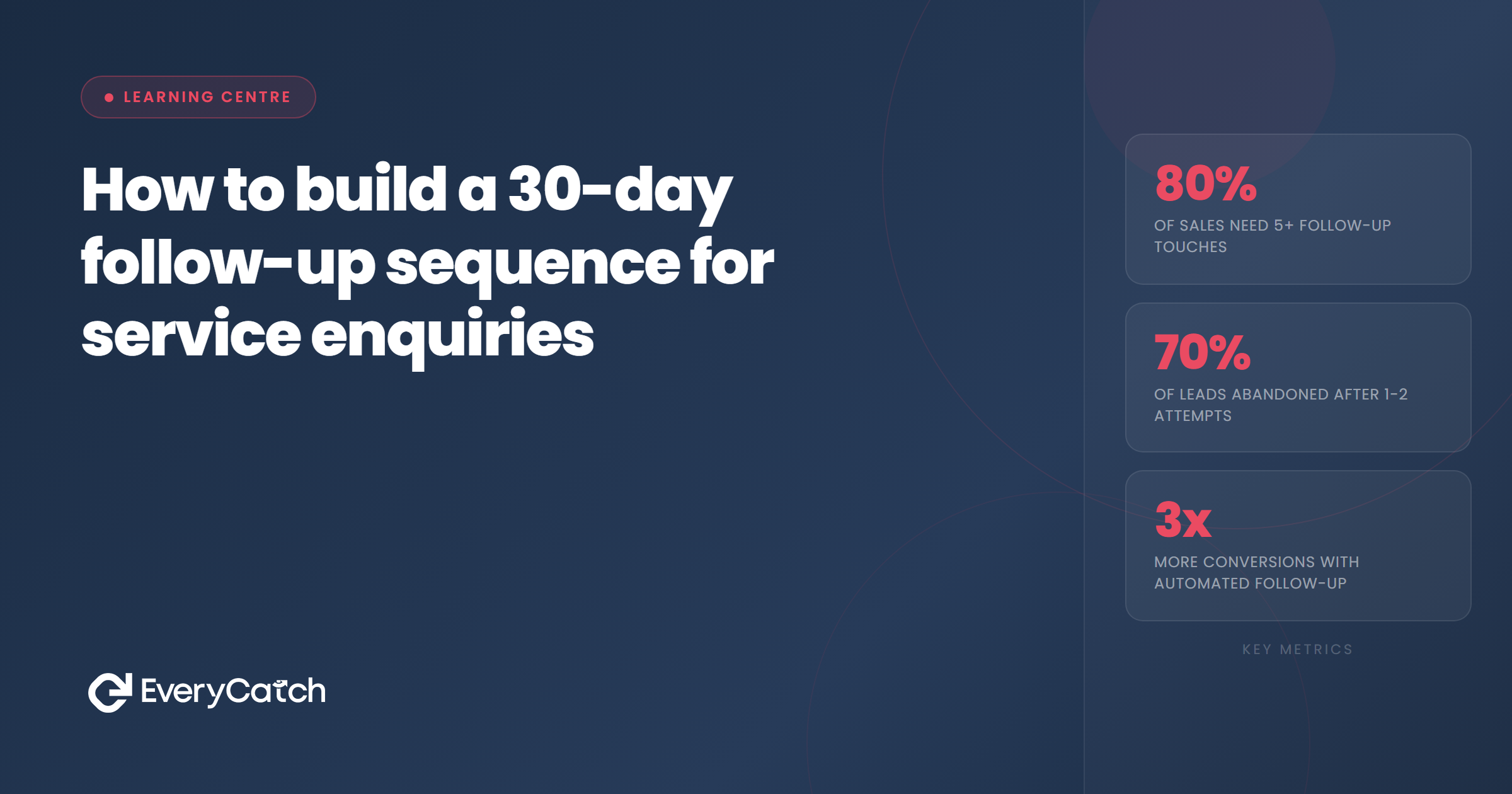

- Most service enquiries don't convert on the first contact, making a structured follow-up sequence essential
- A 30-day sequence gives you enough touchpoints to stay present without overwhelming prospects
- Each message needs a clear purpose: confirmation, education, proof, or conversion
- Automation handles the timing and delivery so you don't rely on memory or manual lists
- Tracking open rates and replies tells you which messages work and where to adjust
Someone fills in your quote form. You send them a price. Then nothing. A week later, you remember you meant to follow up, so you send a quick text asking if they're still interested. Still nothing.
This pattern repeats itself dozens of times a month in service businesses. You get enquiries, you respond once, maybe twice if you remember, and then the lead goes cold. The problem is not that you lack persistence. The problem is that you're relying on your memory to handle a job that should run automatically.
A 30-day follow-up sequence solves this. It sends the right message at the right time, without you needing to remember anything. It keeps you in front of prospects during the decision window when they're comparing options, reading reviews, and waiting for payday. And it converts enquiries who would otherwise have booked with someone else or forgotten they even asked for a quote.
Why 30 days works for service businesses
Most service purchases happen within a month of the initial enquiry. The timeline varies by trade, urgency depends on the job, but 30 days covers the decision window for most people. Someone booking a bathroom renovation might take three weeks to compare quotes and check availability. Someone needing a boiler repair books faster, but even then, they might wait a few days if it's not an emergency.
The 30-day window also matches how people actually make decisions. They don't evaluate your quote immediately and choose yes or no. They think about it, talk to their partner, check their bank balance, read a few reviews, then come back to it. A sequence keeps your name present during this thinking time.
Beyond 30 days, the urgency usually fades. If they haven't booked by then, either they chose someone else or the need disappeared. You can still send an occasional check-in after that, but the structured sequence does its work in the first month.
The sequence structure: what you send and when
A good 30-day sequence includes eight to ten messages spread across four weeks. That sounds like a lot, but remember that many people won't open every message, and not every message requires a response. The sequence works because it gives multiple opportunities to engage at different stages of their decision process.
The structure looks like this. Week one focuses on confirming the enquiry and setting expectations. Week two builds value and demonstrates your expertise. Week three addresses common objections and shows proof. Week four creates urgency and offers a final prompt to book.
Each message has a single clear purpose. You're not repeating the same "just checking in" text ten times. You're building a case, answering questions, and removing friction at each stage. The person reading your messages should feel like you understand where they are in the decision process and that each message gives them something useful.
Week one: confirmation and positioning
The first message goes out immediately after they enquire. This is your confirmation. It thanks them for reaching out, confirms you've received their enquiry, and tells them what happens next. If you've already sent a quote, this message acknowledges that and sets a timeline for when they can expect to hear from you again.
Day two sends a follow-up that reinforces why they should choose you. This is where you mention your credentials, your years in business, or a recent similar job. The goal is to position yourself as competent and trustworthy before they've had time to forget who you are.
Day four checks if they have questions. This is a soft prompt. You're not asking for a decision yet. You're opening a door for them to ask about timing, materials, process, or anything else that might be holding them back. Many people have questions but don't want to seem difficult, so you give them permission to ask.
Week two: value and proof
By the start of week two, they've had time to think about your quote. This is when comparison shopping happens. Your messages this week need to demonstrate value and build confidence.
Day seven sends educational content. This could be a short explanation of what's included in your quote, what makes your approach different, or what to watch out for when comparing quotes. You're helping them make a better decision, even if they don't choose you. This builds trust.
Day ten shares a piece of social proof. A recent review from someone who had a similar job done, a before-and-after photo, or a quick case study. This shows that people like them have chosen you and been happy with the result. It answers the unspoken question: "Can I trust this person to do a good job?"
Day twelve asks if now is still the right time. People's circumstances change. They might have decided to wait a few months, or the urgency might have increased. This message gives them a chance to update you without feeling pressured. If they reply that they're waiting until summer, you can adjust your follow-up accordingly instead of wasting messages.
Want to see how this works in practice?
We'll show you exactly how EveryCatch builds and automates your follow-up sequences.
Book a free discovery callWeek three: addressing objections
Week three is about removing roadblocks. By now, if they haven't booked, there's a reason. Your messages this week tackle the most common objections head-on.
Day fifteen addresses price concerns. This doesn't mean dropping your price. It means explaining what they get for the money, offering payment options if that's relevant, or breaking down the cost so it doesn't feel like one big scary number. You're reframing value, not discounting.
Day eighteen talks about timing and availability. Many people delay booking because they think you're too busy or they're not sure when they want the work done. This message tells them you have availability, you can work around their schedule, or you can book them in now and start later. It removes the "I'll get back to you when I know my dates" excuse.
Day twenty-one shares another proof point, ideally one that addresses a concern specific to your trade. If you're a roofer, this might be a testimonial about how clean you left the site. If you're an electrician, it could be about how you explained everything clearly. Match the proof to the objection you think they have.
Week four: final push
The final week creates gentle urgency. You're not being pushy, but you are making it clear that this is decision time.
Day twenty-four reminds them of the original enquiry and offers one last chance to ask questions. This is the "anything I can help with?" message. It's friendly, not aggressive, but it signals that you're wrapping up your follow-up.
Day twenty-seven introduces a reason to act now. This could be a mention of your diary filling up, a seasonal consideration ("we're heading into the busy season"), or a limited-time offer if that's appropriate for your business. The urgency needs to be real, not manufactured.
Day thirty is your final message. It thanks them for considering you, leaves the door open for future contact, and wishes them well. If they don't respond to this, they're not booking. Move them out of the active sequence and into a long-term nurture list for occasional check-ins every few months.
How to automate the sequence
You don't send these messages manually. That would take hours every week and you'd inevitably miss people or send the wrong message at the wrong time. The sequence runs automatically using a CRM or marketing automation tool.
The setup works like this. When someone enquires, they enter the sequence automatically. The system tags them based on how they enquired (web form, phone call, email) and starts sending messages according to the schedule you've set. Each message goes out at the assigned day and time without you lifting a finger.
If they reply at any point, you pause the automation and handle the conversation manually. Once that conversation finishes, you decide whether to restart the sequence or mark them as booked. If they book, they exit the sequence immediately and move into your customer journey. If they go quiet again, the sequence picks up where it left off.
The system also handles different scenarios. If someone asks to be contacted in two months, you remove them from the 30-day sequence and schedule a single message for the date they specified. If they say no thanks, they exit immediately and go onto a "not interested" list so you don't keep following up. The automation should be smart enough to adjust based on how people respond.
Most service businesses use platforms like EveryCatch, GoHighLevel, HubSpot, or ActiveCampaign for this. The specific tool matters less than having one that can trigger sequences automatically, track engagement, and let you intervene manually when needed. The messages themselves can be SMS, email, or a mix of both, depending on what works for your audience.
Tracking what works
Once your sequence is running, you need to watch which messages get opened, which get replies, and which lead to bookings. This tells you where your sequence is working and where it's not.
Track open rates for each message. If a particular message gets ignored by almost everyone, either the subject line is weak, the timing is wrong, or the content isn't relevant. Test a different approach. If another message gets opened by most people but generates no replies, the content might be interesting but not actionable. Add a clearer call to action or a question that invites a response.
Measure reply rates separately from booking rates. A message that gets lots of replies but no bookings is starting conversations, which is good, but not closing them. You might need a stronger follow-up for those conversations. A message that gets few replies but high booking rates is doing its job efficiently.
Look at where people drop off. If most people engage with the first three messages then go quiet, week two might be too pushy or not valuable enough. If engagement stays strong through week three then dies in week four, your final messages might lack urgency or feel too salesy. Adjust based on the pattern you see.
Also track the overall conversion rate of the sequence. What percentage of people who enter the sequence end up booking? For most service businesses, a well-built 30-day sequence should convert 15 to 30 percent of enquiries, depending on your industry and average job value. If you're below that, your sequence needs work. If you're above it, you've built something that works.

From the EveryCatch team
We help service businesses automate their follow-up so no enquiry falls through the cracks. Our platform builds and manages these sequences for you, with templates specific to your trade and proven to convert.