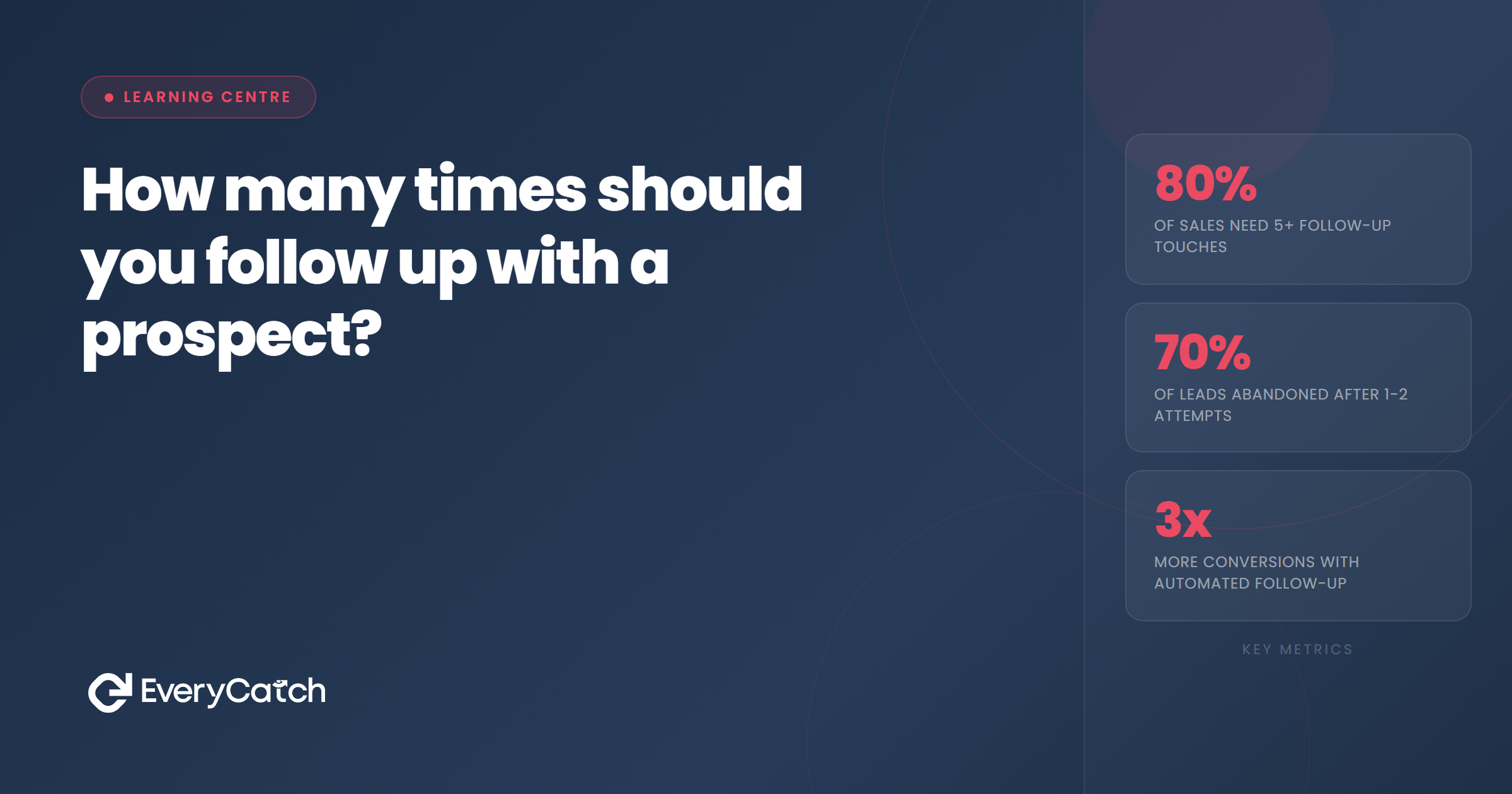

- Most conversions happen after the fifth follow-up attempt, yet most businesses stop after two
- A structured sequence of 5 to 8 follow-ups over two weeks strikes the right balance between persistence and respect
- Higher-value services justify more follow-up attempts because the potential return is greater
- Spacing your follow-ups correctly prevents you from appearing desperate while keeping you top of mind
- Automated systems let you maintain consistent follow-up without manual effort or awkward sales pressure
The question of how many times to follow up sits at the heart of most service businesses' sales problems. Follow up too little and you leave money on the table. Follow up too much and you risk annoying prospects or damaging your brand.
The uncomfortable truth is that most businesses err dramatically on the side of too little. They send one email, make one phone call, and then assume the prospect isn't interested. Meanwhile, their competitors who persist just a bit longer win the work.
The right number of follow-ups depends on your specific situation, but research and real-world data point to a range that works across most service industries. Understanding that range, and the factors that shift it up or down, changes how you think about sales.
What the research says
Multiple studies on sales effectiveness reveal a consistent pattern. Around 80% of sales require five or more follow-up attempts after the initial contact. Yet the majority of salespeople stop after just two attempts.
This creates an enormous opportunity gap. The businesses that continue following up when their competitors have given up capture a disproportionate share of available work. They win not because they're better at their trade, but because they're still in the conversation when the prospect is ready to decide.
Data from service businesses using automated follow-up systems shows the same pattern. Conversion rates climb steadily through the first six touches, plateau slightly, then drop off after about ten attempts. The sweet spot sits somewhere between five and eight meaningful contacts over a two-week window.
Different industries show slight variations. High-value professional services like architectural work or specialist consulting often convert best with seven to nine touches. Lower-value, more immediate-need services like domestic plumbing or locksmith work might see faster decisions with four to six touches. The underlying principle remains the same: persistence wins, but there's a point of diminishing returns.
The recommended starting point
If you currently have no structured follow-up system, start with six attempts over 14 days. This gives you enough persistence to capture most opportunities without overwhelming prospects or consuming excessive time.
A basic six-touch sequence might look like this. First contact happens within five minutes of the initial enquiry, ideally by phone with an SMS backup if they don't answer. Second contact comes 24 hours later via email. Third contact arrives 48 hours after that, by phone again. Fourth contact uses email three days later. Fifth contact goes out by SMS five days after the fourth. Sixth and final contact happens by email three days later, offering one last opportunity to engage.
This pattern mixes channels, spaces attempts sensibly, and doesn't cluster contacts so closely that you appear desperate. Each touch adds value or information rather than simply repeating "just checking in" messages that prospects ignore.
Track your results. If you're seeing most conversions happen at touches five and six, you might benefit from extending to eight touches. If prospects are booking by touch three, you might be working harder than necessary and could consolidate.
Variables that change the number
Your average job value shifts the equation significantly. A tradesperson quoting £300 jobs can't justify the same follow-up investment as a consultant pitching £15,000 projects. Higher value justifies more touches because even a small improvement in conversion rate produces substantial revenue.
The source of the lead matters too. Someone who filled out a detailed quote request form on your website has shown more intent than someone who tapped your number in a directory listing. Warm inbound leads might only need four or five touches, while colder enquiries benefit from seven or eight.
Your sales cycle length plays a role. Emergency services with same-day decisions need compressed follow-up sequences, maybe four touches over three days. Projects with longer consideration periods, like home extensions or business consulting, work better with stretched sequences that maintain presence over weeks rather than days.
Market competition changes the calculation as well. In crowded markets where prospects request quotes from five or six providers, persistence becomes the differentiator. In niche markets with limited alternatives, fewer touches might suffice because prospects have fewer options to compare.
Losing prospects between touches?
See how automated follow-up keeps every conversation moving without the manual work.
Book a free discovery callFollow-up cadence matters
Spacing matters as much as total number. Six follow-ups crammed into three days feels aggressive and desperate. The same six spread over two weeks feels professional and persistent.
Start with tighter spacing, then stretch out the gaps. Your first follow-up should happen the same day as the initial enquiry, ideally within minutes. The second can wait until the next day. After that, extend the gaps to every two or three days.
This pattern mirrors natural buying behaviour. People research quickly when they first have a need, then slow down as they compare options and think through decisions. Your follow-up rhythm should match their decision rhythm.
Vary your channels. Don't send six emails in a row. Mix phone calls, SMS messages, and emails. Different people prefer different communication methods, and channel variety prevents your messages from blending into repetitive noise.
Each follow-up should offer something new. Share a case study, answer a common question, mention a recent similar project, or highlight a seasonal factor. Value-adding follow-ups feel helpful rather than pushy. Generic "just touching base" messages get ignored or deleted.
When to stop
Even the best follow-up sequence needs an end point. Most systems work best with a defined final attempt that makes clear this is the last contact unless the prospect responds.
Your final message should acknowledge you've been in touch several times and won't continue reaching out. Offer one last easy way to engage, then step back. This respects the prospect's space while leaving the door open if their situation changes.
Some prospects explicitly ask you to stop contacting them. Honour those requests immediately and remove them from your sequence. Continuing to contact someone who's asked you to stop damages your reputation and potentially breaks marketing regulations.
Other prospects go completely dark but never explicitly decline. These are the ones where your final follow-up matters most. A well-crafted final message often generates a response, either booking the work or clarifying they've gone elsewhere. Either way, you get closure and can move on.
After your sequence ends, move unresponsive prospects to a quarterly or seasonal check-in list. Someone who wasn't ready in January might have the budget in June. A long-term nurture approach captures these delayed opportunities without requiring active follow-up on every name.

From the EveryCatch team
We've analysed thousands of follow-up sequences across service businesses and found that consistency beats creativity every time. The businesses that win are simply the ones who show up reliably when their competitors have already moved on.